New-build 80-bed sanatorium for people with dementia
New-Build Sanatorium
Near Bonn, OOW has developed a residential care facility of the Augustinum Foundation further with the repertoire of modern architecture. A new building with 80 beds was designed that protects the privacy of the residents living with dementia and makes their orientation
“An intellectual challenge, too - is remembering really essential in order to experience architecture?”
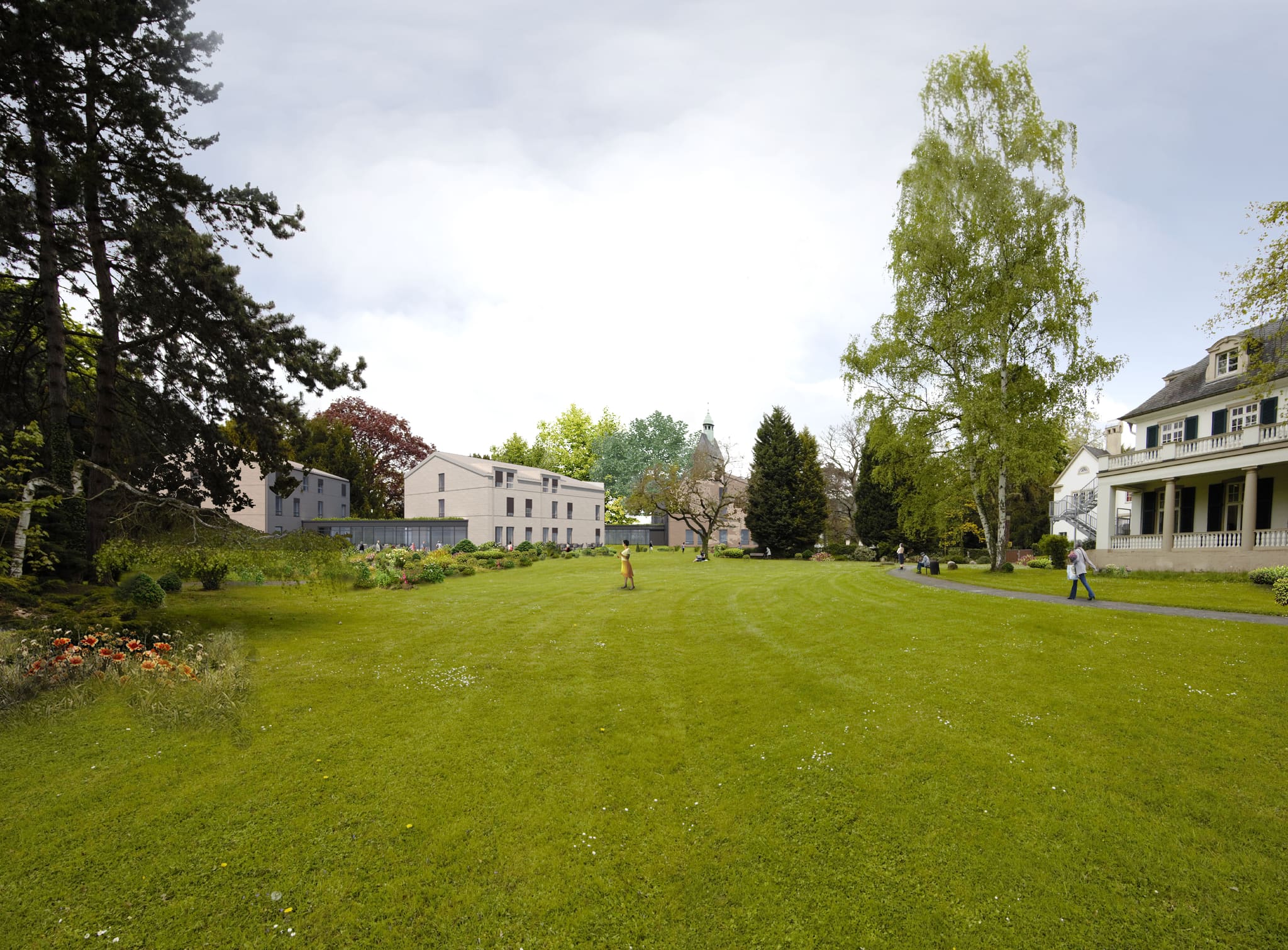
Set directly on the Rhine, an old villa stands within a listed park and is being preserved as the main house of the sanatorium. OOW’s design provides for three new buildings that integrate themselves sensitively into the ensemble at the edge of the park. They show respect for the park’s mature trees and the old villa, yet they meet the very highest standards of functionality and design. Construction starts in 2022, and two years later the residents are due to move in.
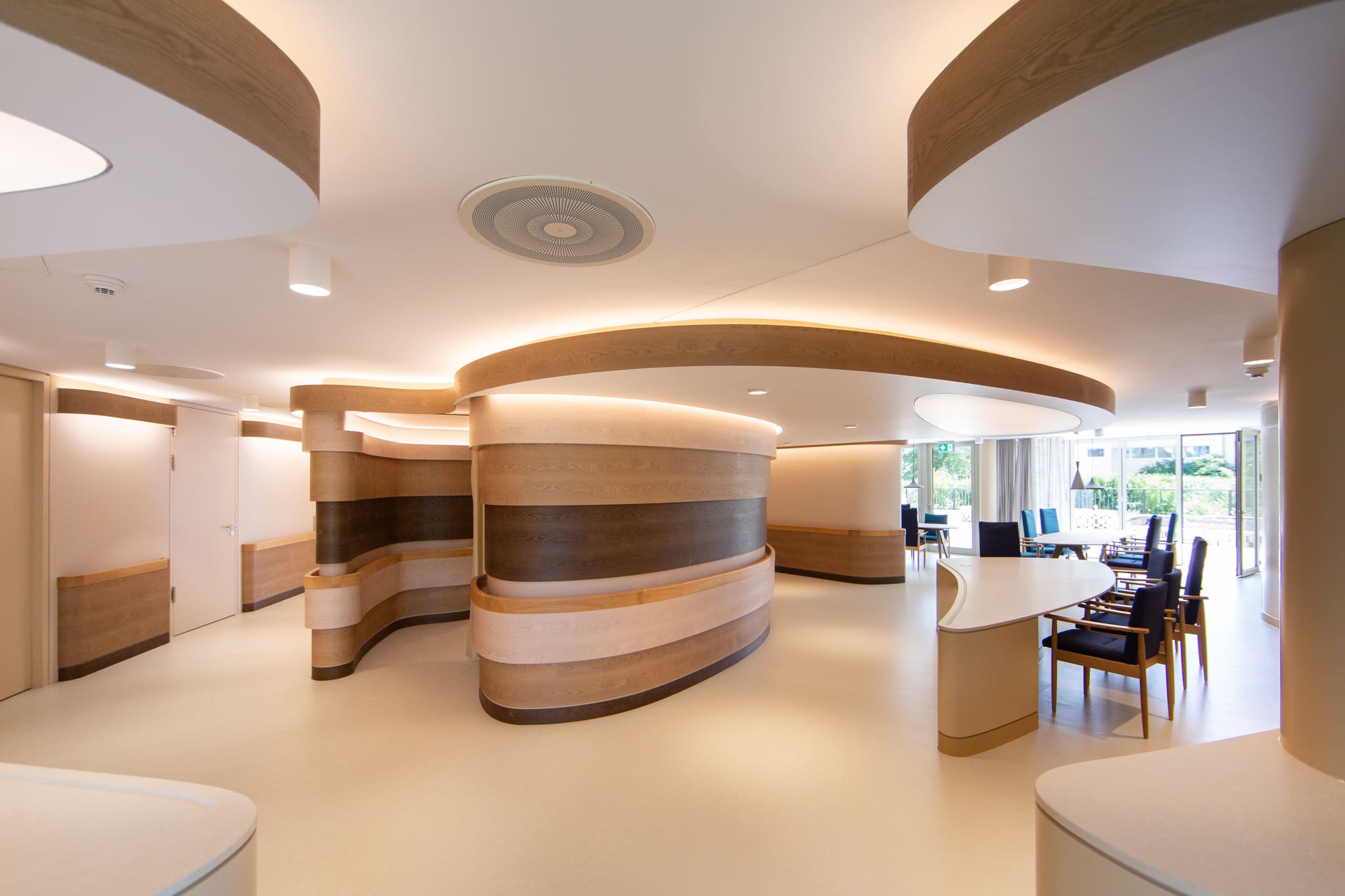
For this project, too, the OOW team has consistently thought its way into the perspective of the users. Living and communal areas are arranged so that the privacy of the residents is the decisive criterion and is safeguarded as well as possible.
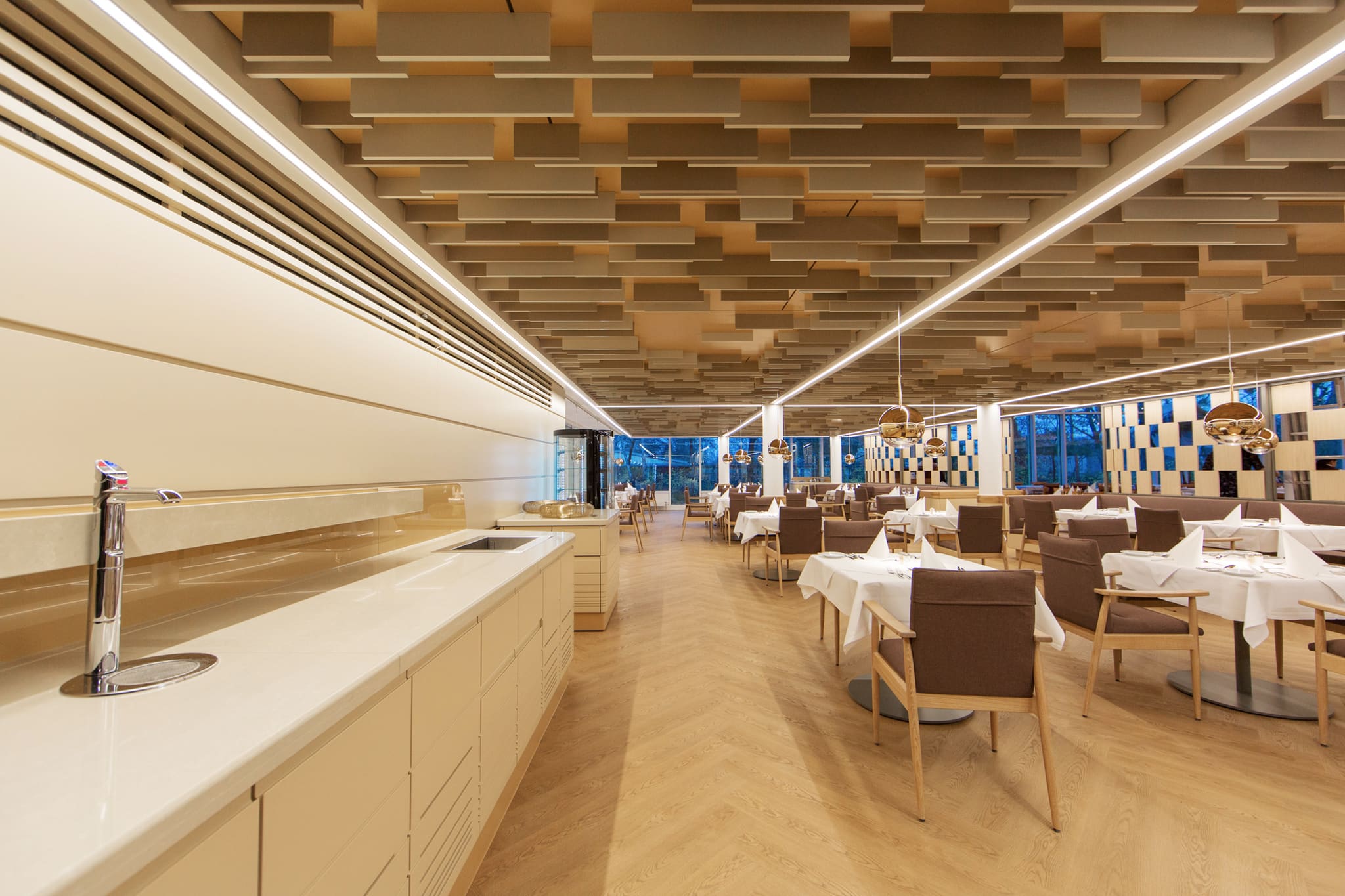
From their own familiar room, each resident reaches a communal area that offers space for shared activities. From here, paths lead to the dining rooms and on into the park or to the communal areas of the other buildings.
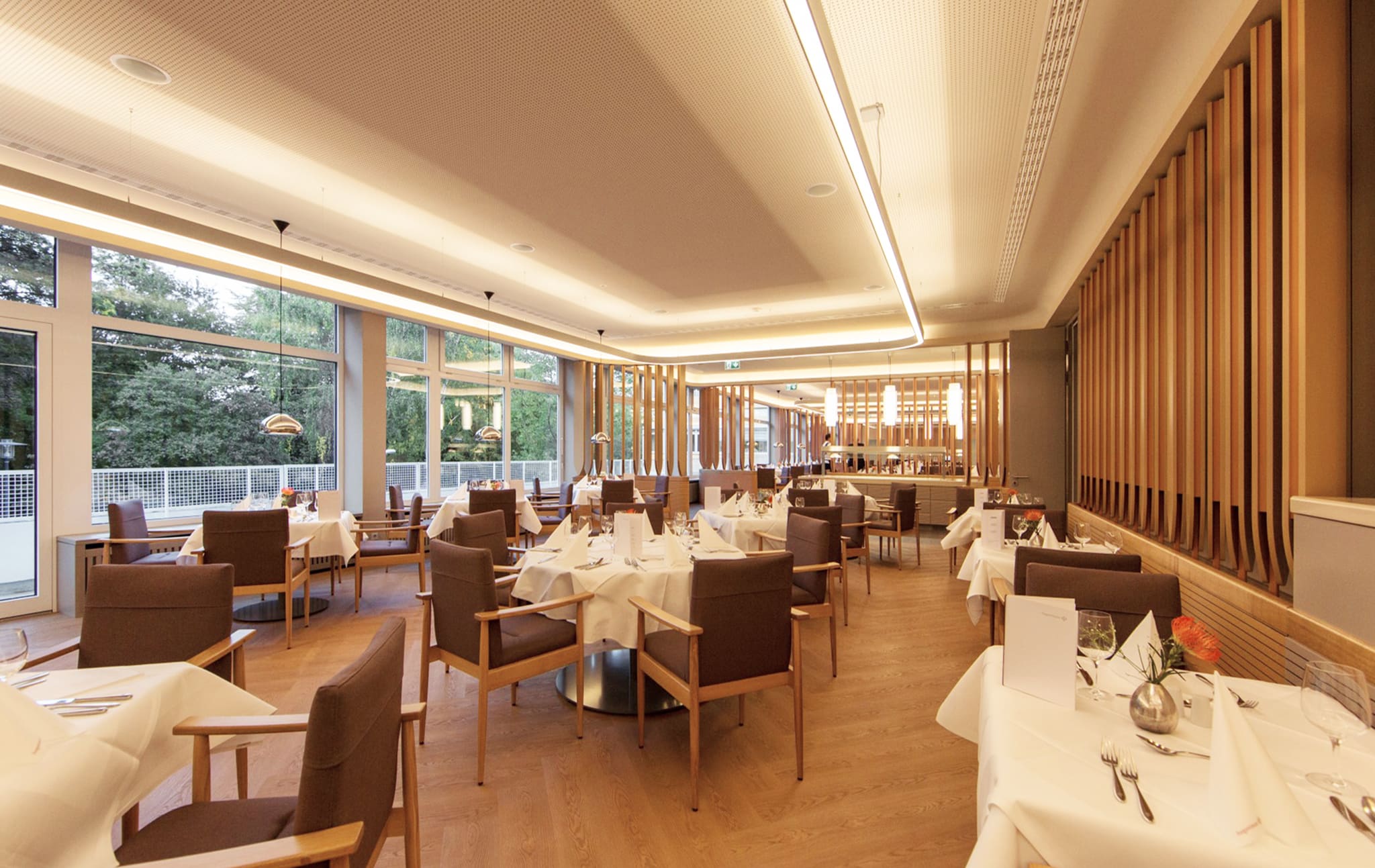
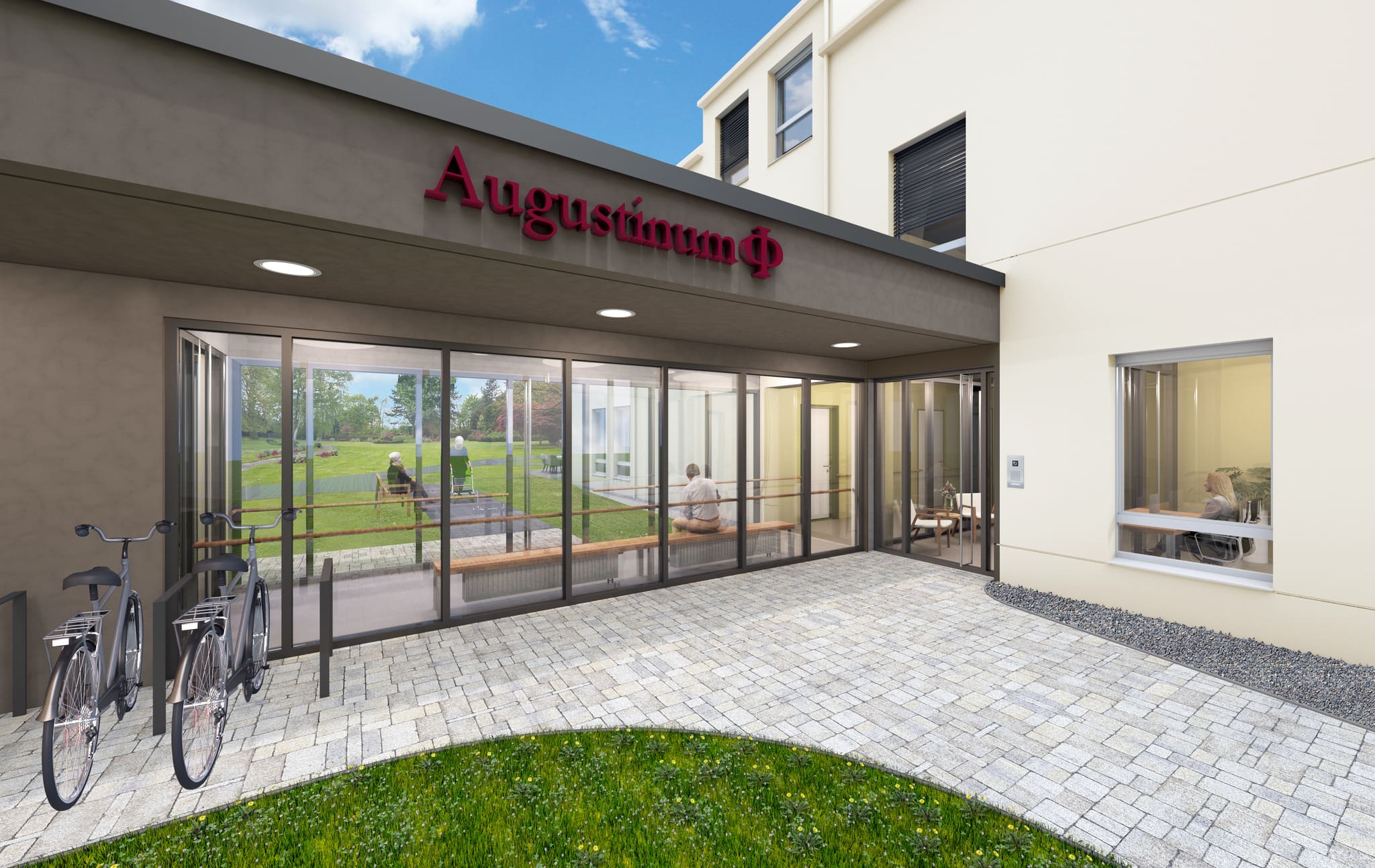
Access to the park, where the residents can stroll and enjoy nature with views of the Rhine, is open. It can be reached directly from all communal areas and dining rooms. And in bad weather? Then the glazed shared areas offer generous views into the park.
State-of-the-art new building for 80 residents
The Itzel-Sanatorium lies in the Bonn suburb of Oberkassel and is operated by the non-profit Augustinum Foundation. The new building designed by OOW creates state-of-the-art spaces for 80 residents. The ensemble complements the listed villa.
The rooms are arranged across three storeys in the three new houses. The buildings are angled – this avoids long corridors, which are often perceived as unpleasant. On the two upper storeys, on leaving the lift one enters a small communal area that can also be used by relatives during visits. This area is open towards the lift. The design concept and the view – which differs according to the orientation of the building – eases the residents’ orientatio
-
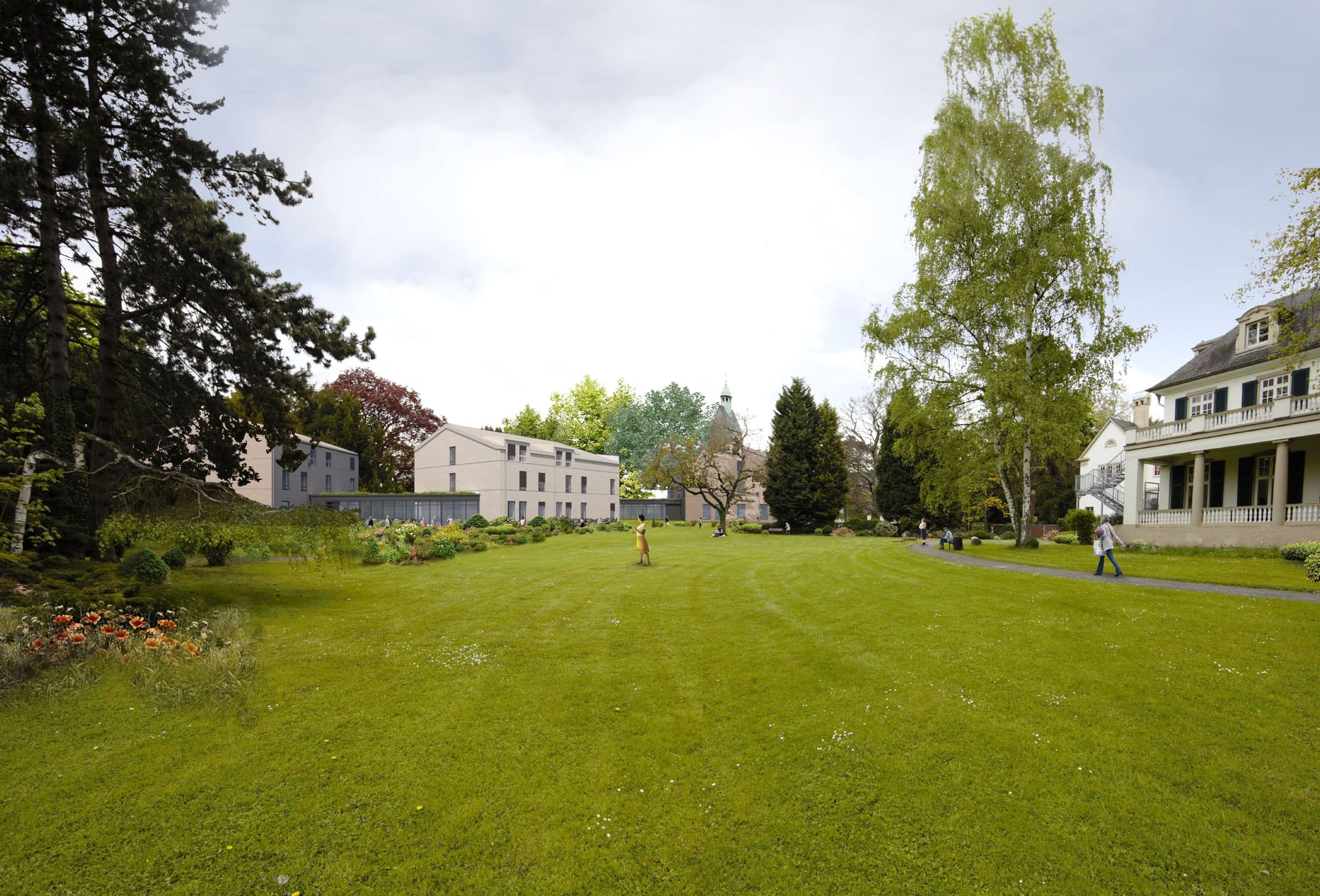
Three angled new buildings settle at the edge of the listed park – the mature trees remain the defining presence.
-
The entrance opens in glass onto the lawn: the park can be reached directly from every communal area.
-
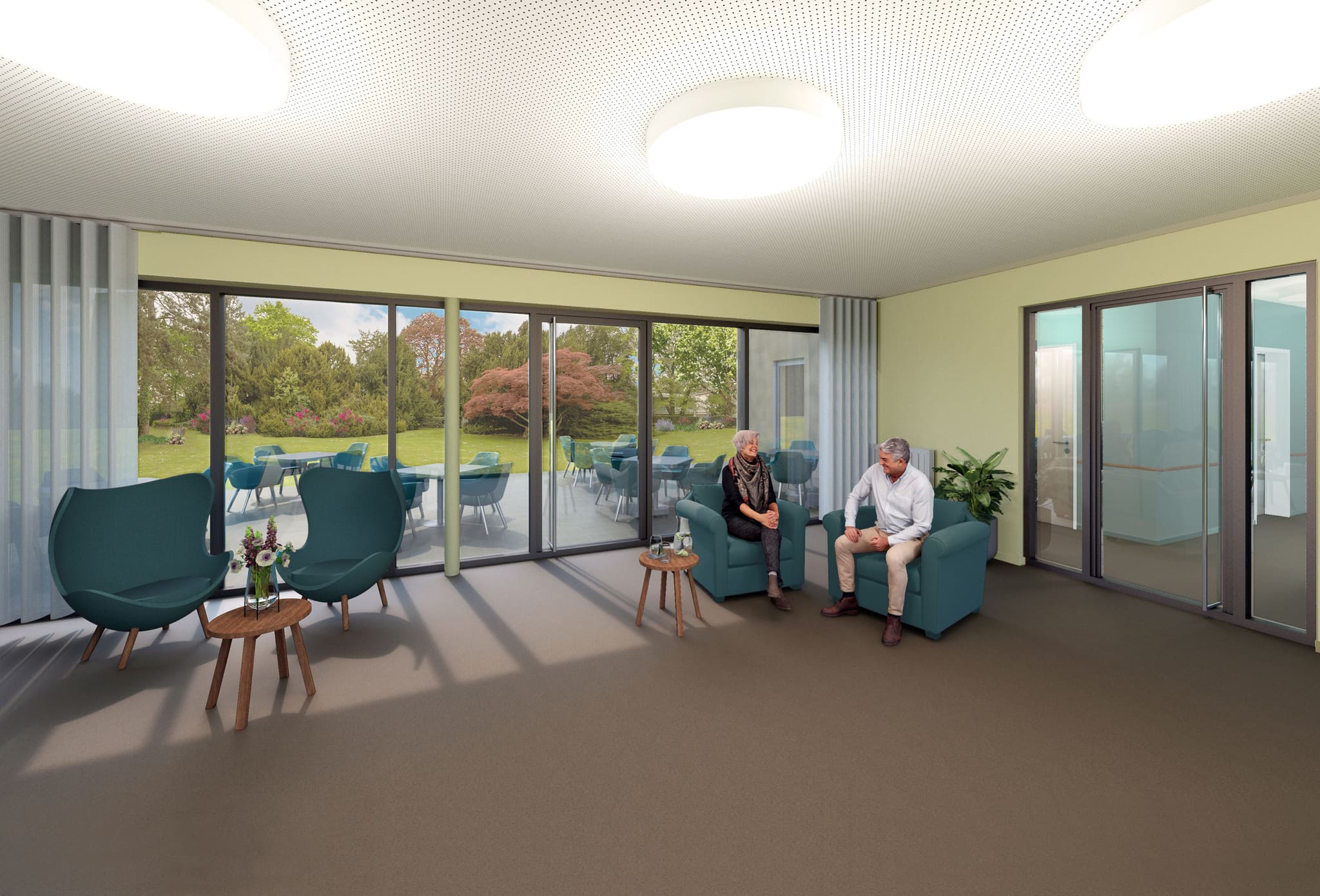
The communal area is glazed: even in bad weather the view into the park stays generous.
-
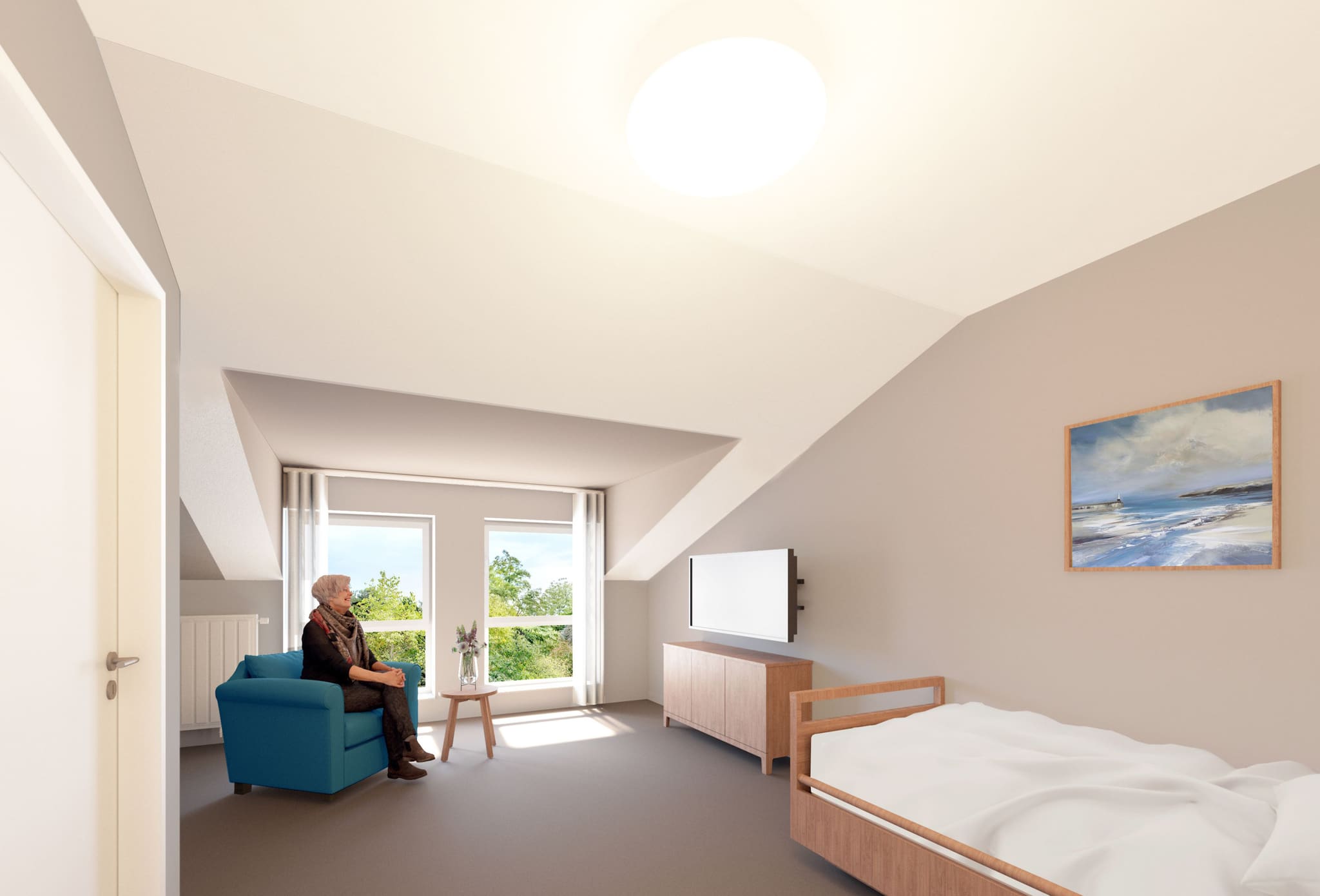
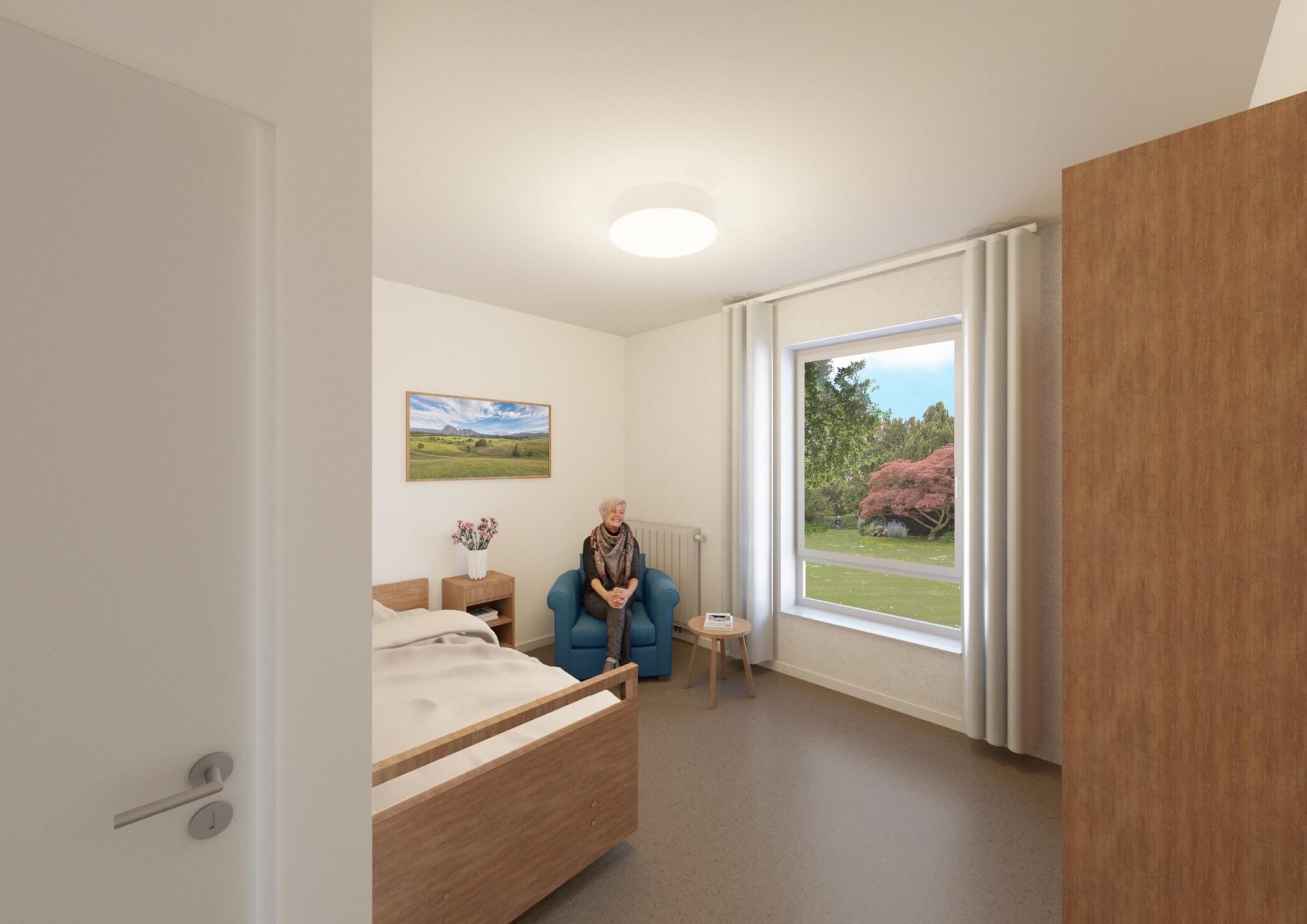
A resident's room under the roof slope: the view, differing with each building orientation, eases orientation for residents.
-
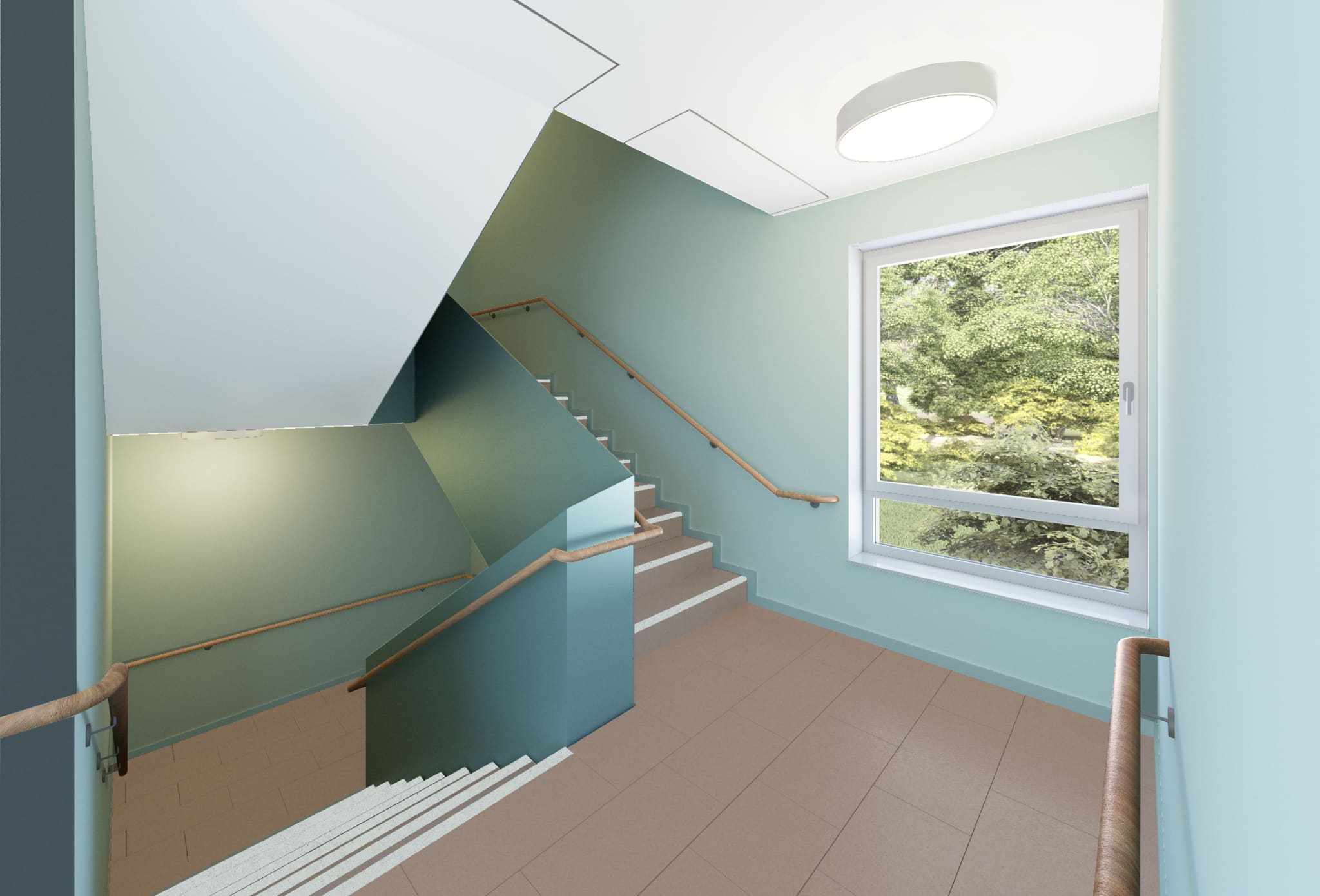
The stairwell in graded shades of green: colour and timber handrail belong to the design concept that eases orientation.
-
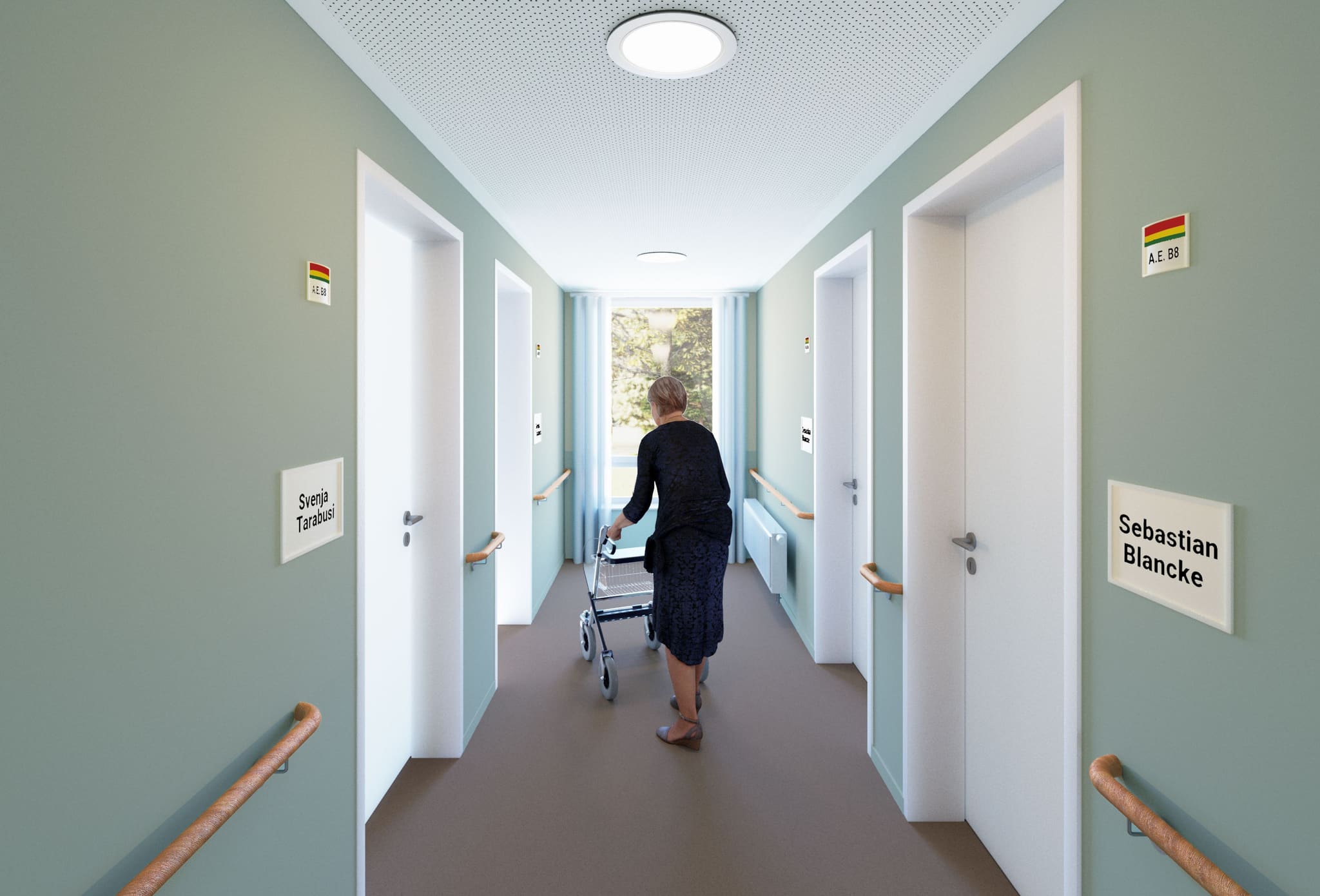
The corridors stay short: because the buildings are angled, the long passages often felt to be unpleasant are avoided.
-
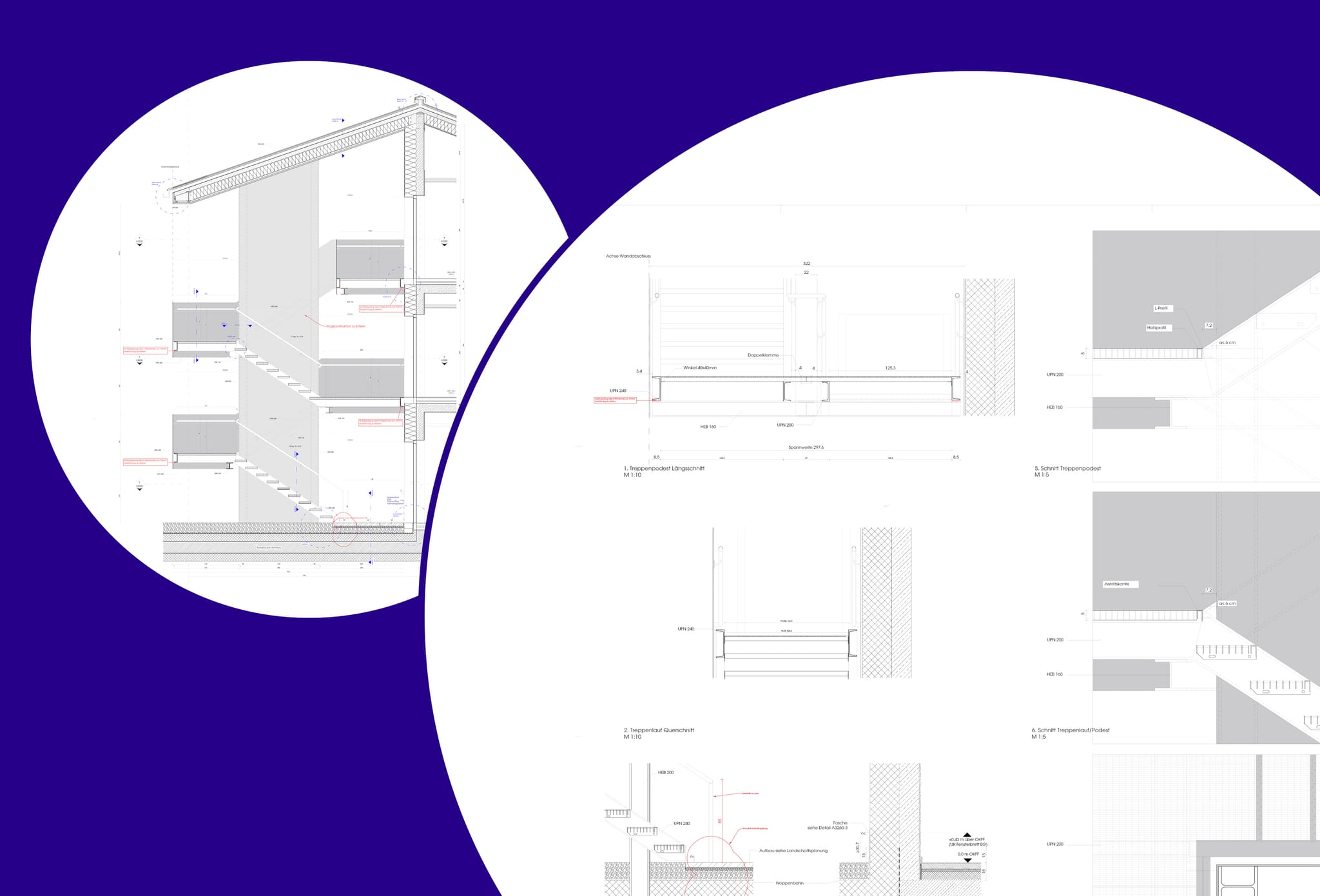
Detailed design of the stairwell: section and landing details with steel sections – scheme design through detailed design by OOW.
-
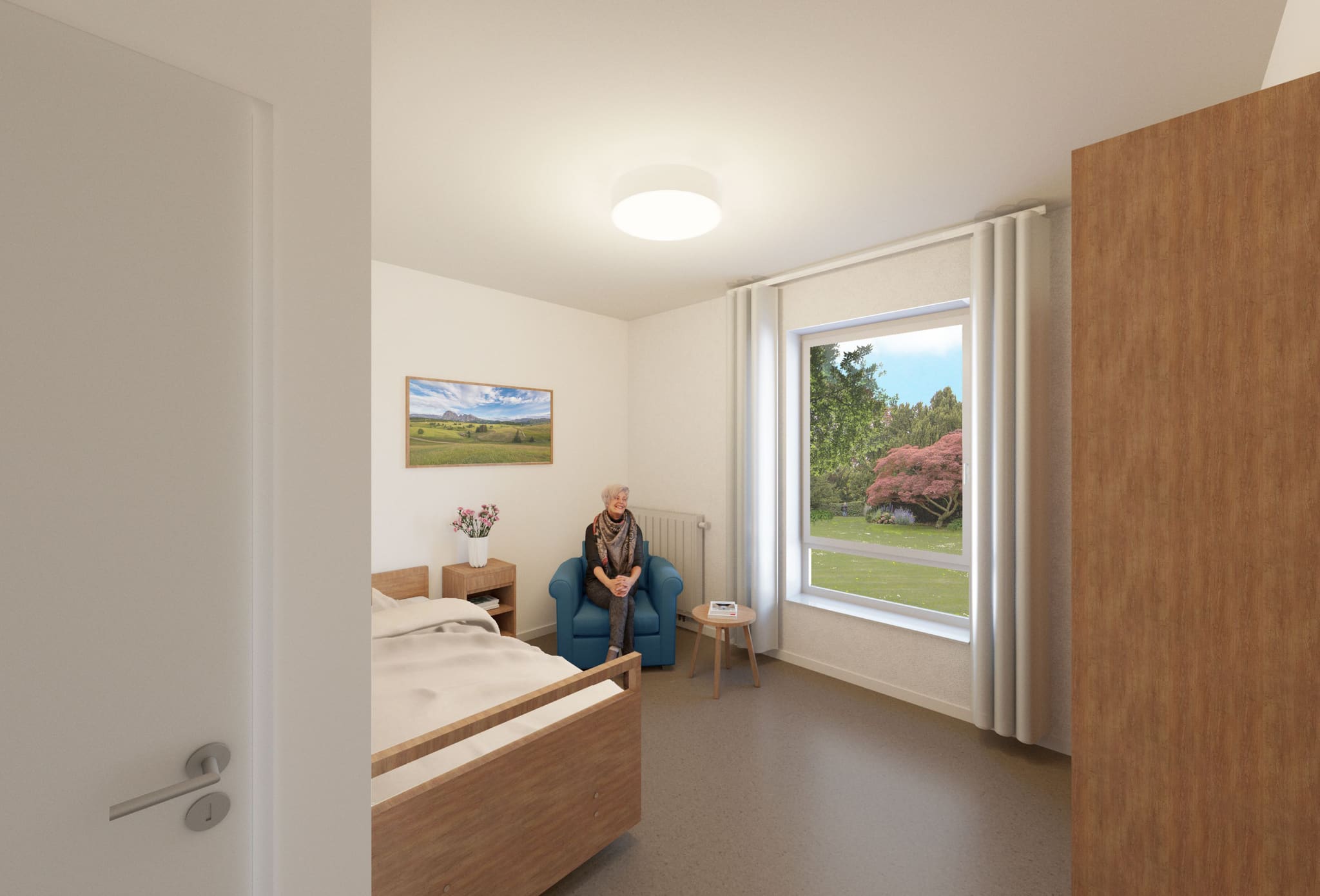
A view into a resident's room: 80 of these rooms are spread across three houses and three storeys each.
-
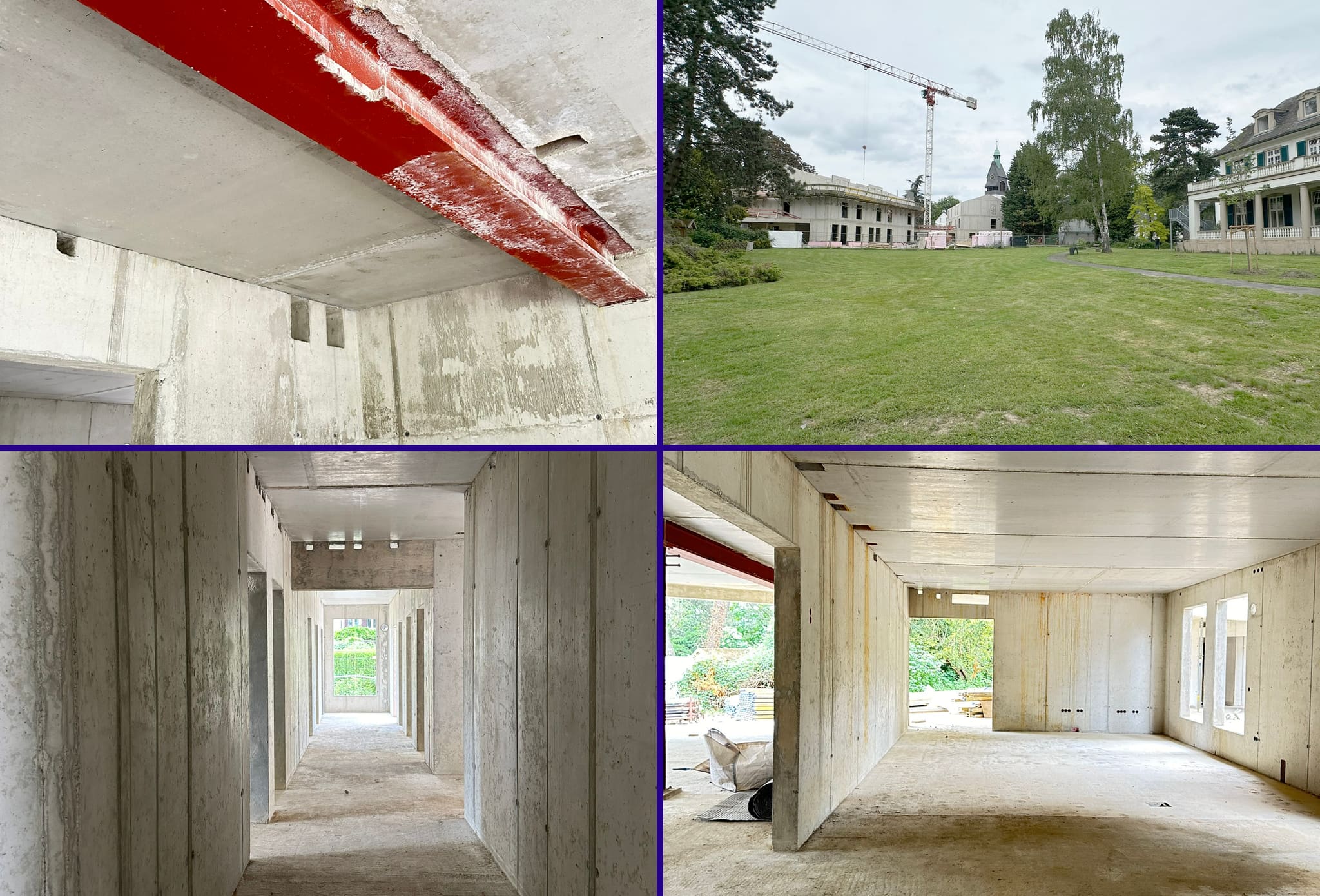
The shell in the park: concrete walls and floor bearings stand, the crane works right beside the listed villa.
Häufige Fragen
How does the architecture make it easier for residents living with dementia to find their bearings?
How does the new building fit into the listed park?
What role does the park play for the residents?
Facts and figures
HELLOOW!
+49 (0)30 7675 811 - 00