The quiet transformation of the Augustinum Kassel
From dining hall to destination
In Kassel, a restaurant within a senior living residence sheds its institutional legacy and takes on the relaxed attitude of a city-centre eatery—achieved through smart zoning, precise lighting and almost no construction-site drama.
“In the senior living residence, lunch in the restaurant is at once the stroll along the seaside promenade and the trip to the opera.”
“Lunch in the restaurant of a senior living residence is a stroll along the seaside promenade and an evening at the opera, both at once.” Few lines capture the social significance of mealtimes so succinctly. At the Augustinum Kassel this becomes the brief: away from the archetype of the grand dining hall and towards a place where residents like to linger—and where family and friends deliberately join them, in the evening especially.
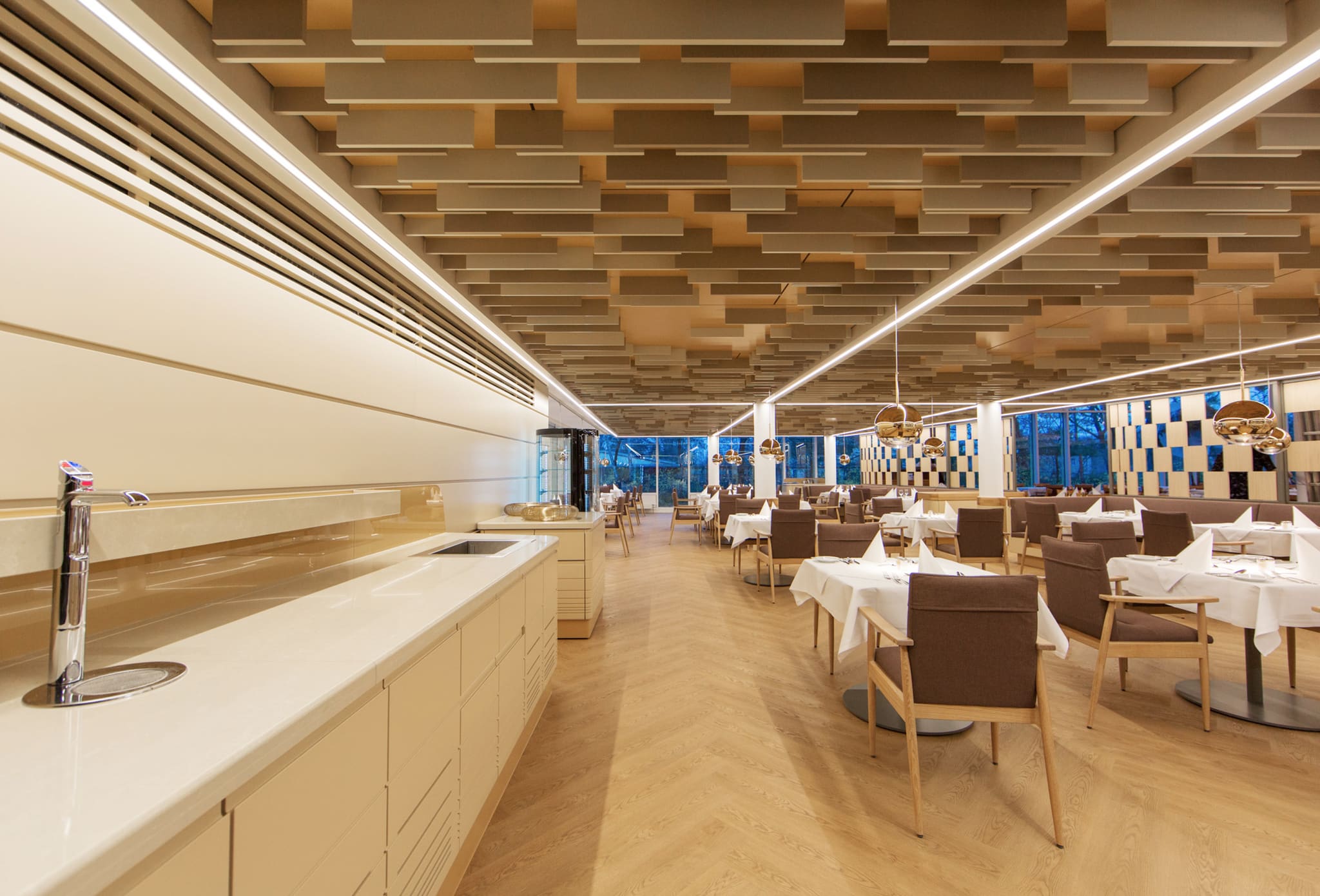
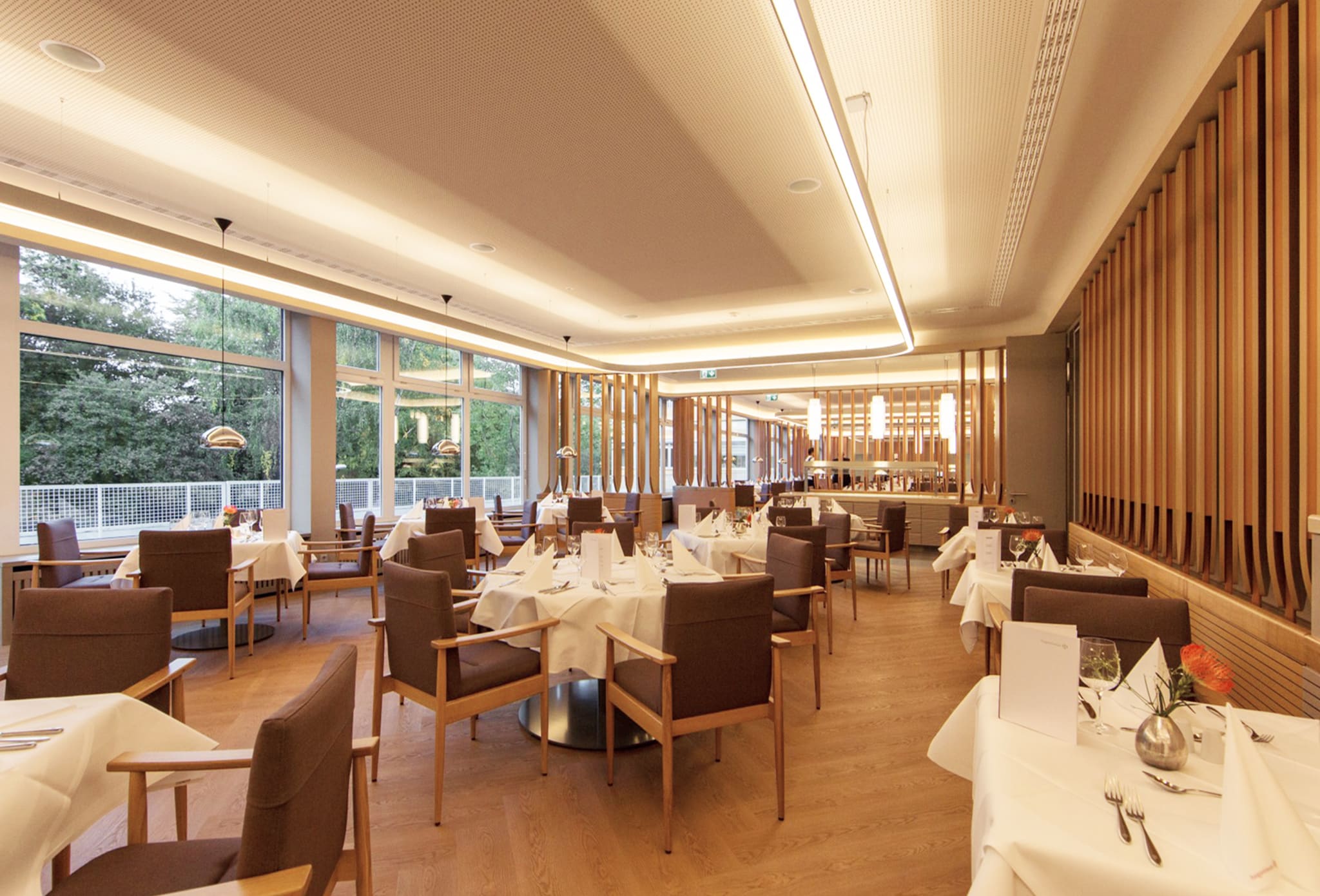
The Berlin practice OOW approaches the task with the restraint of seasoned hospitality architects. Instead of a sweeping overhaul, there is a recomposition. The formerly monolithic room is now divided into three semi-open zones, framed by louvred partition walls set on parapet-height, acoustically effective elements. The sightlines stay long; the noise and the traffic do not. Two central buffet islands sit between the areas, turning service into a calm flow rather than a queue. When fetching their food, guests pass only a handful of other tables—enough to be part of the whole without feeling on display. The floor plan also allows a flexible “time-of-day staggering”: a café mood in the morning, classic service at midday and—crucially—a more intimate corner for snacks and a beer in the evening. In the morning and in the evening the three rooms can also be operated individually with à la carte service.
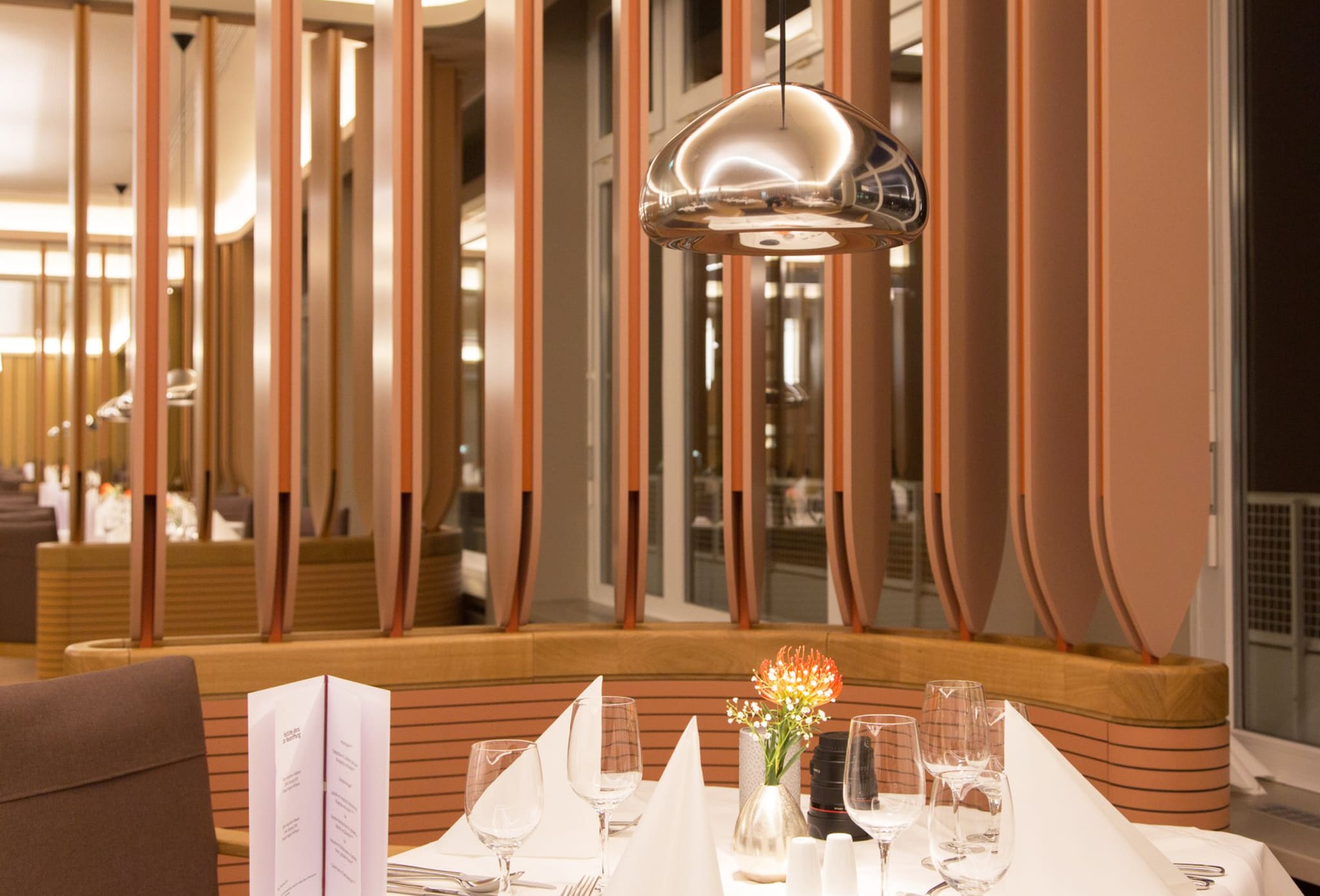
The atmosphere does the heavy lifting. Light coves deliver glare-free, dimmable ambient lighting; pendant lamps drop to table height and frame each table as a private place. A colour scheme tested in 3D spans the range from beige to sienna, while timber surfaces and softly rounded oak handrails bring tactility back into a space that had previously been shaped by function alone. Even the chairs are conceived as part of supporting independence: they glide with the seated person, offer armrests, hooks for bags and jackets and robust, easy-care upholstery—practical without looking like “care”.
As gentle as the design is, the figures are just as clear: since the changeover, evening occupancy has risen noticeably. Several distributed service stations cut walking distances and waiting times. Table sizes and spacing follow proven Augustinum standards and safeguard accessibility; larger gatherings have been moved to other rooms so that the restaurant’s everyday rhythm stays intact. Operation is deliberately kept simple—three lighting scenes, callable at the switch—and avoids the pitfalls of overly complex “smart” retrofits with their permanent need for training.
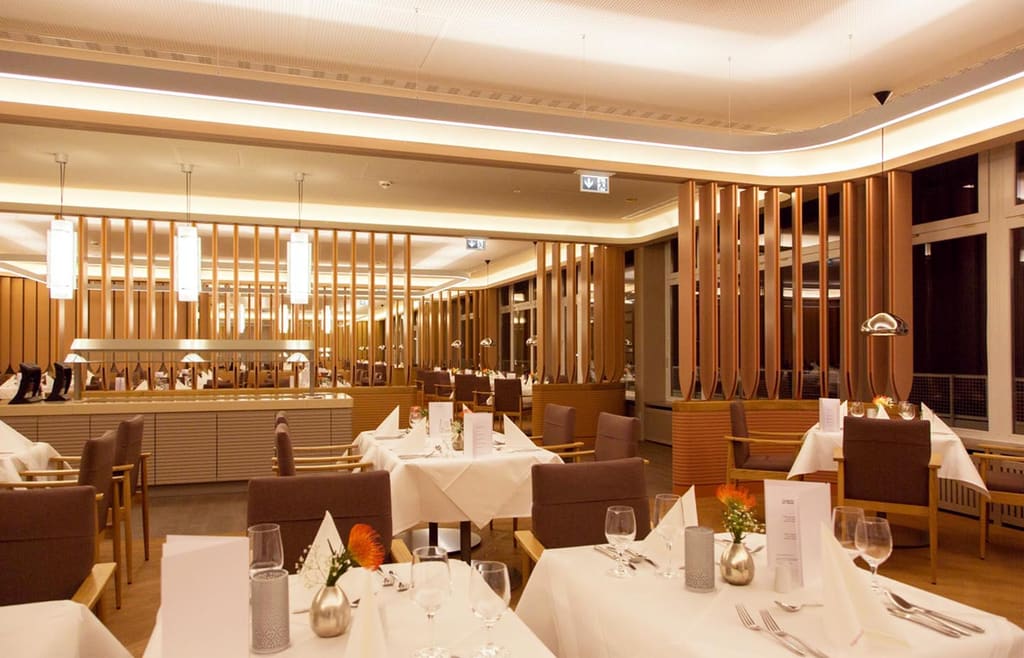
The dining room after the conversion: slatted walls form semi-open zones, and cove lighting traces the outline of the room.
The execution was as considered as the concept. The refurbishment took place during ongoing operation; an interim restaurant kept routines stable. On site, the focus lay on joinery—louvres and shaped handrails—and on coves integrated into the drywall, whose light reads as architecture rather than as equipment. The users’ verdict is brief: the zoning works; from today’s perspective there is barely any notable need for improvement.
The quietly radical thing here lies not in the grand gesture but in a sequence of small, targeted steps that reframe the social life of the room. For operators who know the familiar downward drift of the evening trade, the Kassel model is replicable and pragmatic: stabilise the floor plan with three semi-open zones; use the central buffets as spatial buffers; keep the controls legible; and express quality where residents actually touch it. The result is not a spectacle. In the senior living landscape it is something rarer: a restaurant that feels self-evident—a place one chooses, not one where one happens to eat.
-
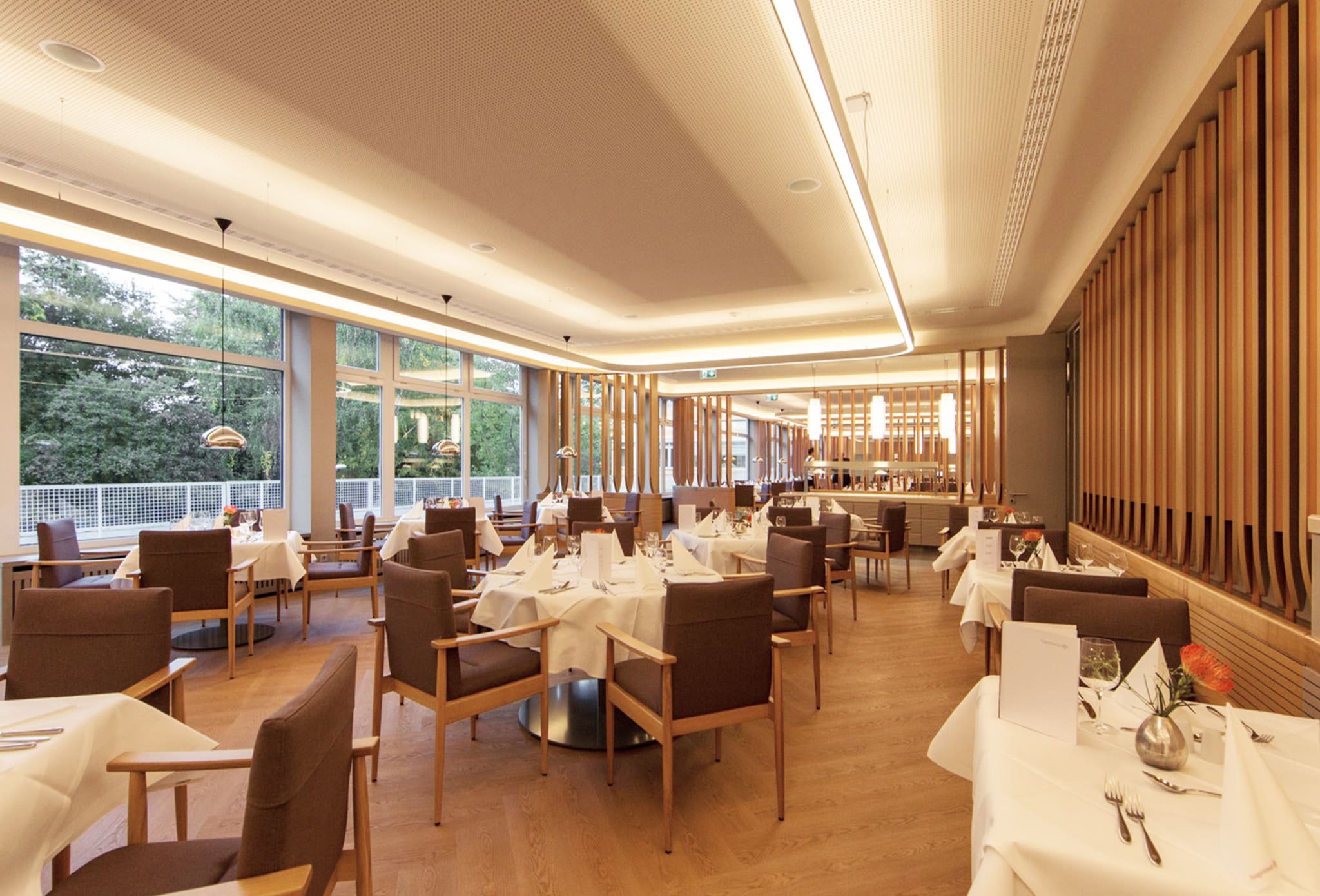
Midday in the window zone: sightlines stay long because the louvred partition walls sit on parapet-height elements.
-
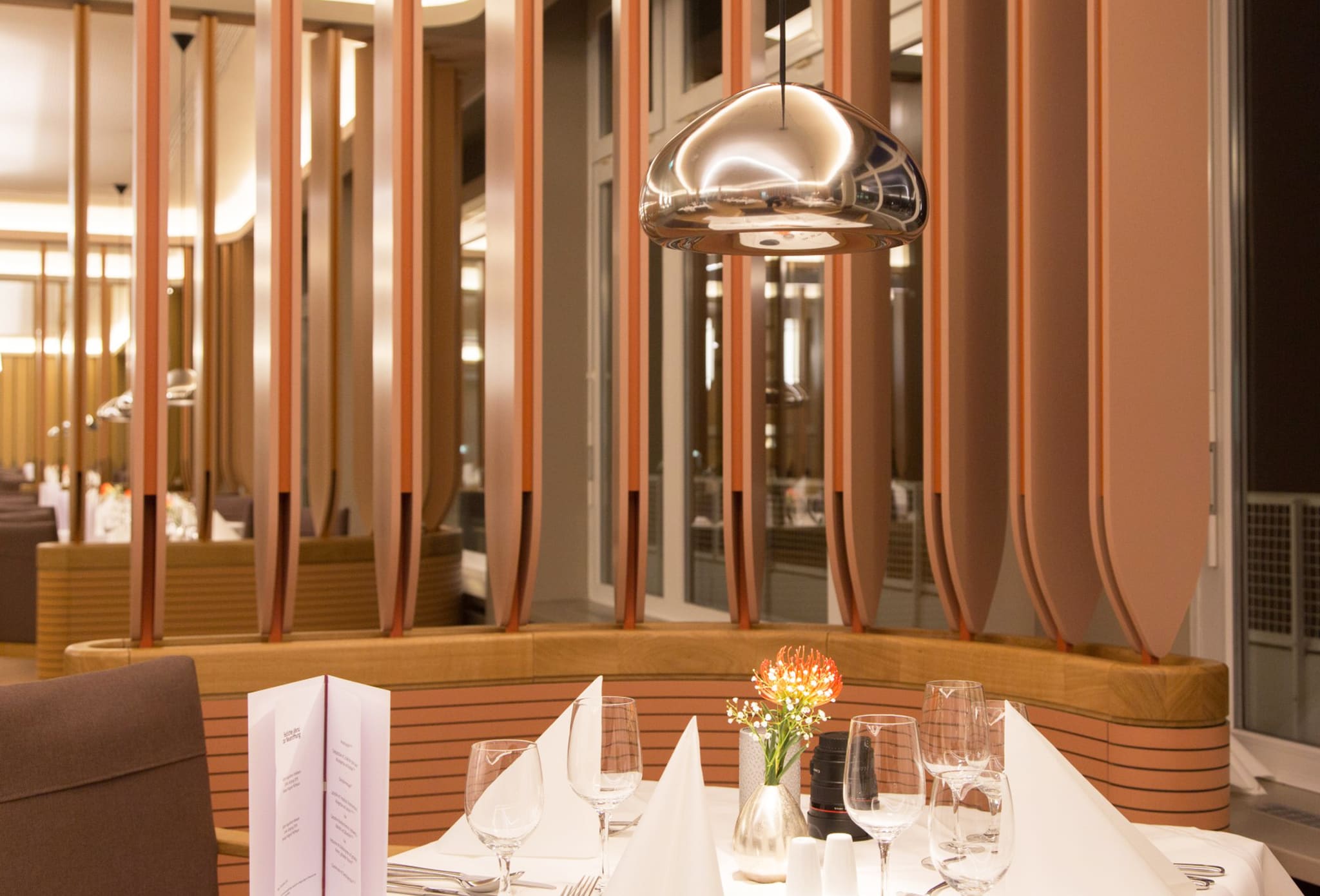
The pendant lamp drops to table height, framing each table as a private place before an acoustically effective parapet.
-
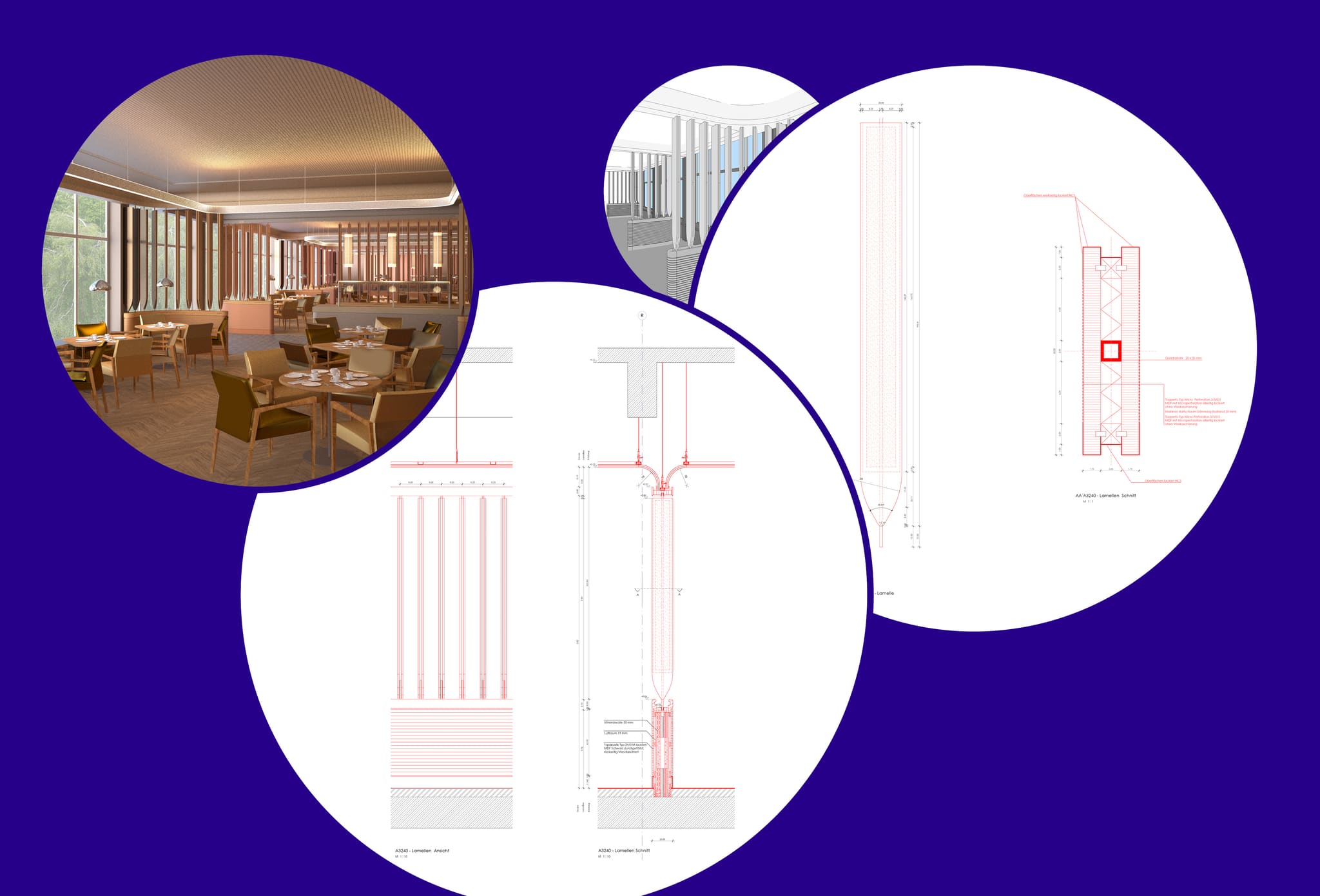
Detailed design of the louvre wall: elevation, section and detail beside the 3D test of the beige-to-sienna colour scheme.
-
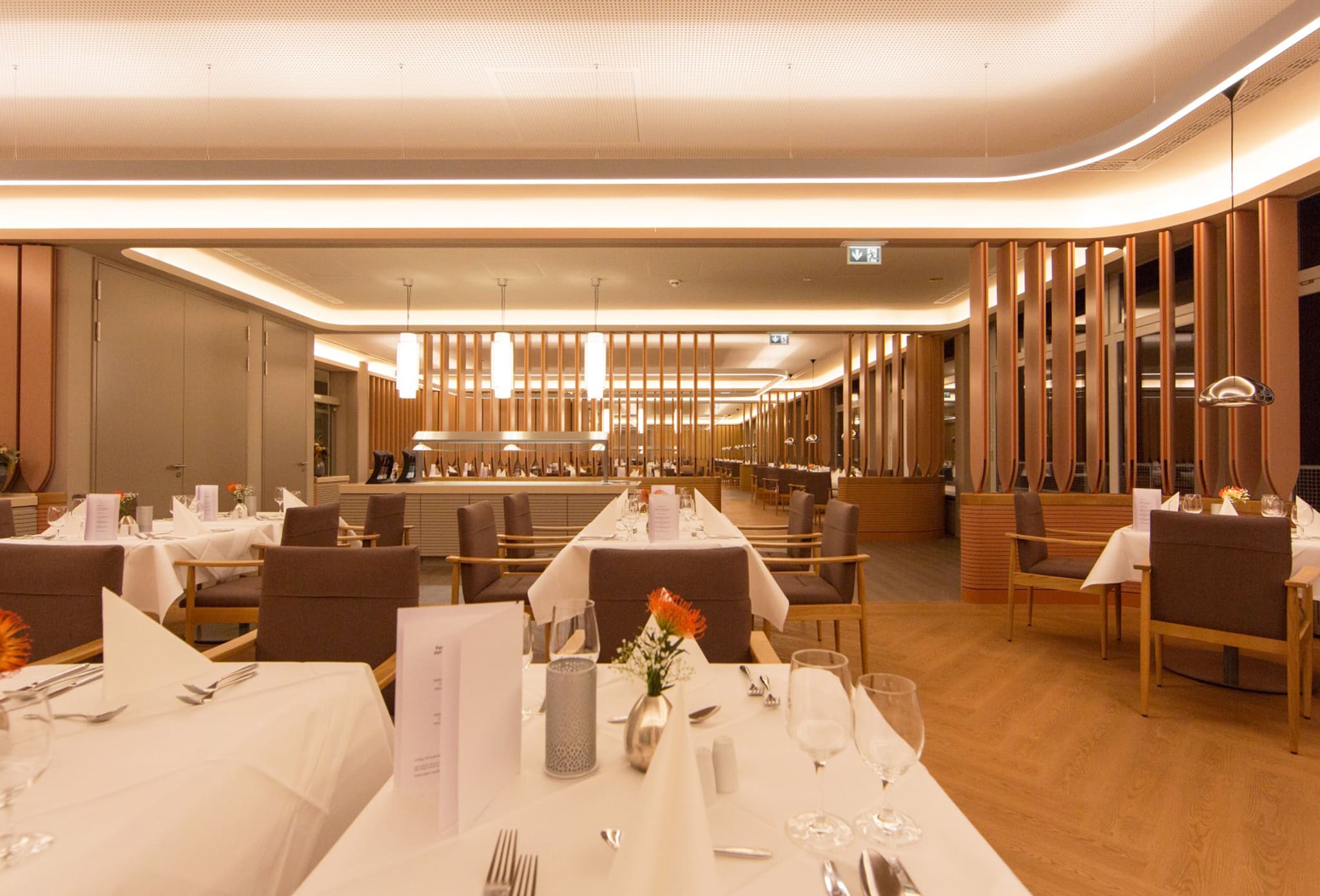
Evening in the middle area: the central buffet island sits between the zones, turning service into a calm flow.
-
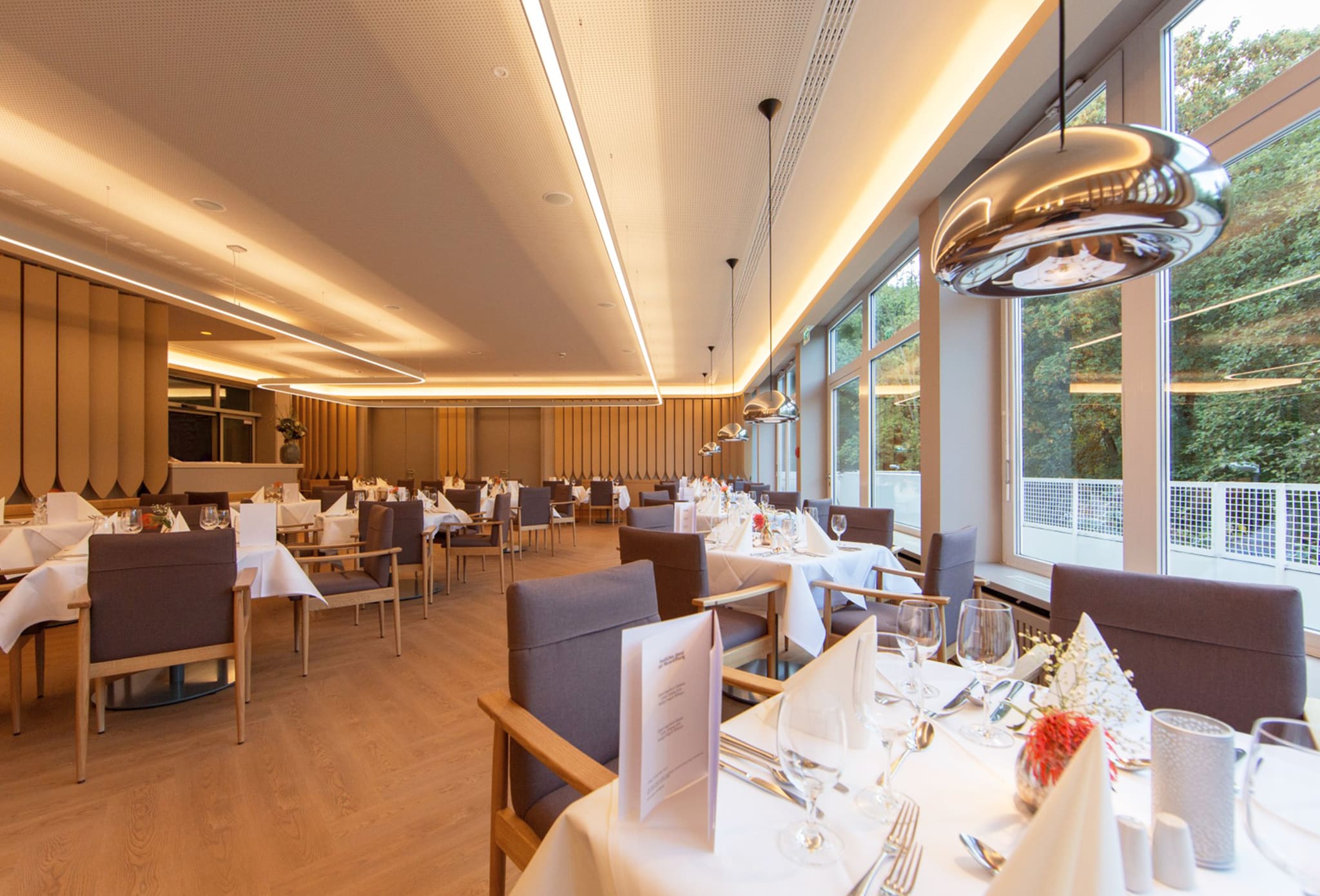
One of the three semi-open zones along the window band – a café mood in the morning, snacks in the evening.
-
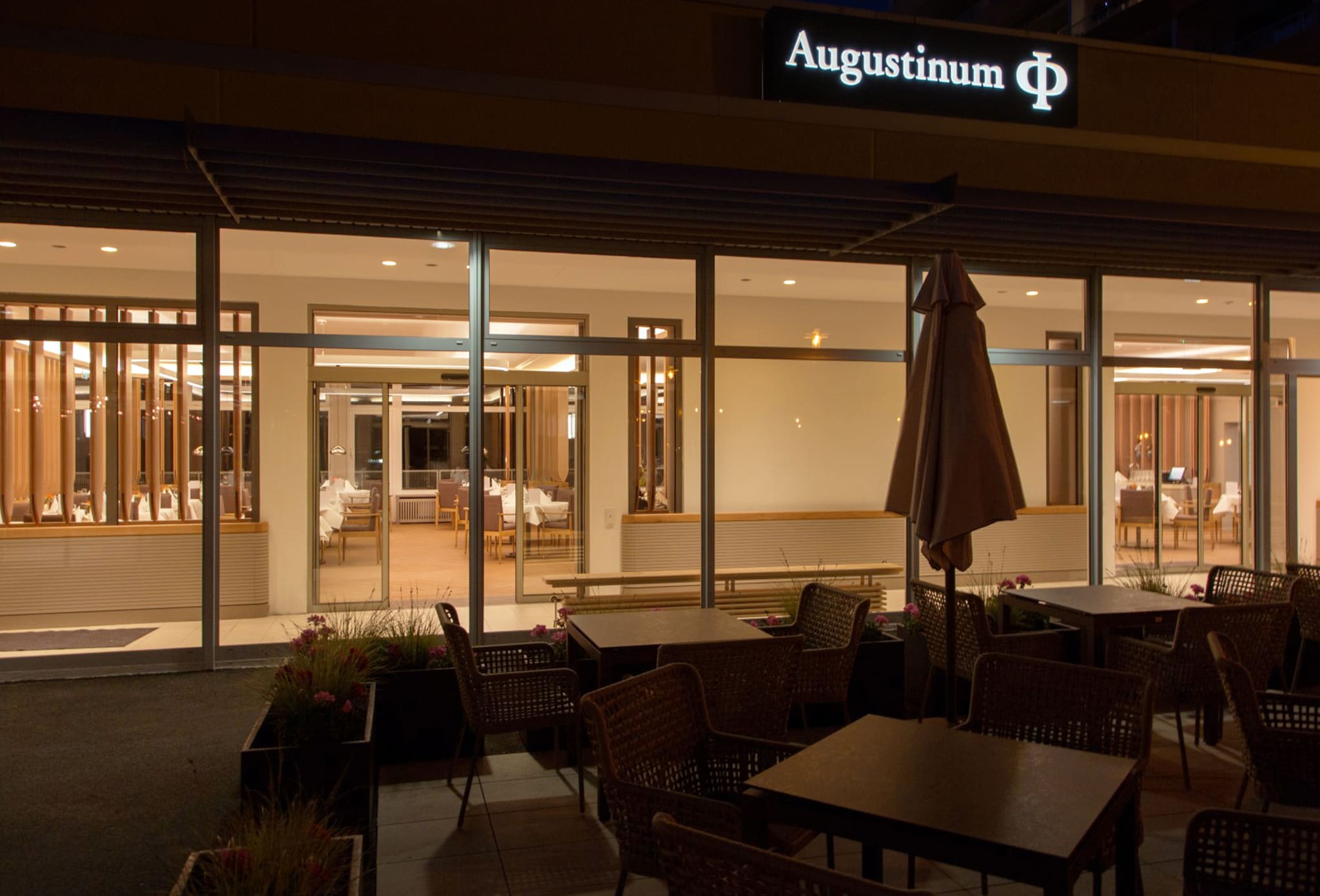
The terrace in the evening, the lit restaurant behind: since the changeover, evening occupancy has risen noticeably.
Frequently asked questions
How was the large dining hall reorganised?
What role does the lighting play in the new restaurant?
Did the restaurant stay in operation during the refurbishment?
What has the redesign achieved?
HELLOOW!
+49 (0)30 7675 811 - 00