All grey, all uncompromising — minimalism, perfected
7047// Concrete
With this 'townhouse' fit-out, OOW achieves a transformation into spaces of rare clarity: entirely in grey, with an abundance of exposed concrete, for a life pared back to the minimum. The design speaks a rigorous, powerful and clear language — a fit-out at gallery standard, in which millimetre-precise joints, concealed light and almost invisible fittings show that luxury is often to be found in the detailing.
Watch our video of the concrete bathtub being made!
“Minimalism as a design decision means maximum effort in the detail.”
The brief was uncompromising from the outset: “We love the concrete and want a house that limits itself to the barest essentials.” Beyond that, as far as possible everything owned was to have its own permanent storage, for a meditative existence free of distraction. OOW translated these almost ascetic requirements into visual calm, control and the precision of fine craftsmanship, without ever appearing cold.
Minimalism also demands skill in the execution – so a single joiner produced the wall linings, doors, built-in elements and furniture to OOW's 1:1 detail drawings: continuous shadow gaps, handle-less openings via recessed grip grooves and fine leather pulls, along with a flush hinged door that aligns exactly with the glass wall of the stairwell and disappears into a niche.
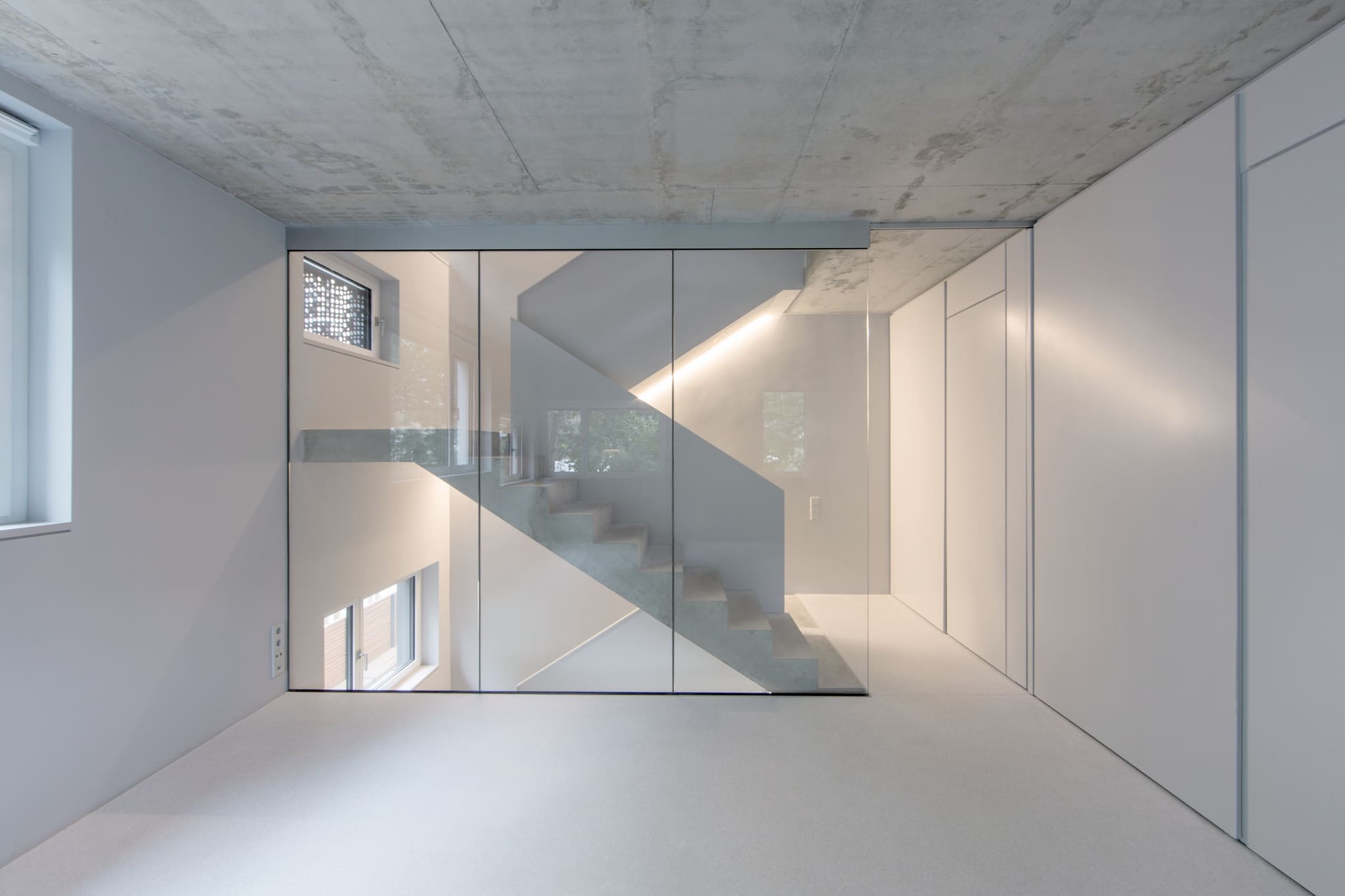
Light here is planned like a further material – the LED tapes with a high colour rendering index sit invisibly in the fine joint between wall and ceiling and concealed behind the stair string, which thereby takes on a sculptural presence — dimmable, deliberately without smart-home automation, switched by push-button. The result is calm and decisive at once: edges are drawn, surfaces read clearly, and the stairwell becomes the connecting element, linking the levels with quiet drama.
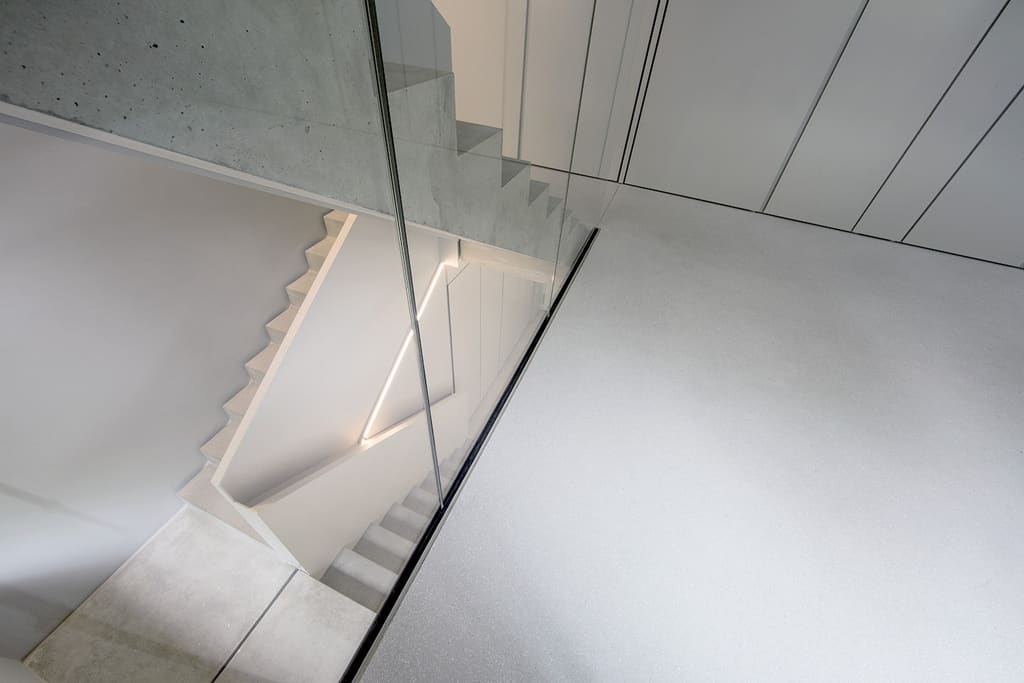
Looking down into the stairwell: white steps, a frameless glass partition and a line of light along the stair stringer.
The materials are reduced, not reductive. The raw exposed concrete — loved by the clients — defines the gallery-like tonality. A pale, polished marble terrazzo looks refined yet proves robust in everyday use. The kitchen recedes behind light-grey lacquered panels: all appliances are invisible, and even the oven is fully concealed by a removable custom cover panel.
The acoustics — the classic weak point of minimalist spaces — are addressed invisibly. Wall panels hang in front of plasterboard walls; in the cavity between, sound energy dissipates. The room sounds as composed as it looks.
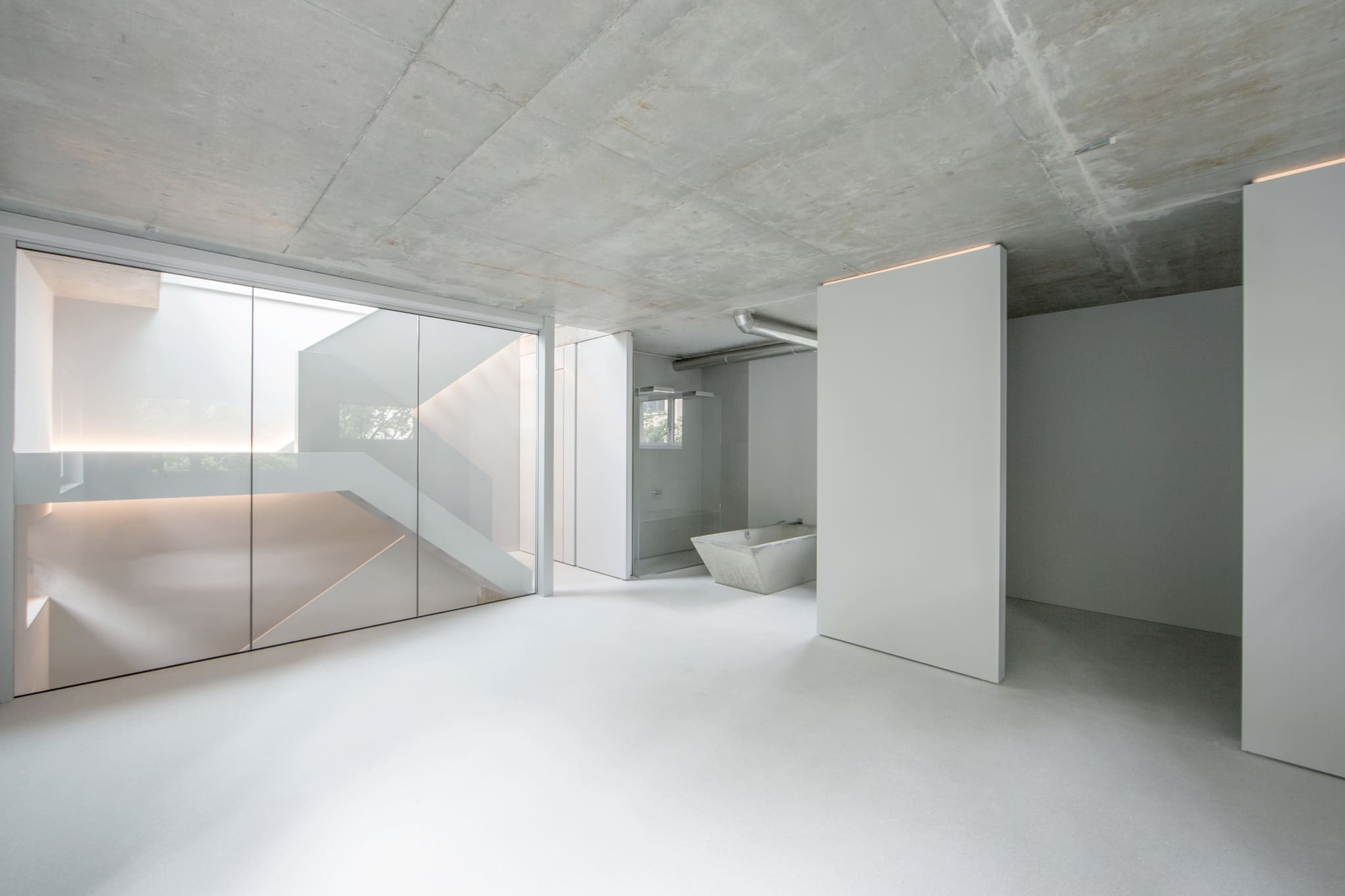
On the upper floor, the strict zoning becomes ordered openness. A full-height mirror anchors the walk-in wardrobe; a flush pivot door continues the line of the stairwell glazing and, when open, disappears elegantly into the wall niche. In the bathroom, materiality takes centre stage: a bespoke concrete bathtub, cast with a soft, flattering surface (acrylic-glass formwork) and sealed with beeswax — a making-of video by OOW documents the process. Lights staged above it are refracted in the water and cast moving reflections across walls and ceiling.
-
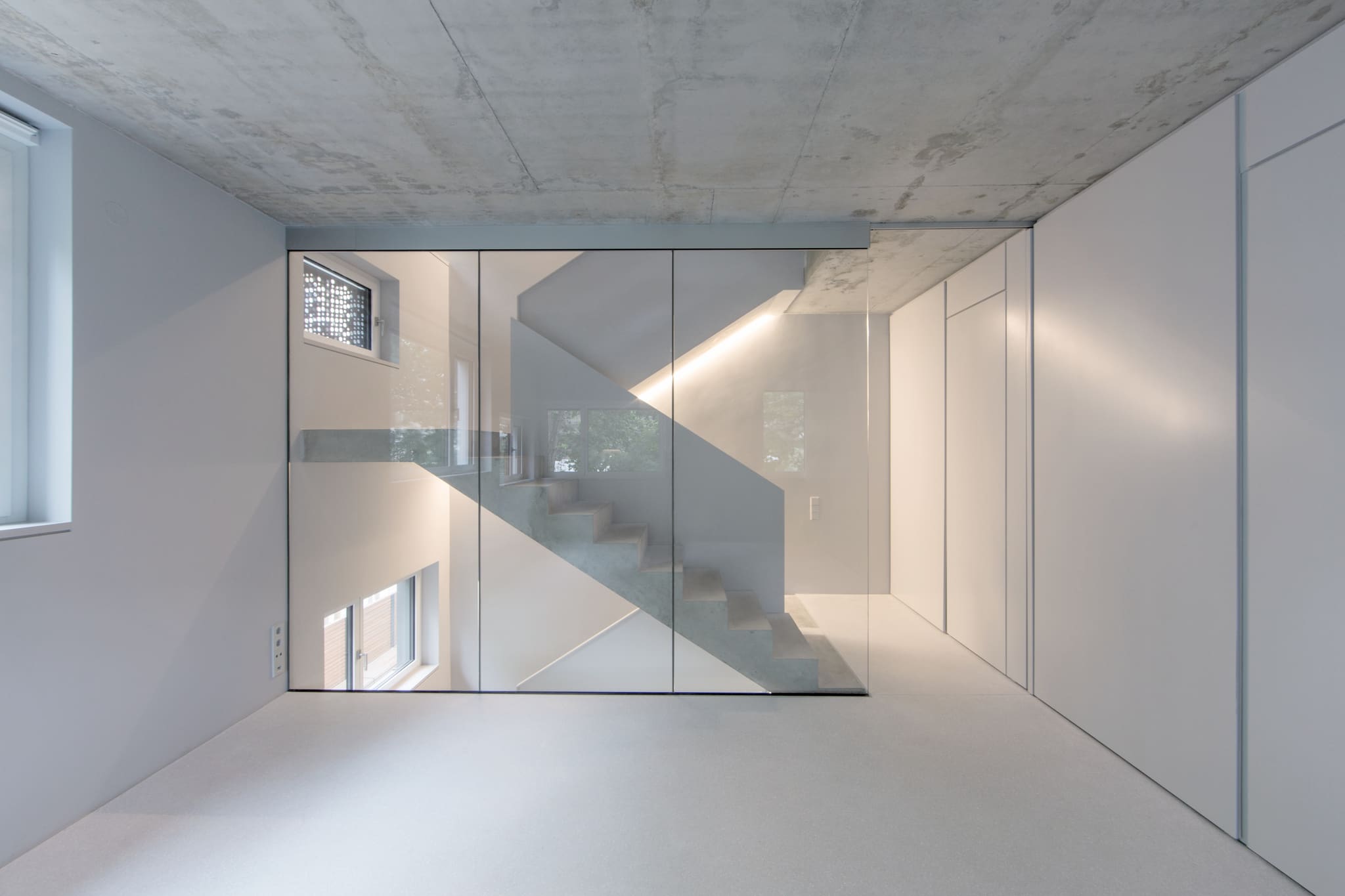
Behind the full-height glass wall lies the concrete stair – the raw exposed concrete gives the fit-out its gallery-like tonality.
-
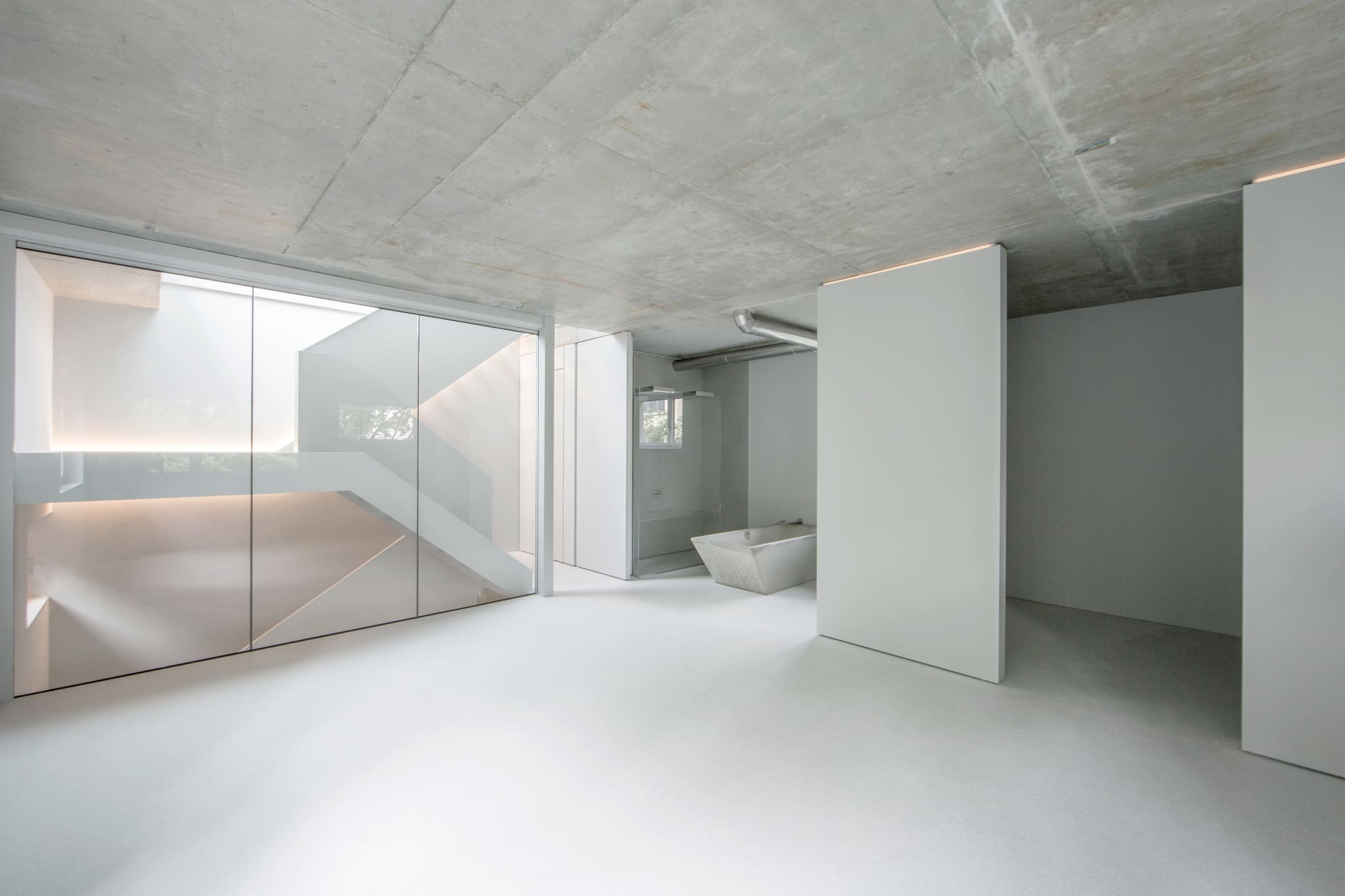
On the upper floor the strict zoning becomes ordered openness – the concrete bathtub stands behind the freestanding wall panel.
-
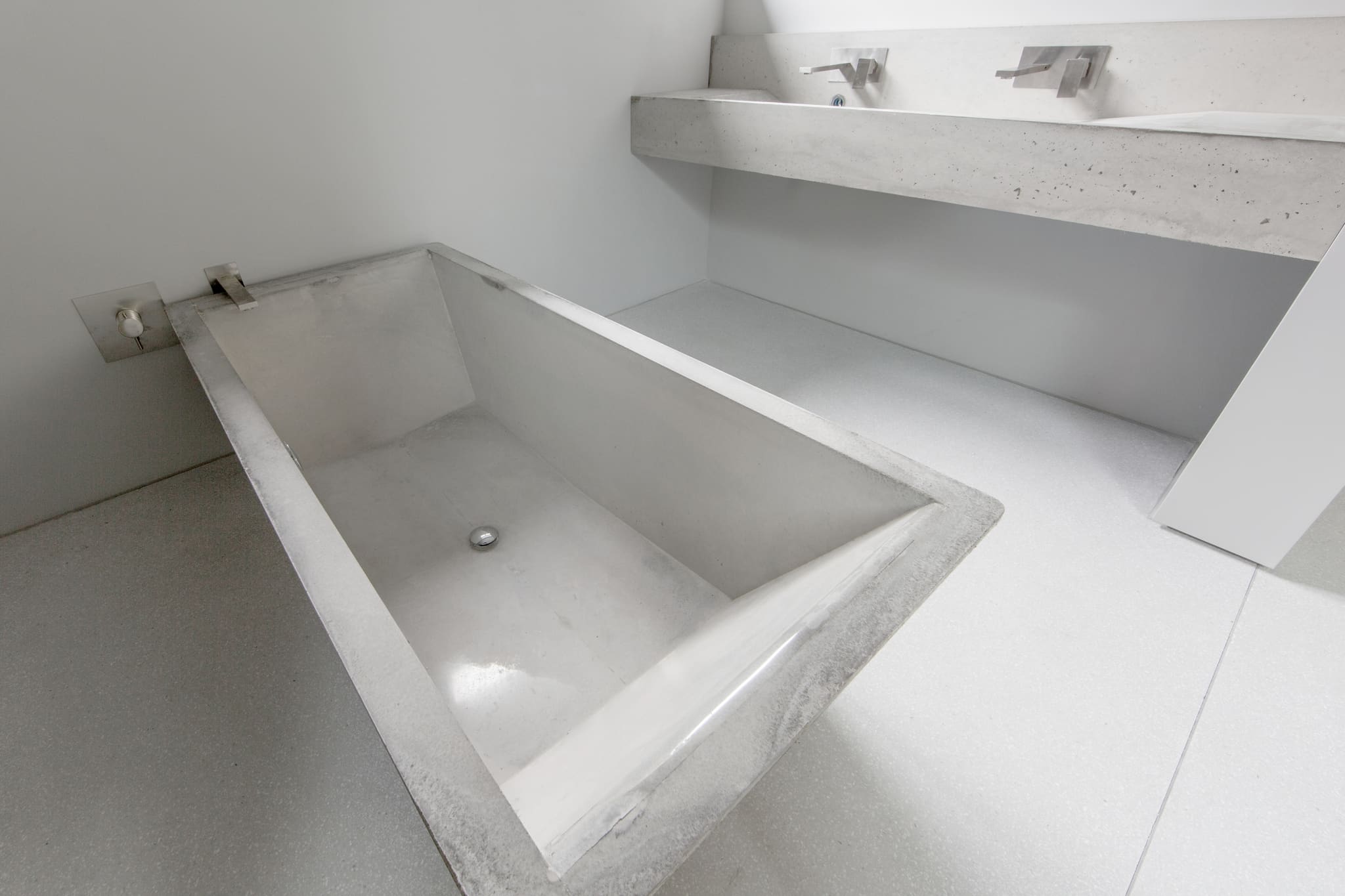
The bespoke concrete bathtub, cast in acrylic-glass formwork and sealed with beeswax – above it the concrete washbasin slab.
-
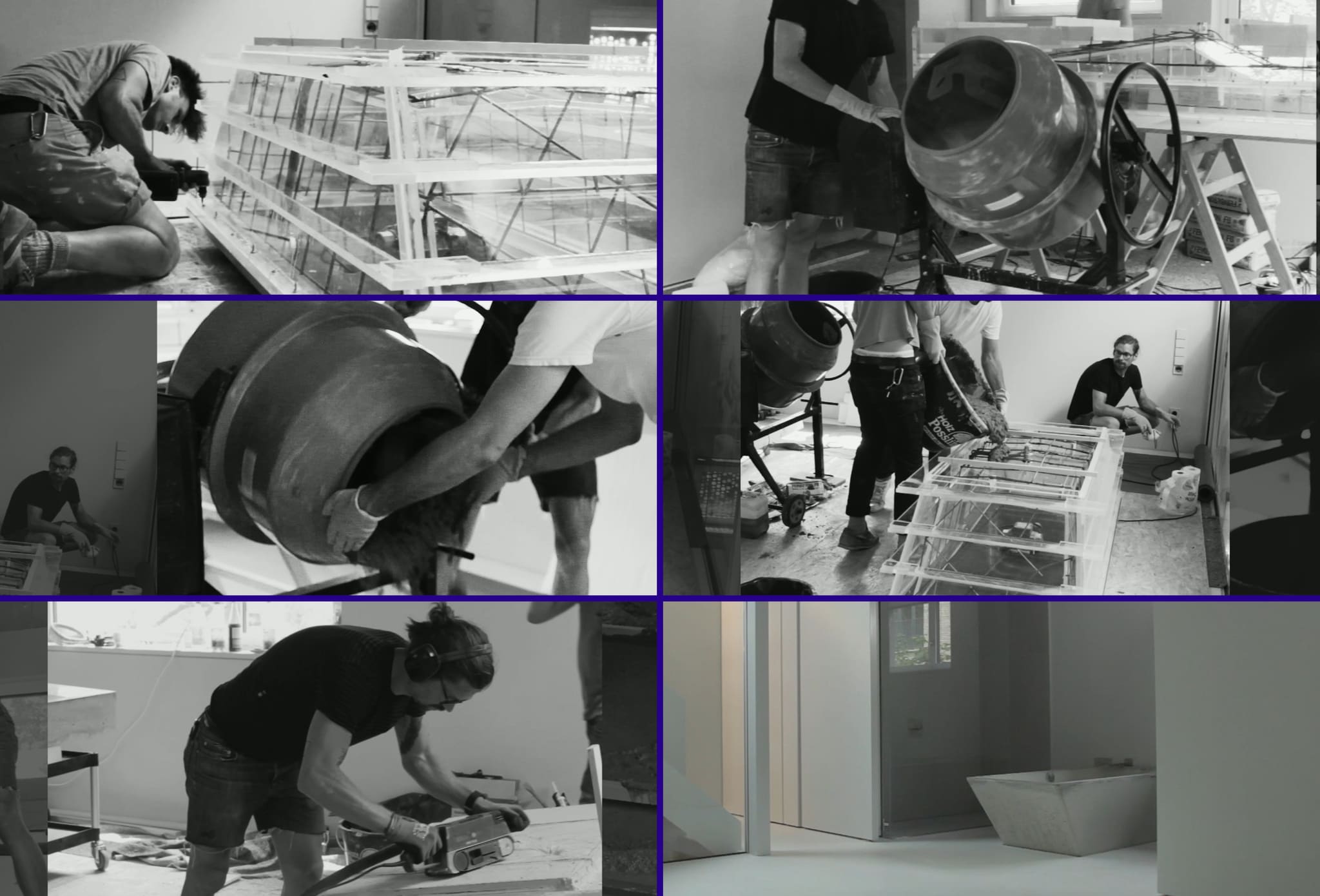
Making of the concrete bathtub: acrylic-glass formwork, mixing and placing the concrete, grinding the surface – filmed by OOW.
-
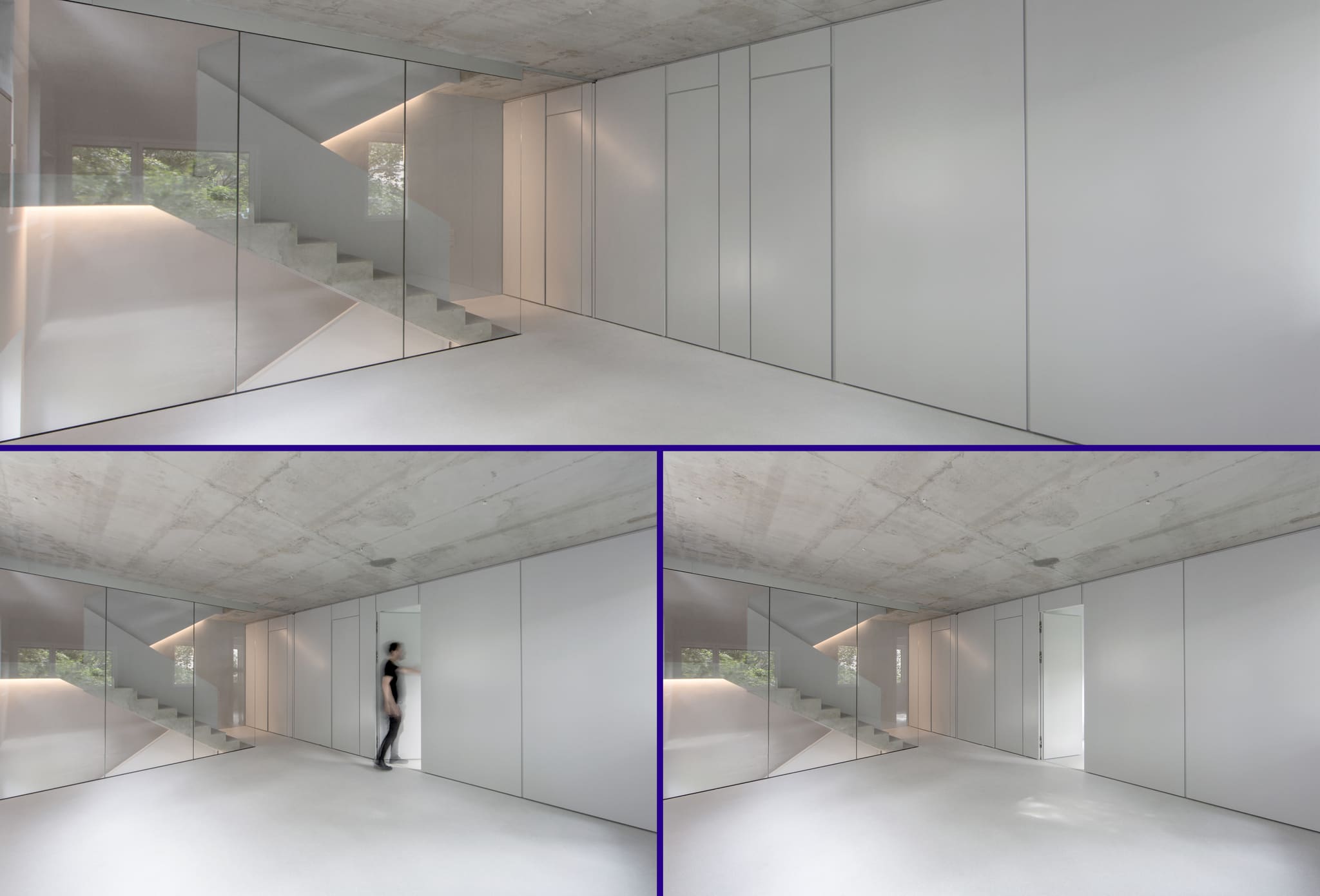
Three shots of the same wall – the door sits flush in the panelling and, when open, reveals the passage.
-
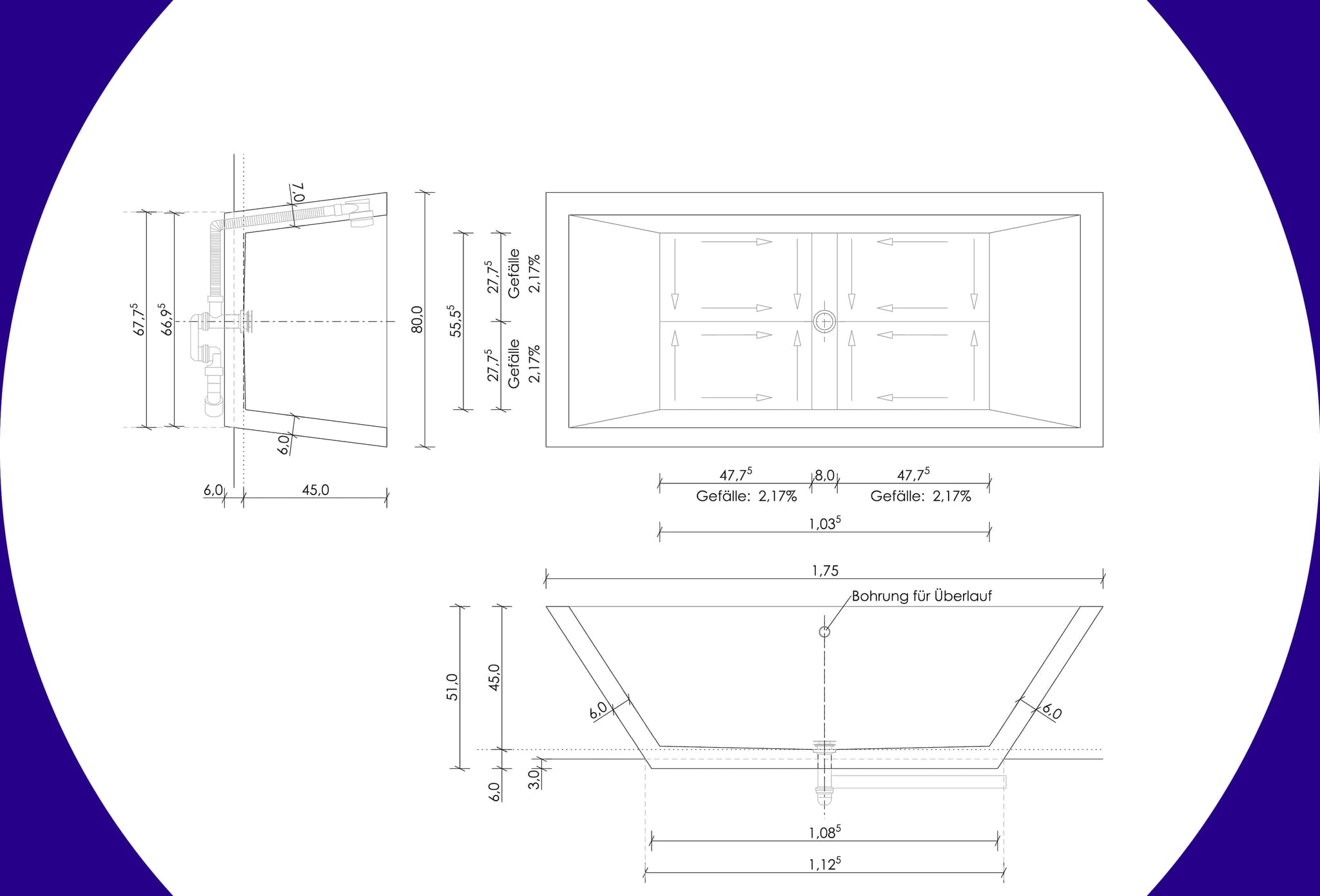
Working drawing of the concrete bathtub: plan, section and elevation with the floor falling towards the central drain.
-
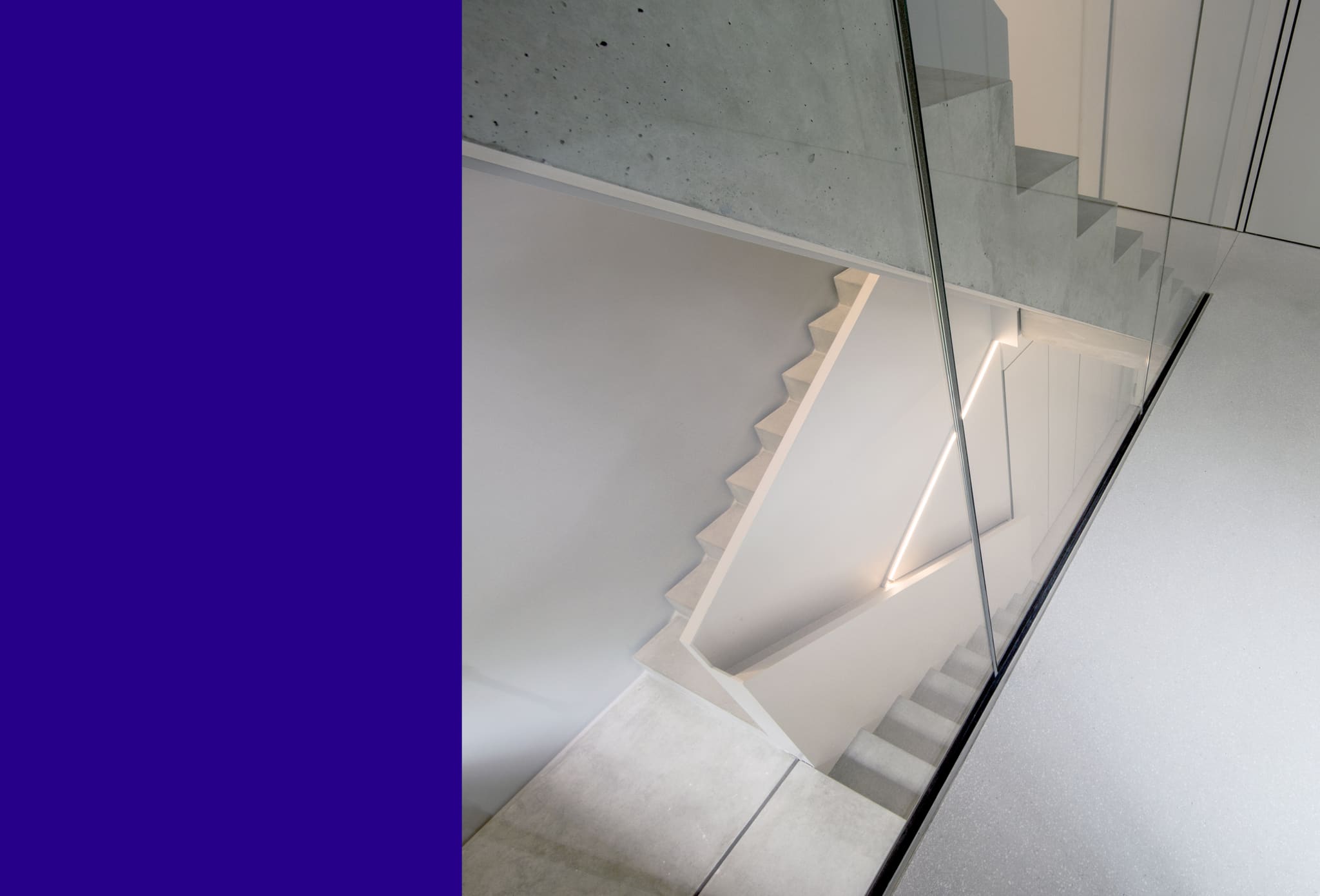
A view over the glass edge into the stairwell – light behind the stringer gives the stair a sculptural presence.
-
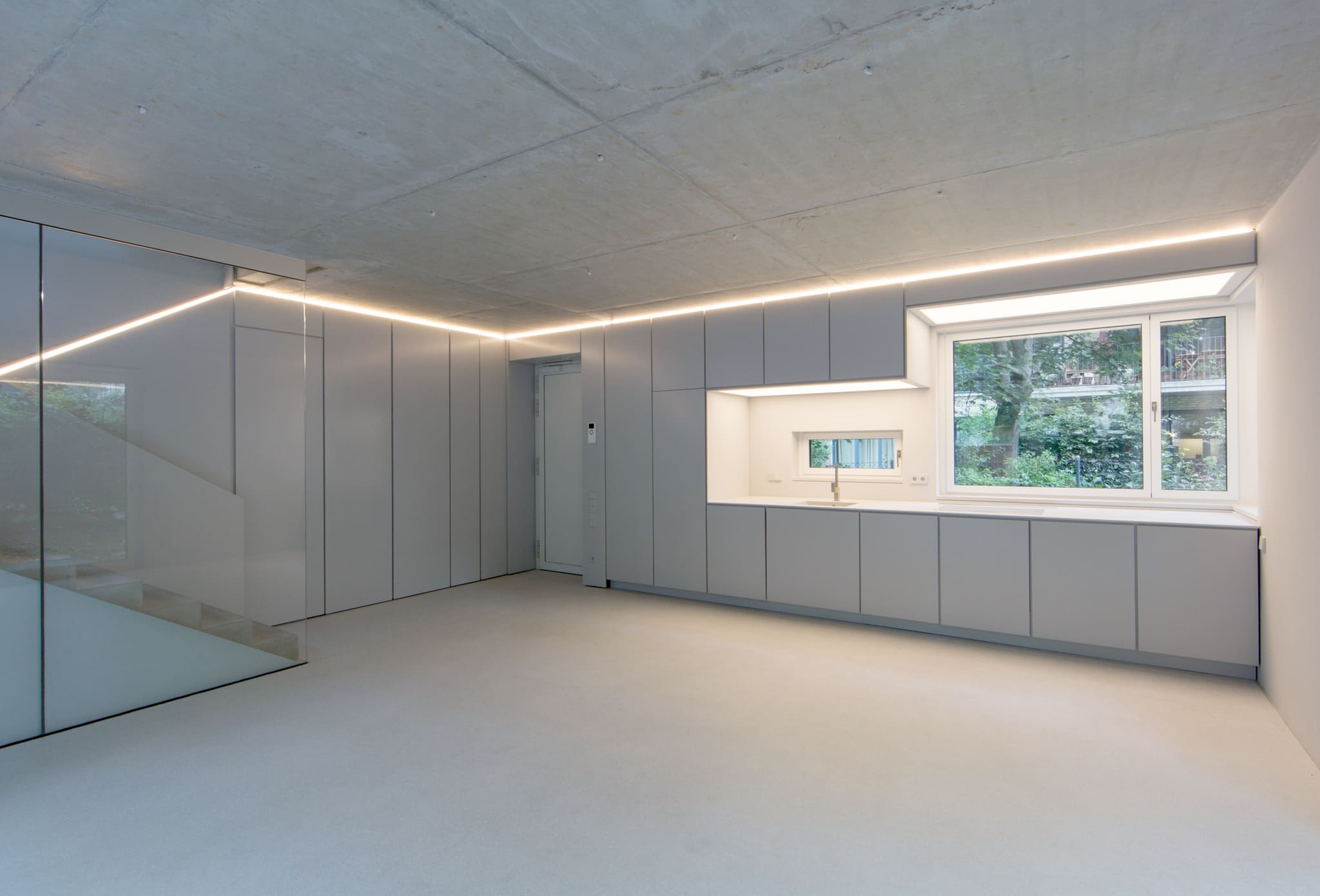
The light sits invisibly in the slender joint between wall and ceiling – switched by push-button, deliberately offline.
-
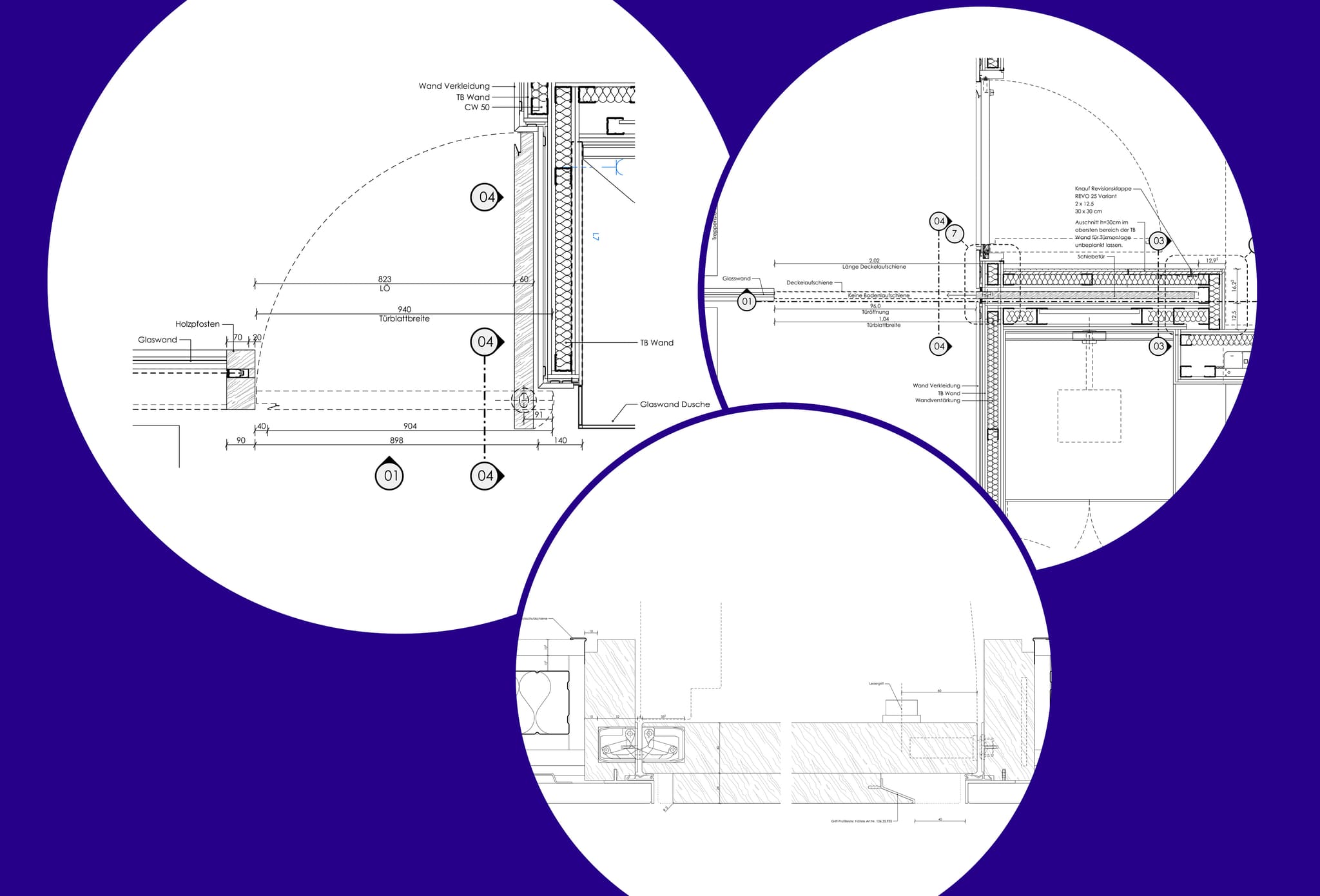
Detail drawings of the doors: door leaf, glass wall and stud wall in section, plus fitting and leather pull.
-
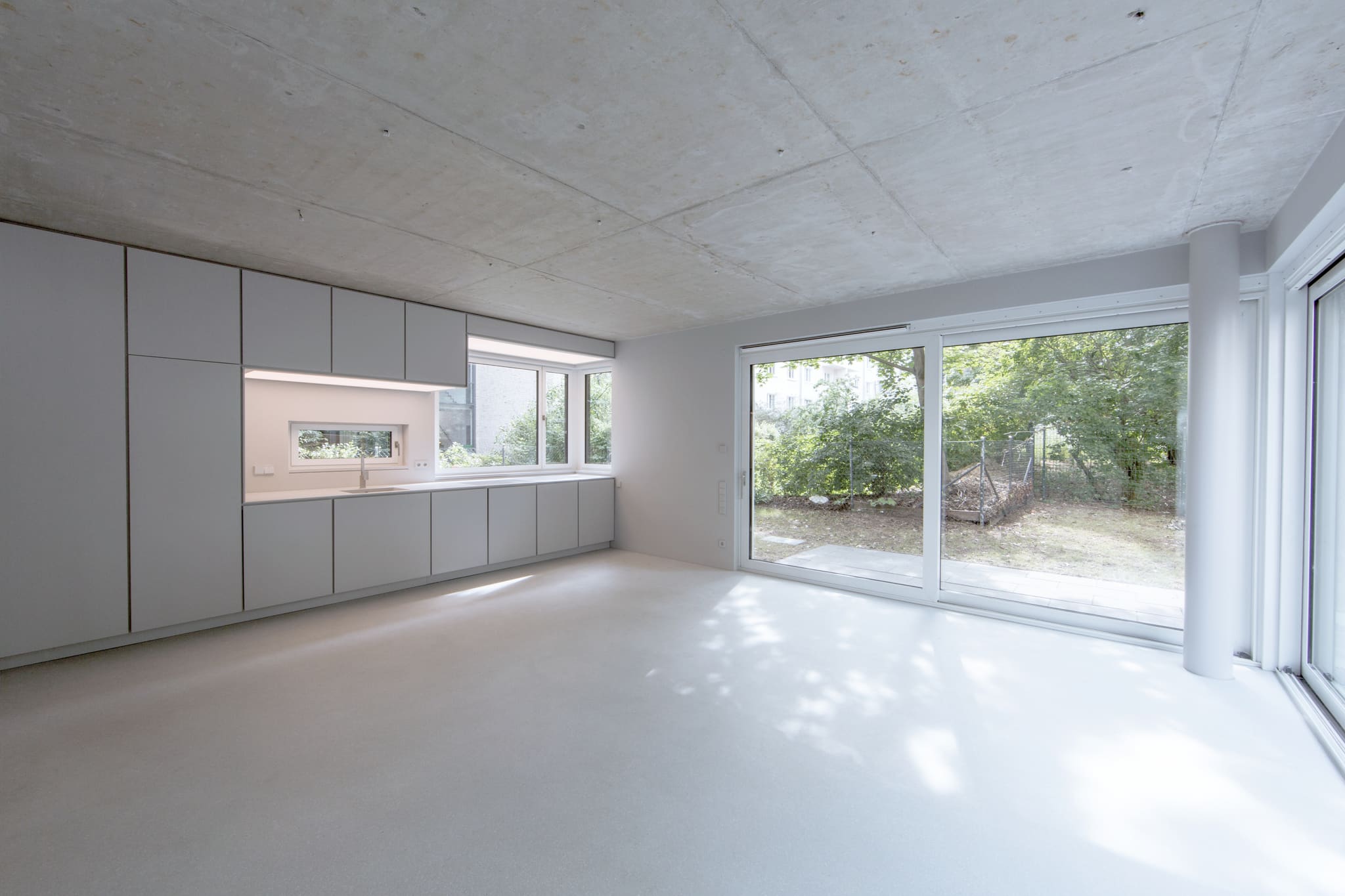
The living room opens to the garden – the kitchen run vanishes into a wall giving every possession its own storage.
Frequently asked questions
What was the brief for the 7047 Concrete fit-out?
How is the light planned in the minimalist spaces?
What is special about the concrete bathtub?
How does the fit-out solve the acoustics of minimalist spaces?
Facts and figures
HELLOOW!
+49 (0)30 7675 811 - 00