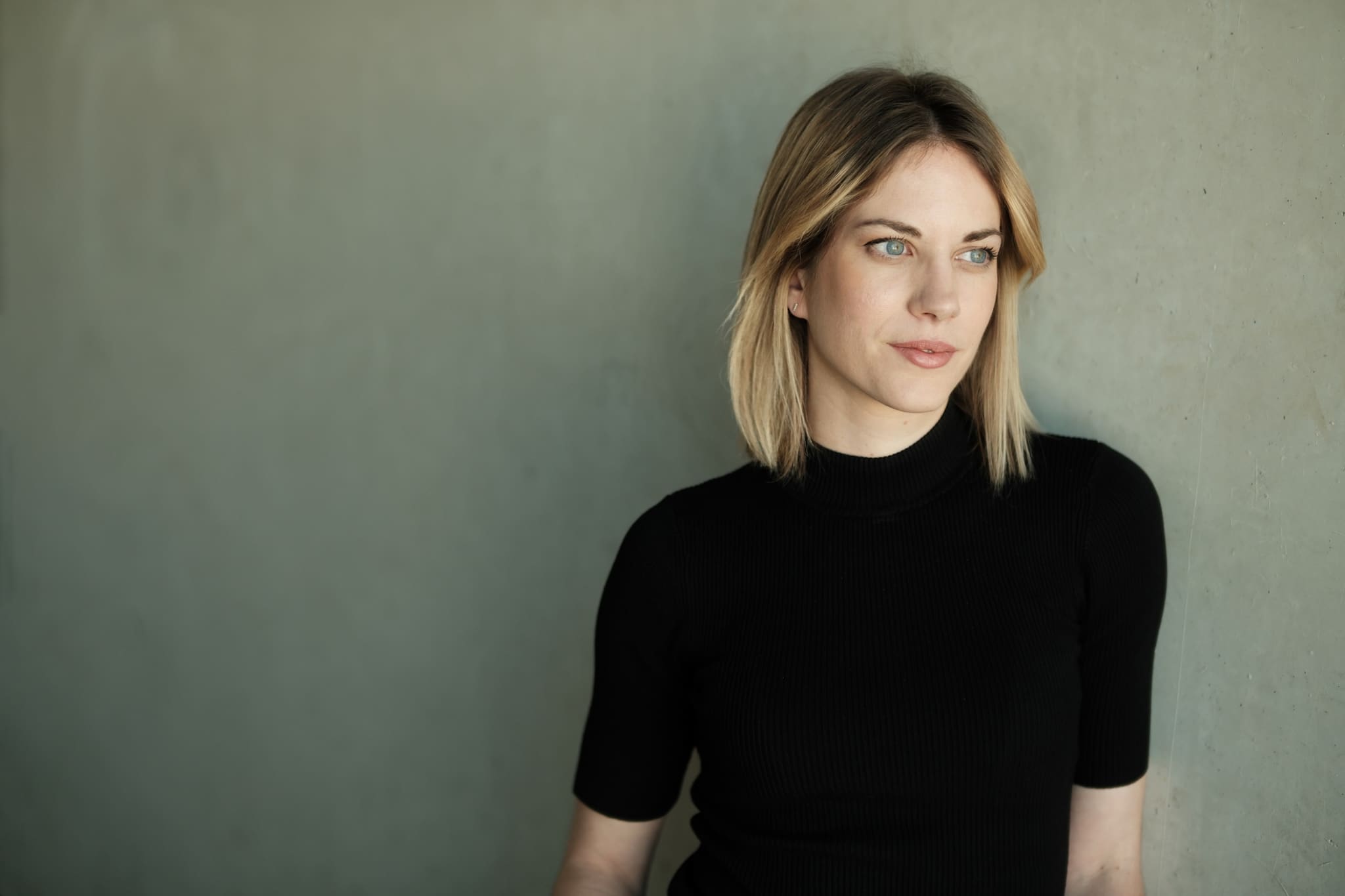
Leda Kremmyda
“We inspire one another”
For many young people, being an architect is a dream job. But what does everyday working life actually look like? And what makes a good employer? In this interview, Leda Kremmyda, an architect at OOW in Berlin, talks about her very personal journey.
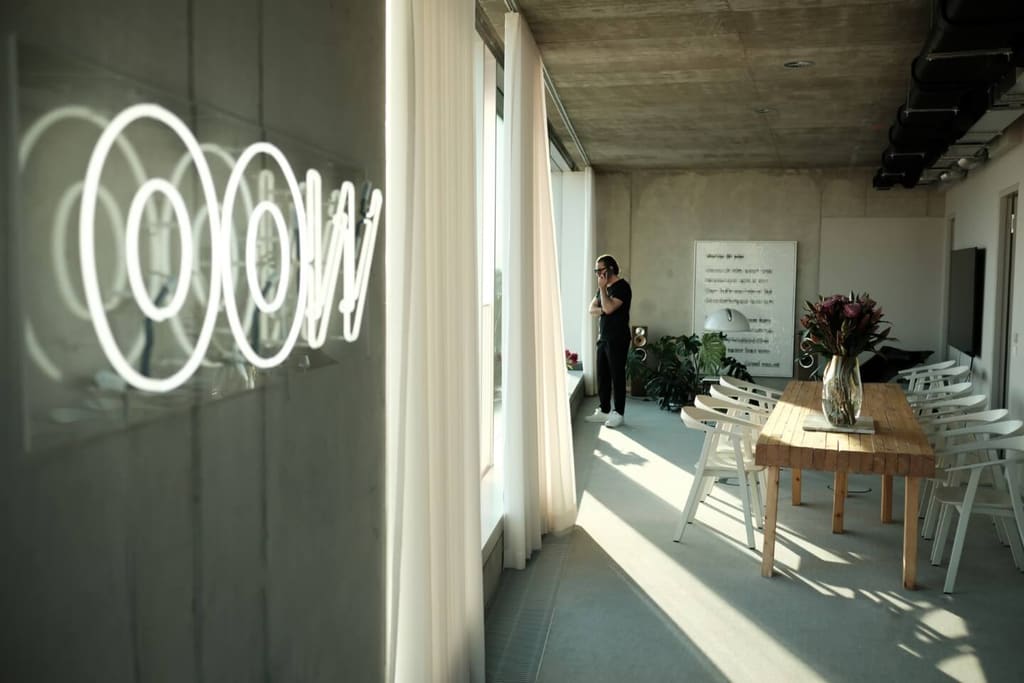
“I am much more content with my work”
We are sitting in the vast OOW office in Berlin-Mitte, looking out onto a big busy street; on the wall behind us hang designs for spectacular architecture - some of them yours. How did you find your way into this world?
I think I was born into it! (laughs) My father is also an architect and was responsible for urban development in Athens, our home city. I grew up among drawings, pictures and models. Around the clock, we talked about how places need to look in order for people to feel at home in them. The idea of becoming an architect had probably already taken shape in my mind before I even knew what it meant.
How did you come to Berlin?
After studying architecture at the National University in Athens, I completed my master's degree and initially worked as a freelancer. Then came the leap to London. There I worked at an architectural practice: ambitious, but a little smaller than OOW. For two years now I have been part of the OOW team: for me, the perfect workplace in the perfect city. Berlin is still changing, and we all inspire one another. For me, it is the place where I need to be!
If you compare yourself to the Leda of three years ago: how have you changed?
! (laughs) Yes, I am genuinely happy with the way I can work here. And alongside my personal situation, I have also developed professionally. I have grown in a great many areas and today I work across all of them: from design through to the actual construction.
What does your work look like in concrete terms?
In London, I mostly worked away on my own. At OOW I came to know a different way of working. We talk to one another a great deal, put our designs up on the wall and discuss them. Is this already the best solution? Or is there another option for shaping the space even better, so that the residents feel at home in it? We are all of a similar age, which makes things easier. And it is a wonderful feeling to develop ourselves and our projects together.
Tell us about one of the projects! What have you been working on most recently?
In Bonn we designed a sanatorium for 80 residents. An old, heritage-listed villa is being preserved and integrated into the design. As lead architect, I accompanied the sanatorium from the very first sketch – and here too, of course, we visualised everything three-dimensionally. The same goes for one of my other projects: the rooftop bar 260 Grad at Mercedes Platz in Berlin. That way, even at the planning stage, we could make visible what defines the bar today: for instance the interplay between the interior and the spectacular view across Berlin, or the wonderful design details such as the bar counter in polished copper. It is always exciting when you stand in the building for the first time and realise: hey, this all works rather well!
Is the picture people have of the architect's profession actually accurate?
Our profession is very creative, and I find that great fun. So in that sense: yes, that stereotype does hold true! However, very few people are aware of how much, in everyday work, we are above all problem-solvers. That is less exciting, but just as compelling. (laughs) You have to be pragmatic and, above all, plan cost-efficiently. We must never forget: in the end someone has to pay for the building, and everything has to work.
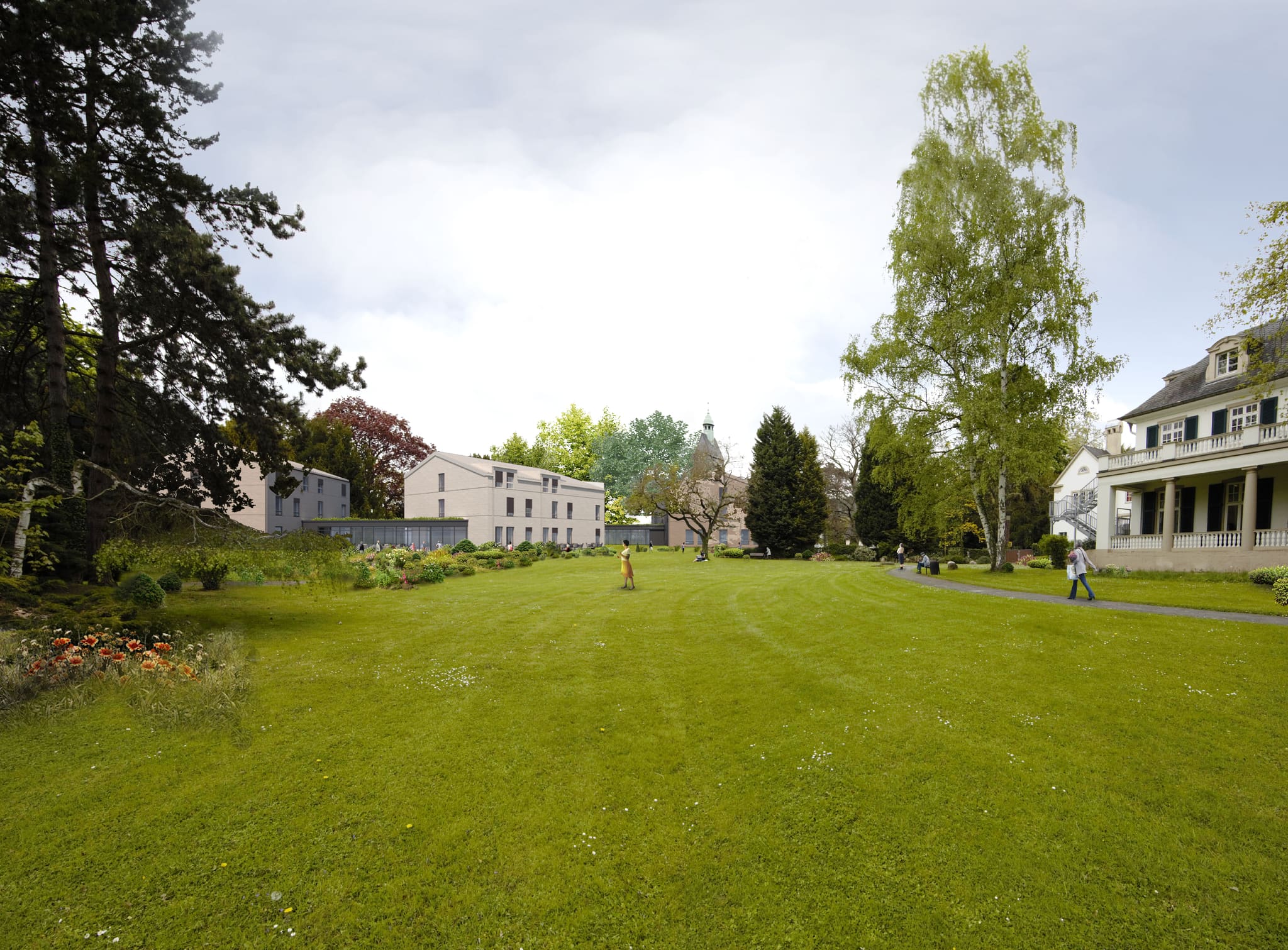
“It is always exciting when you stand in the building for the first time and realise: hey, this all works rather well!”
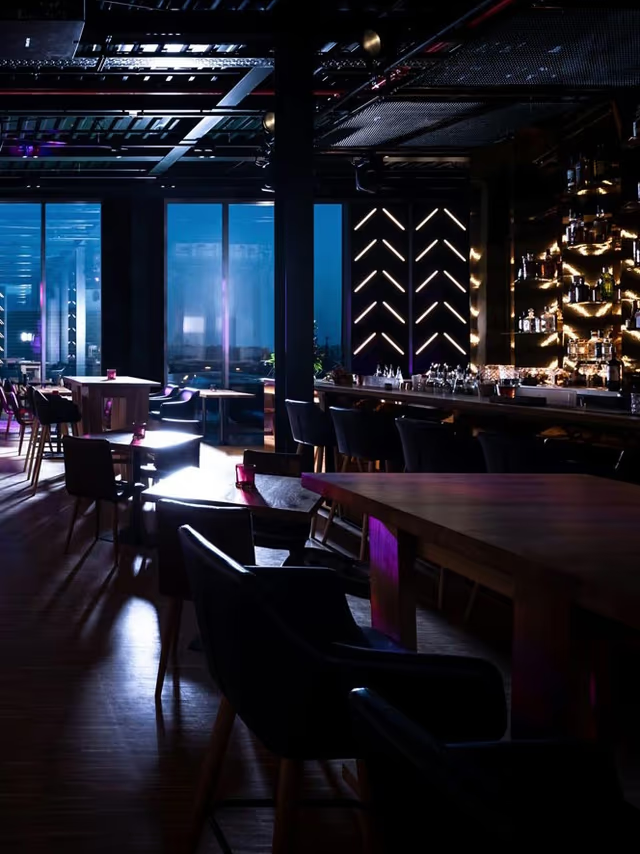
“Our profession is very creative, and I find that great fun.”
What does it mean to you to realise projects like these in Berlin?
In London the interactions were at times a little stiff; here everything is far more relaxed. People here keep reinventing themselves, and a great deal that is exciting is happening in architecture and art. I want to be part of that!
Frequently asked questions
Which projects has Leda Kremmyda worked on at OOW?
How did Leda Kremmyda come to architecture?
How does working at OOW differ from her time in London?
Our team
HELLOOW!
+49 (0)30 7675 811 - 00