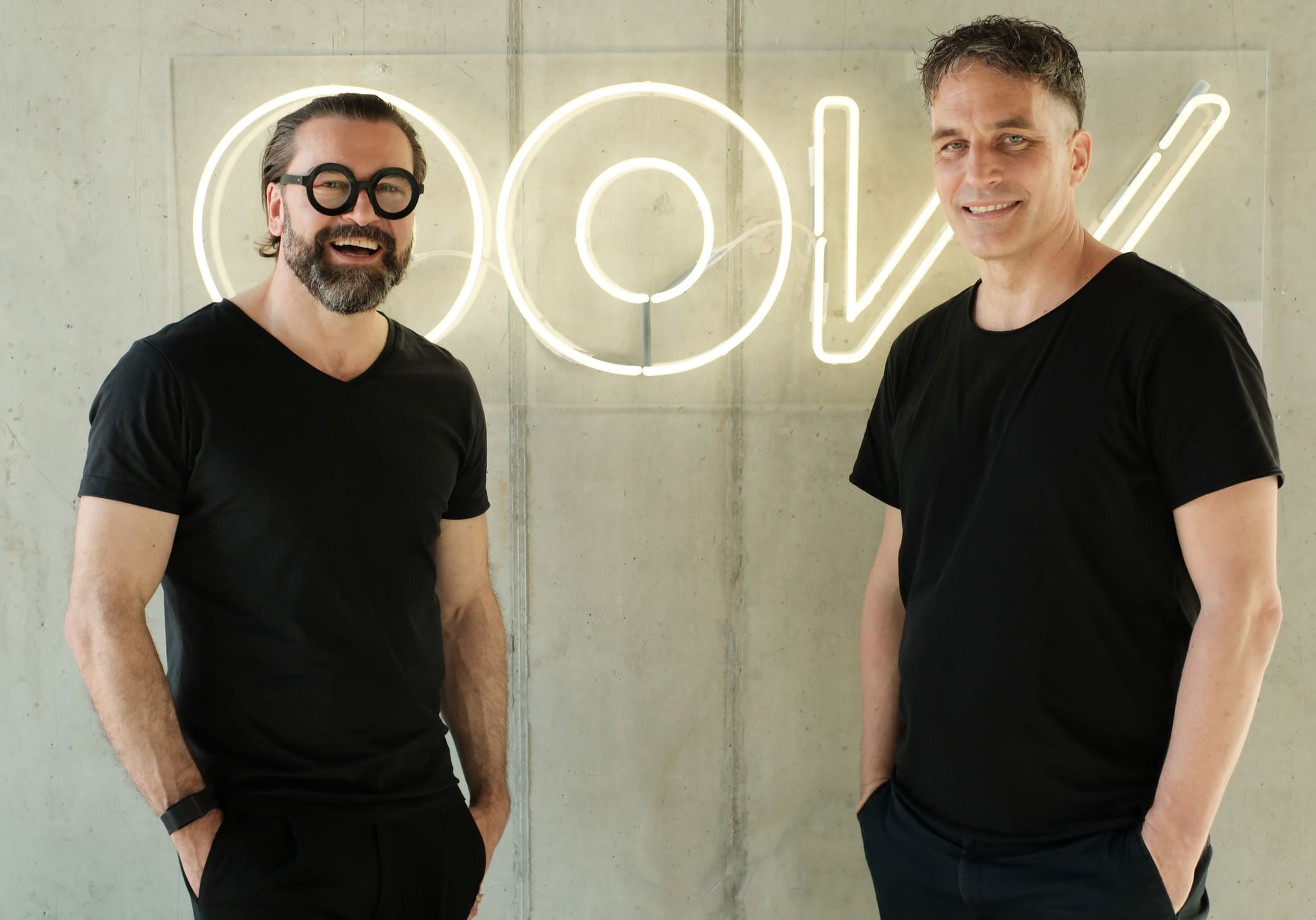
OOW founders Sebastian Blancke and Mathis Malchow in interview
“Design is like a composition”
They build for high-profile investors, global corporations and celebrity chefs: in this interview, OOW founders Sebastian Blancke and Mathis Malchow talk about what is probably Berlin's most spectacular apartment, about work that ranges from wellington boots to 3D printing, and about how they discovered their love of the perfect detail in Norman Foster's legendary practice.
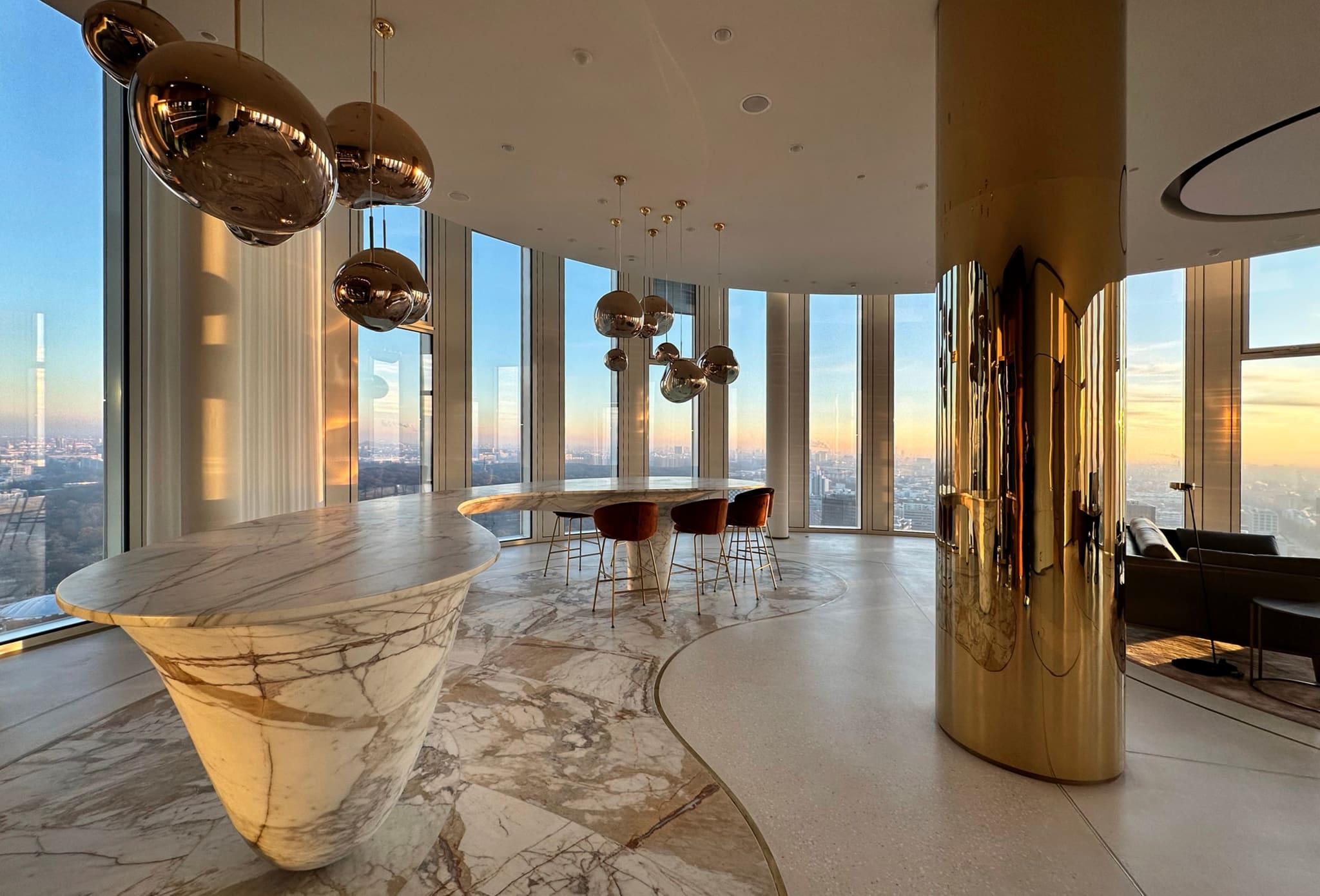
If you want to get a five-tonne marble counter up to the 33rd floor, you have to commission the two of you.
Mathis Malchow (laughs): “True, we can do that! And above all: if you even want one in the first place, we're the right people to talk to!”
You built that counter for the legendary investor René Benko – like so many other pieces of furniture. You fitted out his entire apartment in the west of Berlin, and it has become what is probably the most spectacular penthouse in the whole city. Tell us what made the project so special.
Sebastian Blancke: “Across around 1,000 square metres, only the finest materials and construction methods were used: there are curved leather wall panels, round glass doors, bathtubs milled from whole blocks of marble, and a nine-metre dining table built using boatbuilding techniques. Its hull is American walnut, the top Calacatta marble. A real eye-catcher! Oh, we could probably rave about the penthouse for hours. Every last corner is flawless in its perfection.”
That sounds as though there were hardly any budget constraints. That probably makes the work easy, doesn't it?
Mathis: “It's a misconception that all you need is high-quality materials and that they then work up beautifully all by themselves. Quite the opposite: precisely with this palette of materials and these demanding constructions, you have to understand the textures exactly and have a feel for them. Try shaping marble into a curve and then joining it to a leather panel with an extremely slim joint! That's an art! And the result, of course, is absolutely stunning.”
Over the past few years you have grown into one of the best-kept secrets of Berlin's architecture scene. Read through your list of clients and you get quite the who's who. You built Jamie Oliver's Berlin restaurant, developed projects for the Autostadt in Wolfsburg, handled the coordination and site supervision of the Kerb Food Hall, and of course the penthouse for René Benko. How did you get so big?
Mathis: “We were lucky to win loyal clients quite soon after founding the practice. We did a great deal for them: whether the Bundestag, Leonardo Hotels, the Augustinum Group or the biopharma company CureVac. And after that, everything ran on word of mouth!”
What does your everyday life as architects look like?
Sebastian: “‘Everyday’ is really the wrong word, it always sounds like monotony. And we have none of it at all! Neither in the way we work nor in the topics we tackle.”
Mathis: “On the creative side, we're still out and about with a felt-tip pen to make a sketch. And of course we also stand around in the classic way, in wellington boots, on muddy building sites!” (laughs)
Sebastian: “And at the same time we work with the latest technologies such as 3D printing and BIM models: this lets us represent buildings digitally and three-dimensionally in all their detail. We also make a lot of use of virtual reality in our visualisation. With a VR headset, clients can then marvel at the finished building before the first stone has even been laid. They're all utterly thrilled!”
Let's look back once more at how your shared journey began. 660 drawings in A0 format brought you together. You'll have to explain that!
Mathis Malchow (laughs): “True, that was back in 2005. At the time, Sebastian and I were working for Norman Foster in London and designing a concert hall in St Petersburg. A huge project on an unimaginable scale! And for it, our team produced those legendary 660 drawings.”
Good heavens, that must forge a bond!
Sebastian Blancke: “And how! And above all, in such demanding project phases you find out whether you can work well together. For us it was a bullseye: the two of us were the last in the office at one in the morning, then went out celebrating together, and were back at our desks by seven. It was an extreme time, but we were looking for each other – and we found each other!”
What did you have in common?
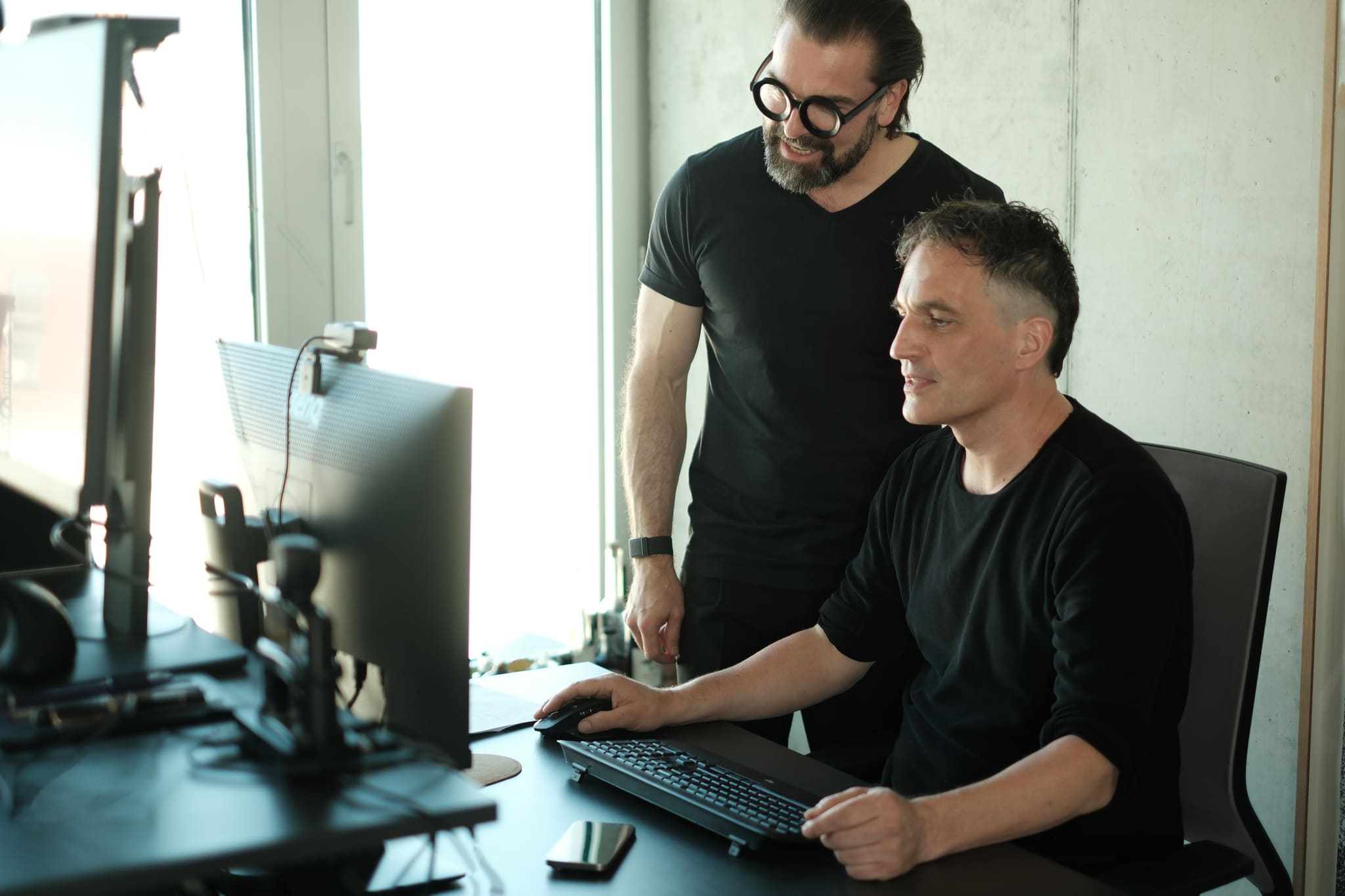
Our first office in Prenzlauer Berg
Mathis: “We quickly realised that we're both perfectionists and had that hunger. Even though the St Petersburg concert hall was the first time we worked together, the others immediately saw us as a unit: ‘the crazy germans’!” (laughs)
“We quickly realised that we are both perfectionists.”
In 2009 you then set up on your own in Berlin.
Sebastian: “I never saw myself as an employee. For me it was clear that I would found my own practice at some point.”
Mathis: “For me too! In the truest sense of the phrase, it was also about ‘making a name for yourself’.”
-
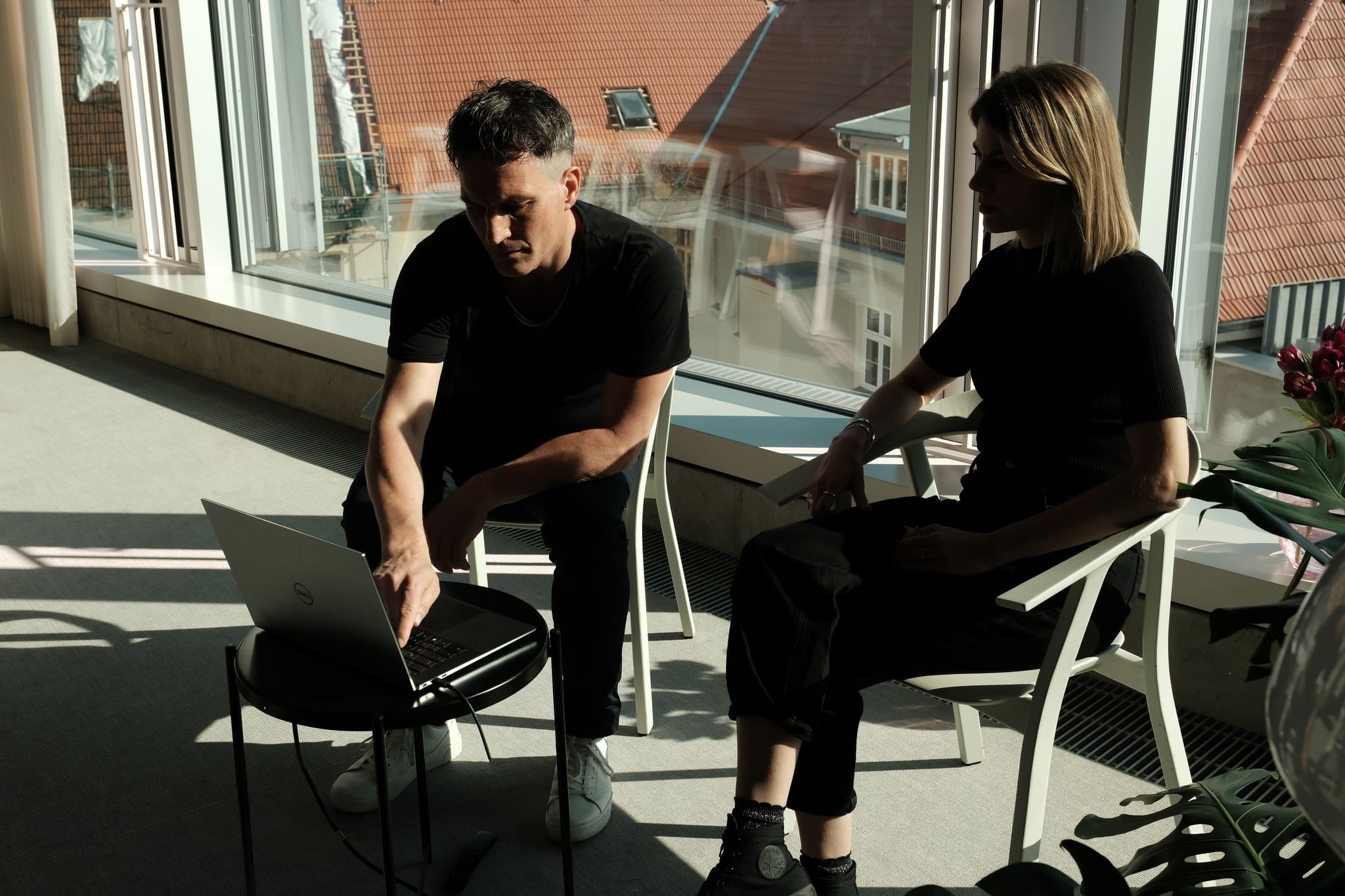
Design review against a Berlin backdrop
Photo: Patrycia Lukas
-
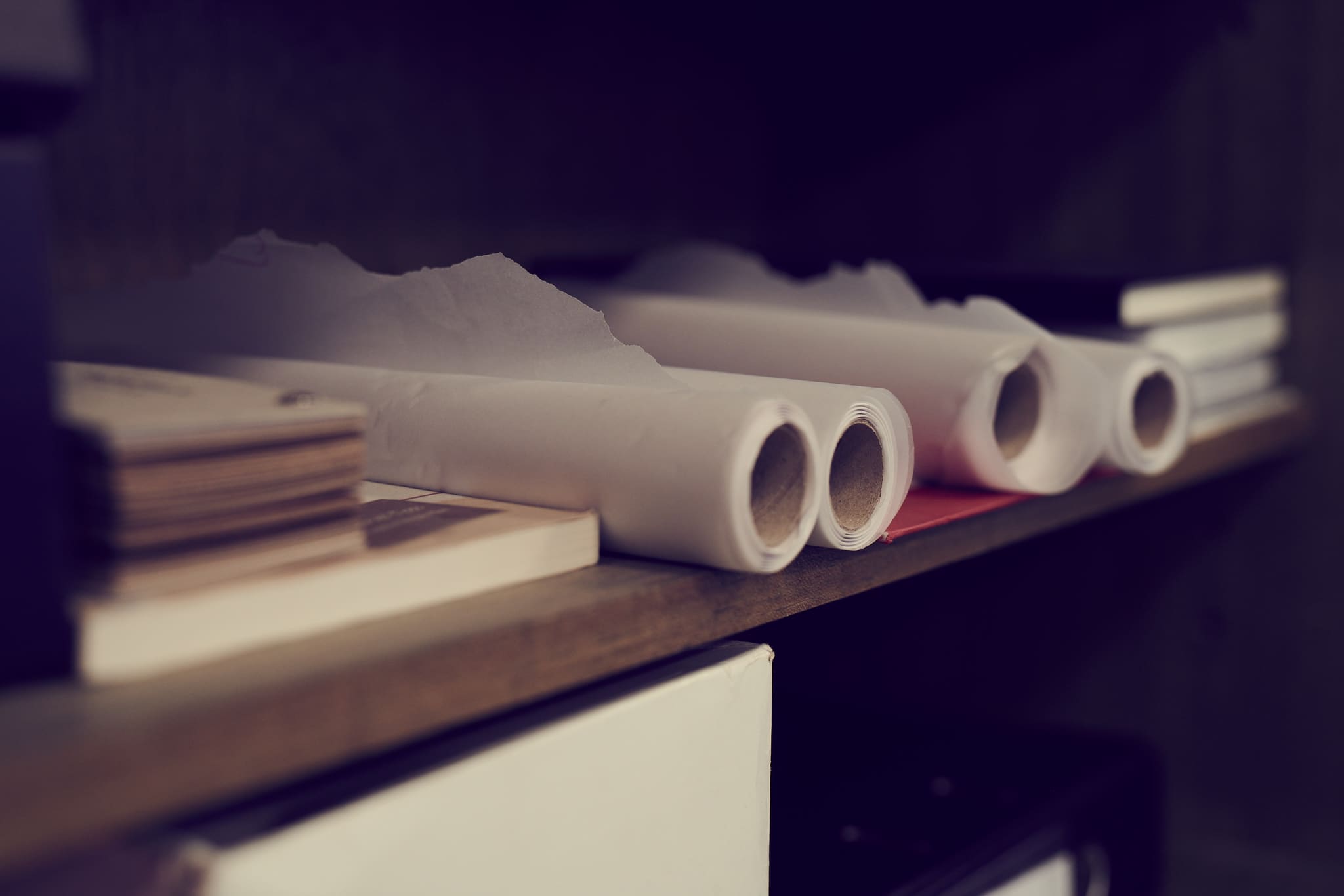
Rolls of drawings on the shelf – at OOW, drawing still starts by hand
Photo: Jan Kopetzky
-
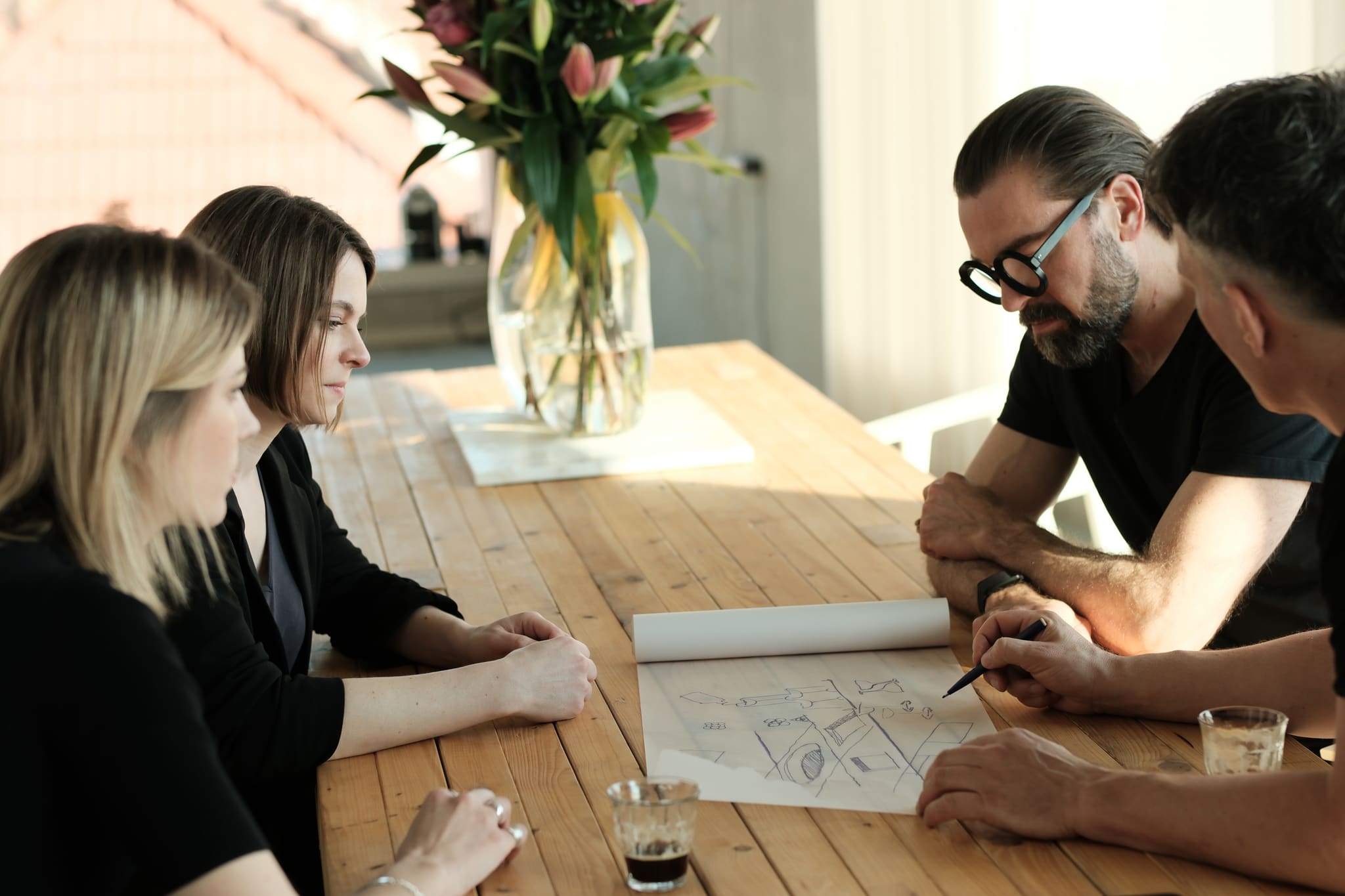
Often a good sketch is all it takes
Photo: Patrycia Lukas
-
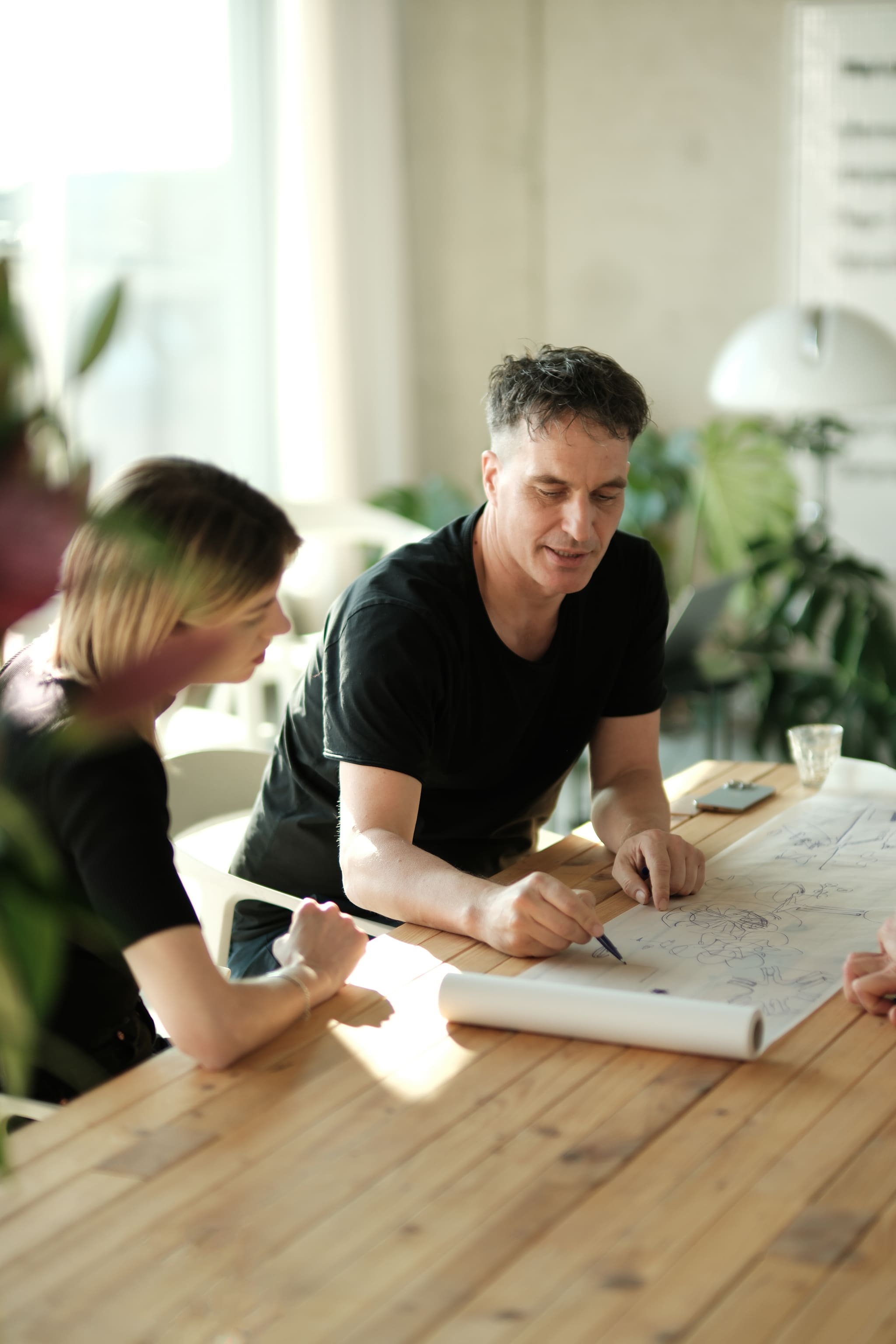
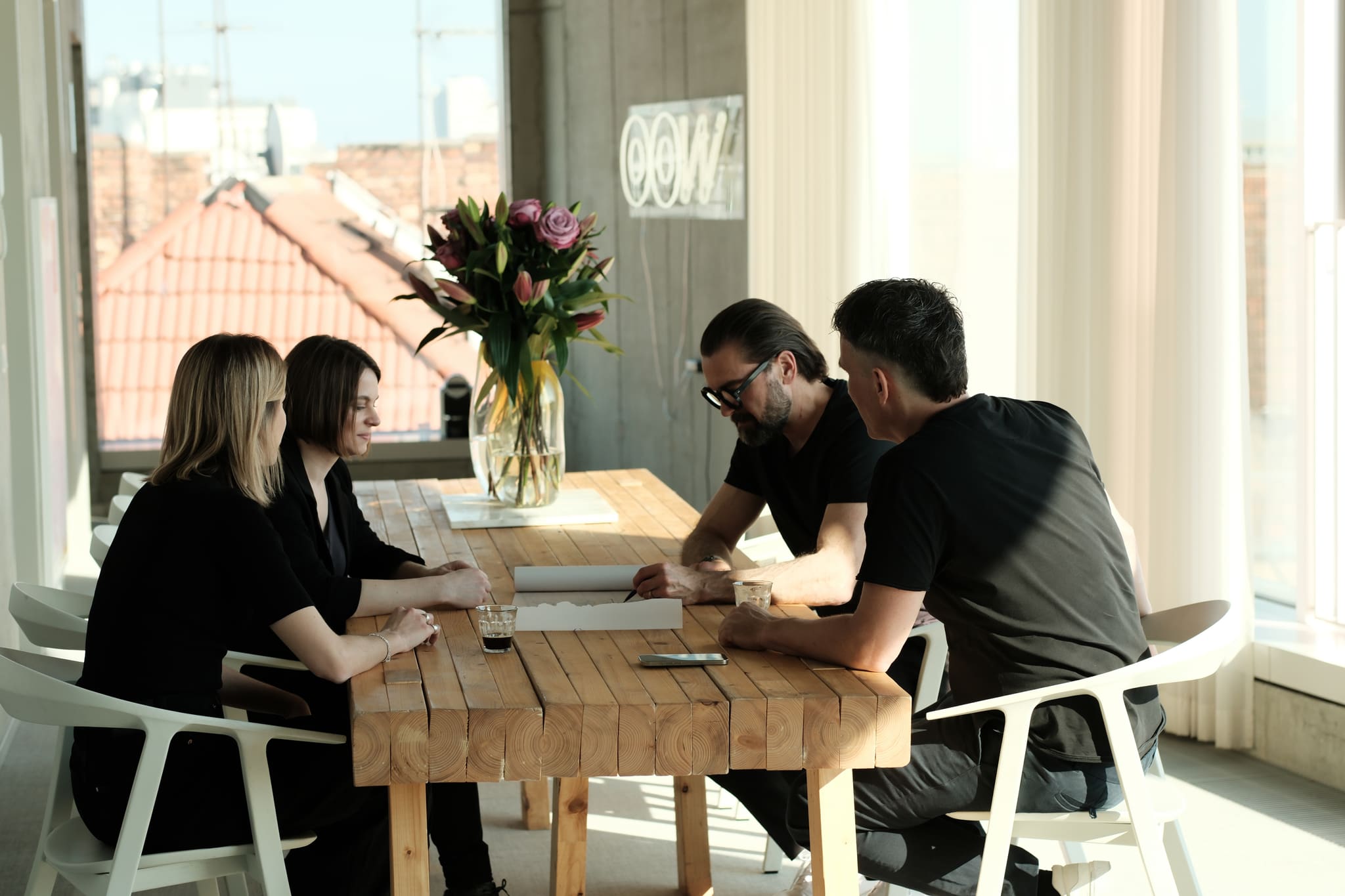
Mathis and Leda at the meeting table
Photo: Patrycia Lukas
-
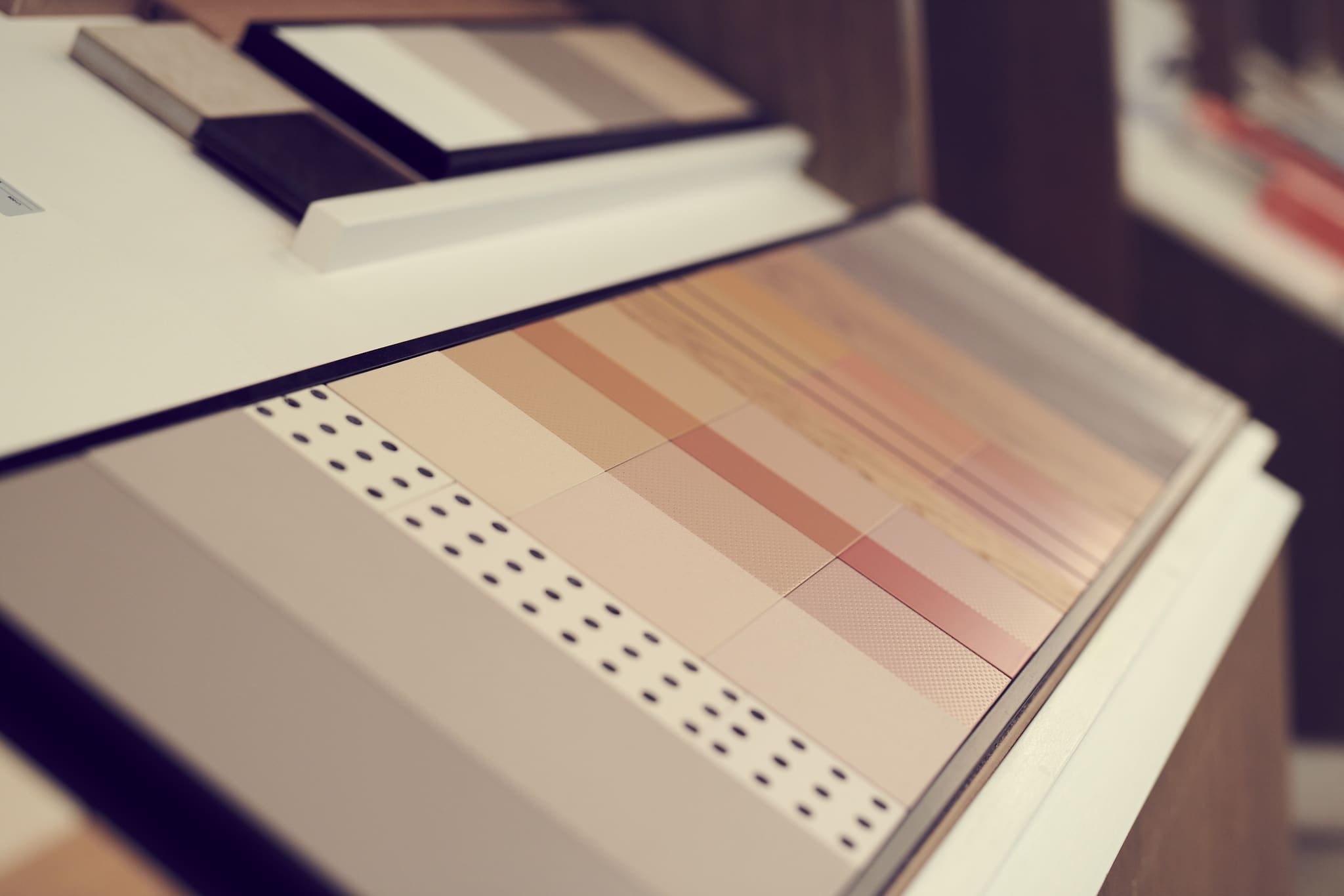
Material samples – textures have to be understood and felt
Photo: Jan Kopetzky
-
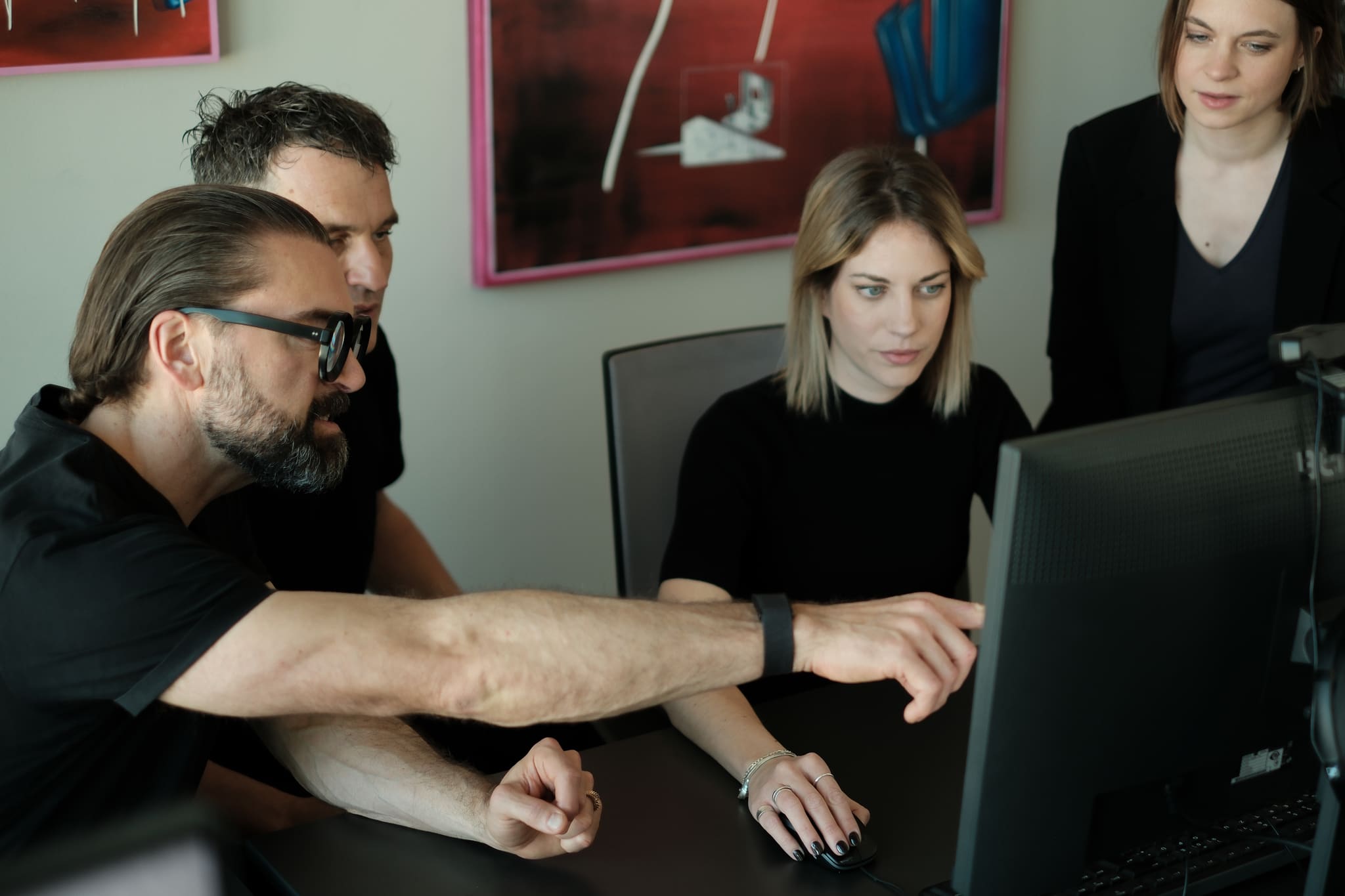
Schemes A, B and C – discussed as a team
Photo: Patrycia Lukas
-
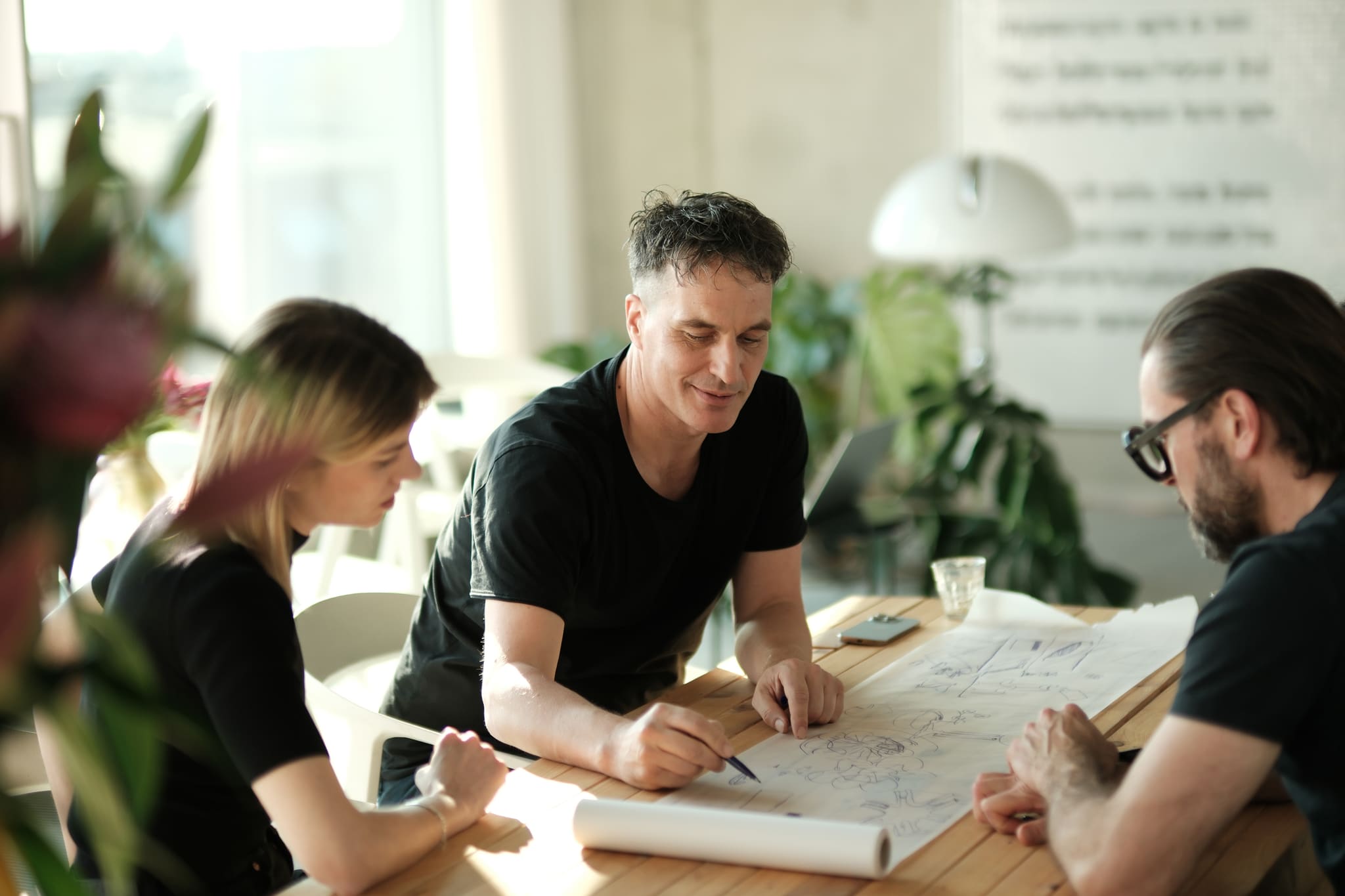
Plan review at the table
Photo: Patrycia Lukas
-
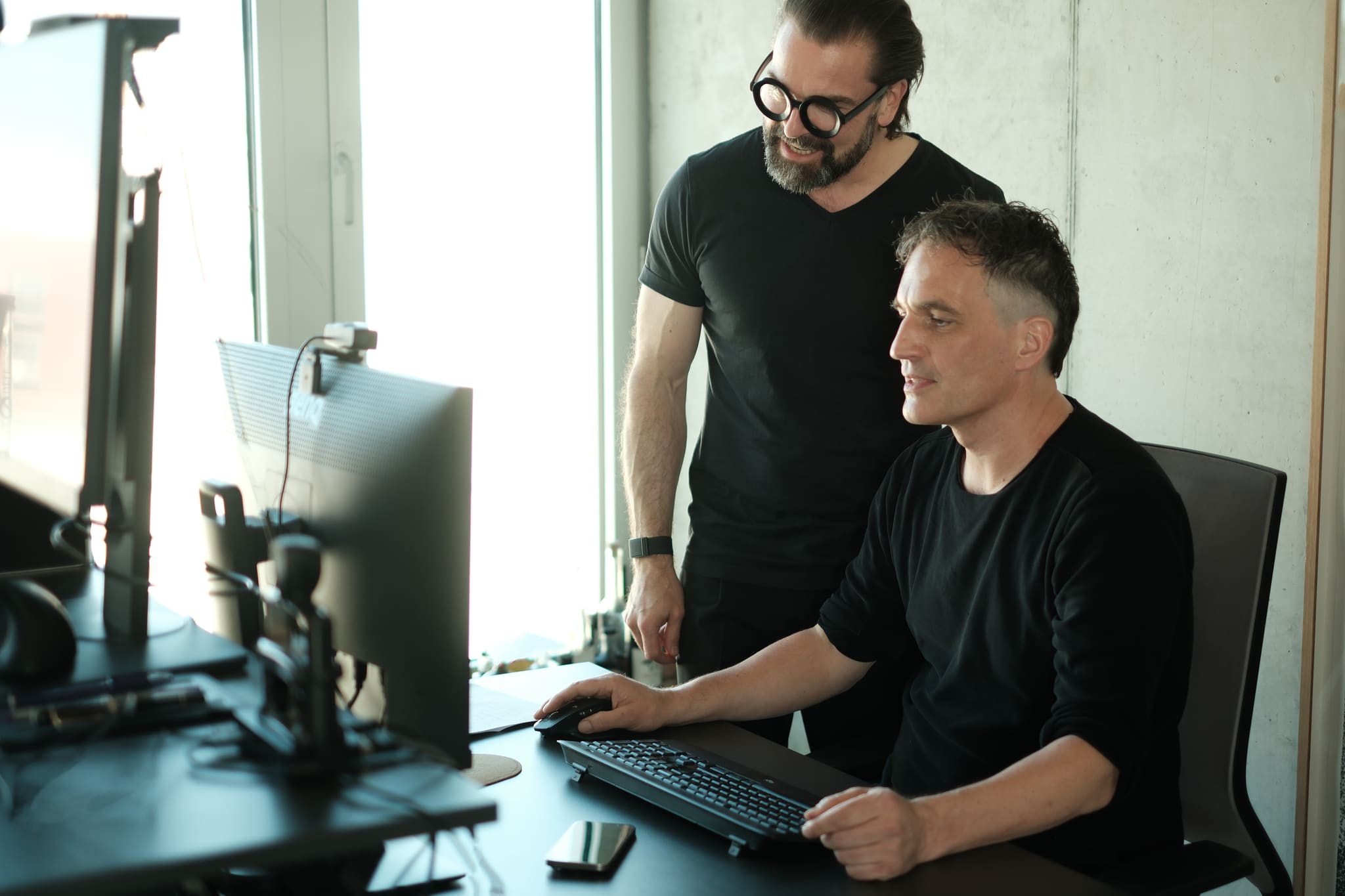
Design review in the first office in Prenzlauer Berg
Photo: Patrycia Lukas
-
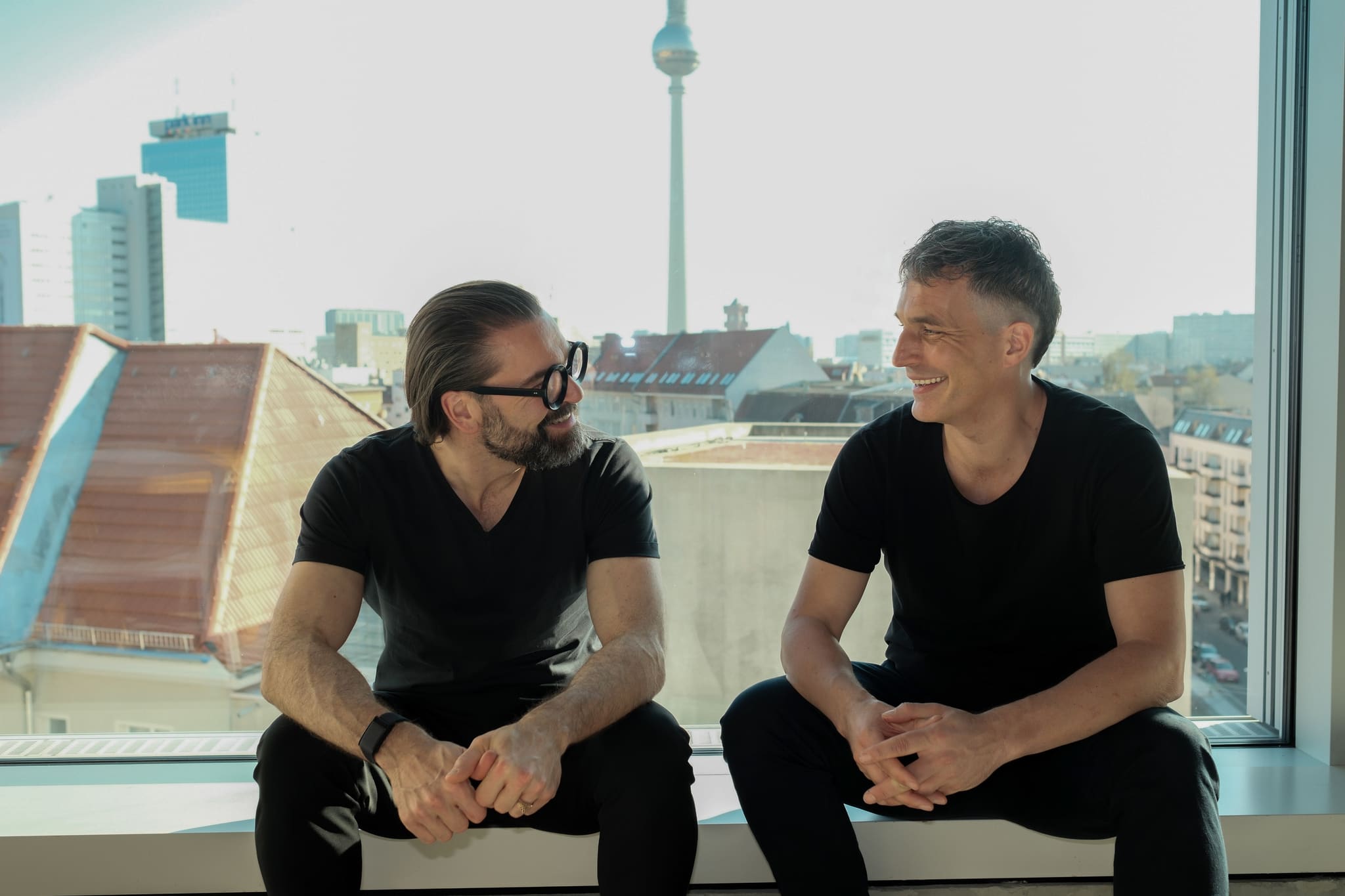
In the new office in the Suhrkamp building on Rosa-Luxemburg-Platz
Photo: Patrycia Lukas
To start with, you rented a small shopfront office in Prenzlauer Berg and bought two IKEA tables.
Sebastian: “Funnily enough, I can still remember exactly how we came back from IKEA. There we stood in the completely empty office and first of all opened a bottle of sparkling wine. We had desks! So business was already booming! (laughs) In all seriousness: somehow I knew we'd laid the foundation stone. For something magnificent. And with this chap (points at Mathis), it can only work out!”
The plywood tops were barely assembled before things moved incredibly fast. The first commissions came in, and interns became permanent members of staff.
Mathis: “Yes, we took on the detailed design for big architectural names like Arno Brandlhuber and Hadi Teherani, and in parallel designed our own magnificent projects, such as the 7047: a radically minimalist house in which even the bathtub was cast from raw concrete.”
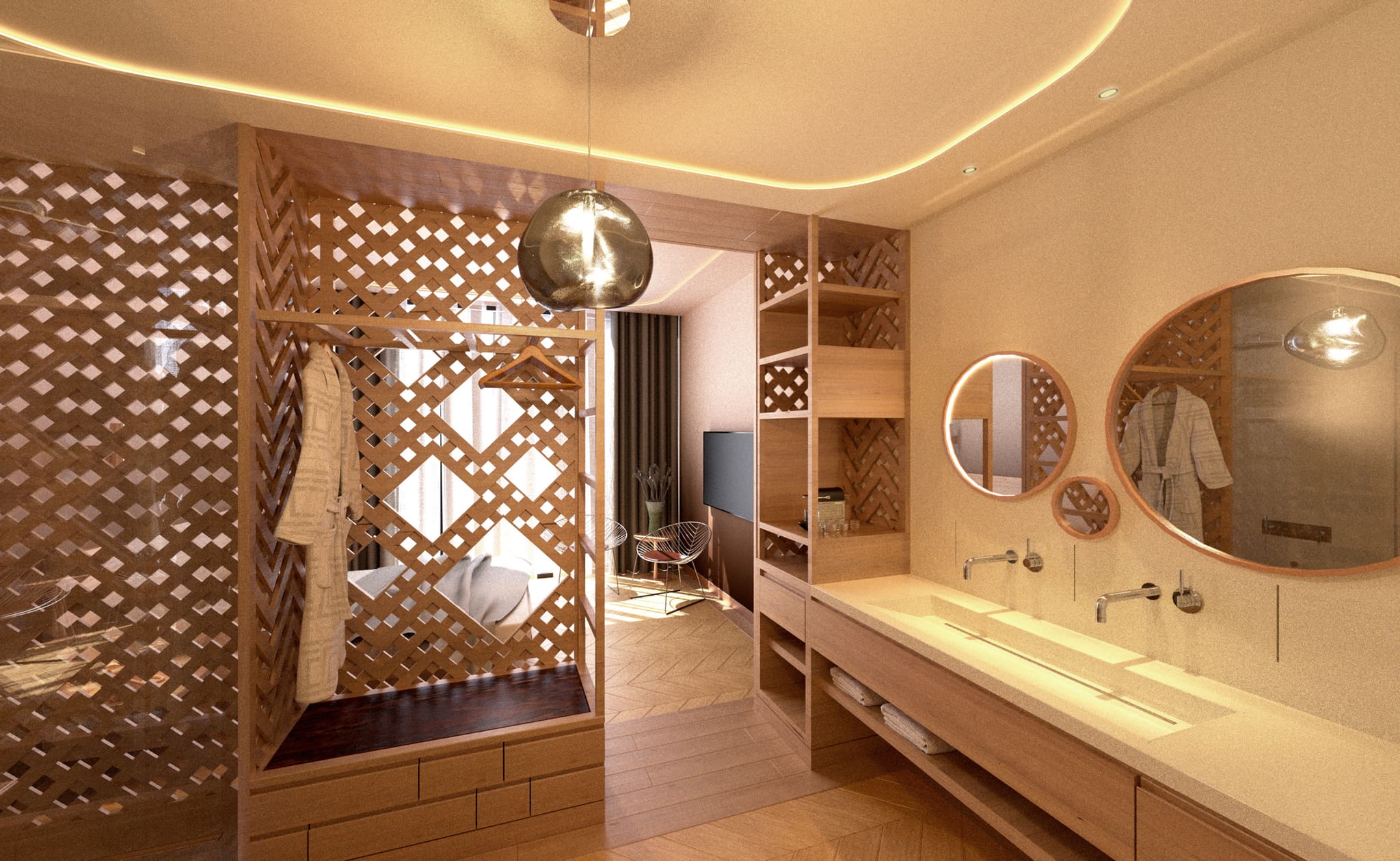
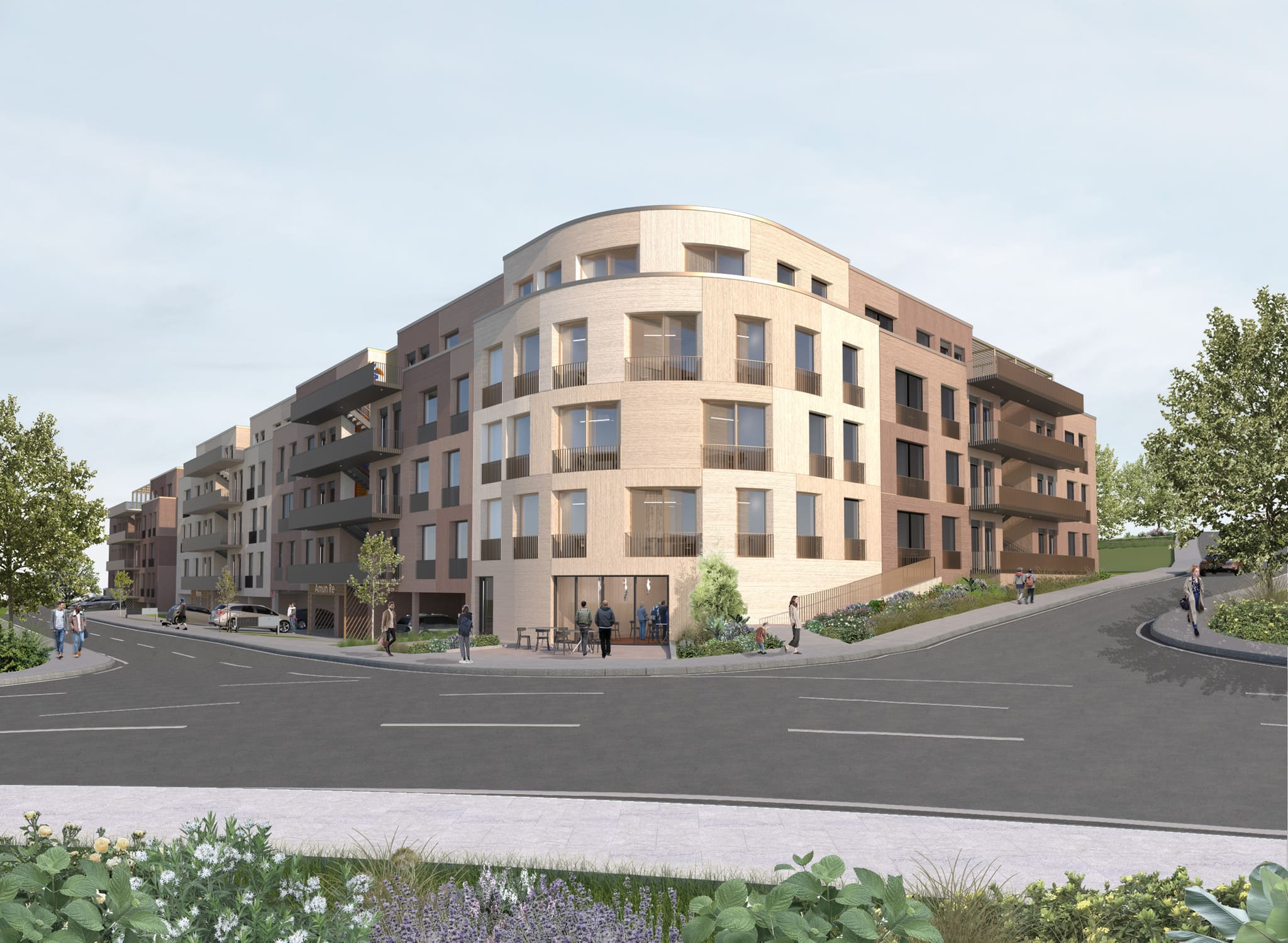
Sebastian: “We cover the full range of architectural services. Alongside the detailed design, we also accompany projects from the very first sketch: we design, prepare the documents for the approval process, prepare the functional performance specification and run the tender for the individual trades. And for complex fit-outs we take on the specialist site supervision and coordinate all the trades from a single source.”
Mathis: “That probably sounds very technical right now. Really, all you need to remember is: they do everything. And they can do everything!” (laughs)
How would you describe your architectural signature?
Sebastian: “We don't have one.”
I beg your pardon?
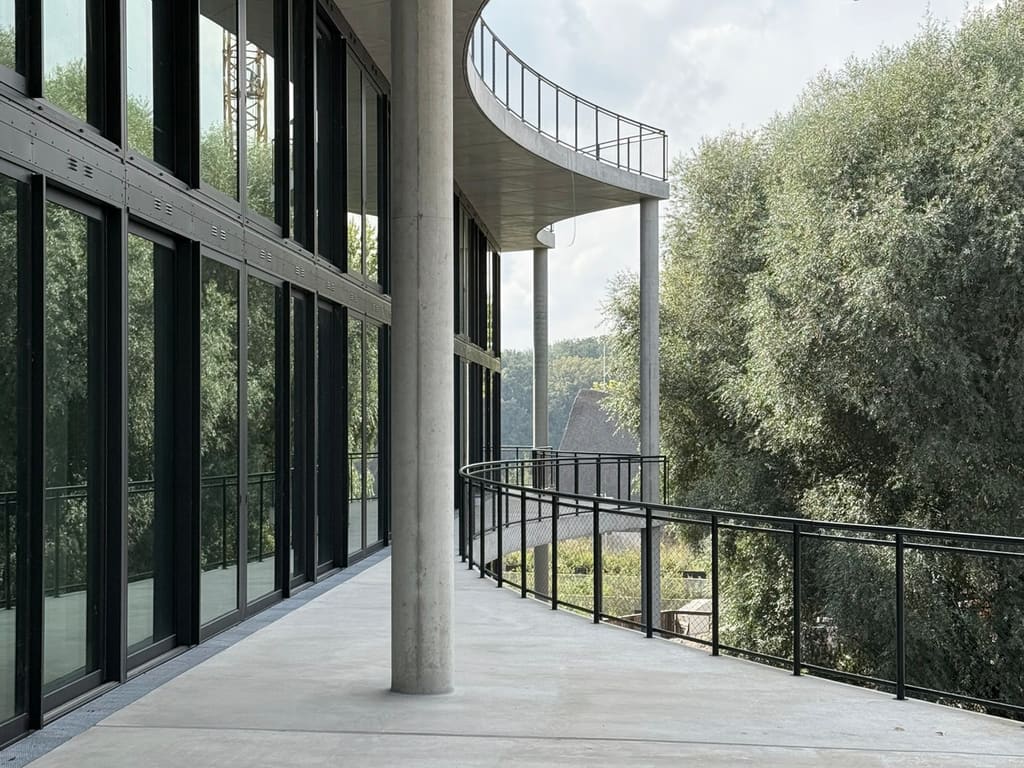
Mathis: “That probably sounds terribly worn out, but we simply stand for bespoke solutions. We're completely open: to different materials, to forms, to anything at all. What matters most to us is that we respond fully to how the building is later meant to be used. Do the residents want a chic concrete structure, or rather warm materials? That's the direction of travel! That's why it isn't a particular style that defines us, but rather an approach: coaxing the beauty out of every space.”
Sebastian: “We put ourselves entirely at the service of the cause and are advocates for a good outcome. We want to show materials off perfectly in their own particular character, to choose the light so that the centrepiece is set in scene, or simply to understand and optimise the use of the space at its core.”
-
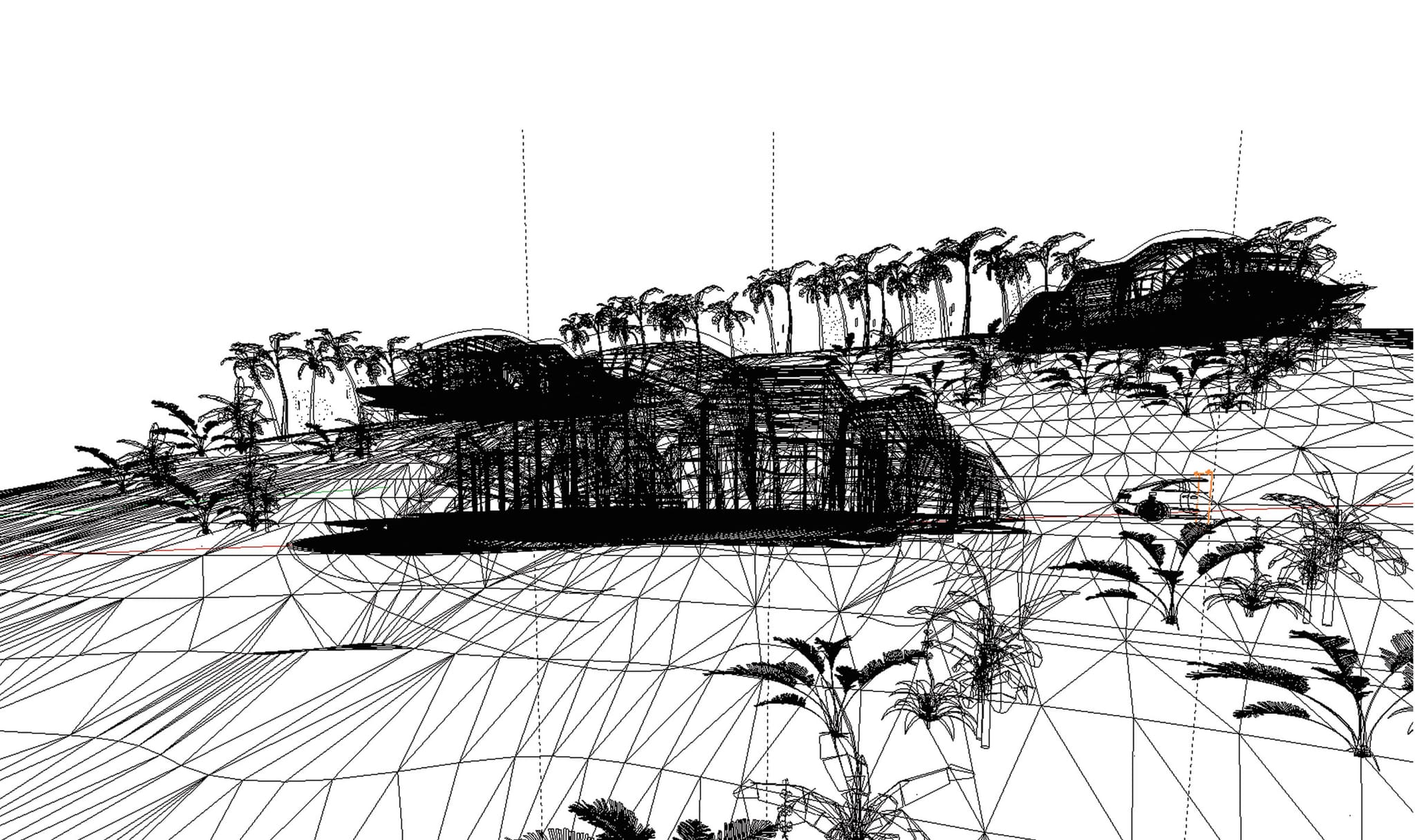
Step 1: the 3D model as a wireframe
-
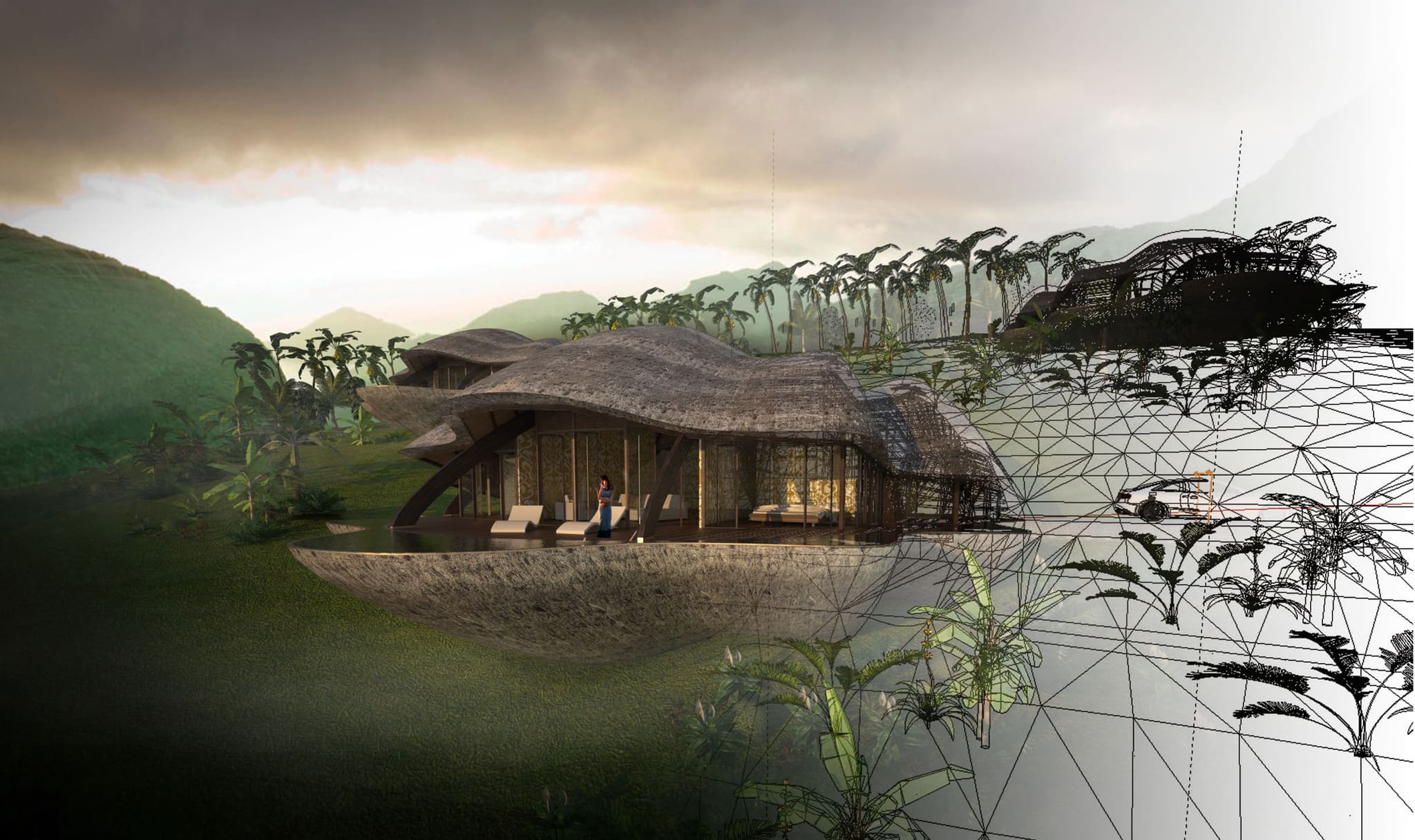
Step 2: model and rendering overlaid
-
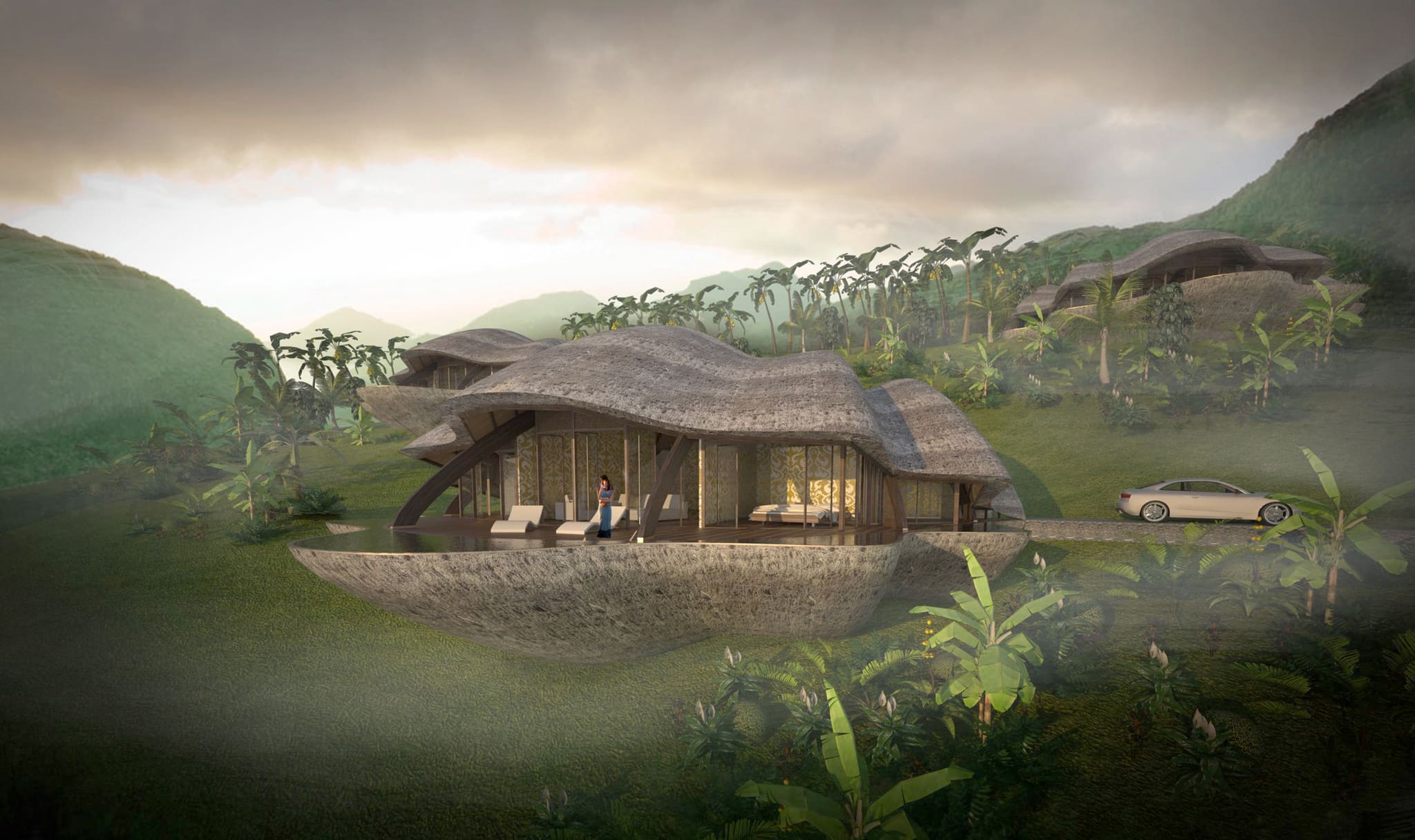
Step 3: the finished visualisation
From the 3D model to the visualisation
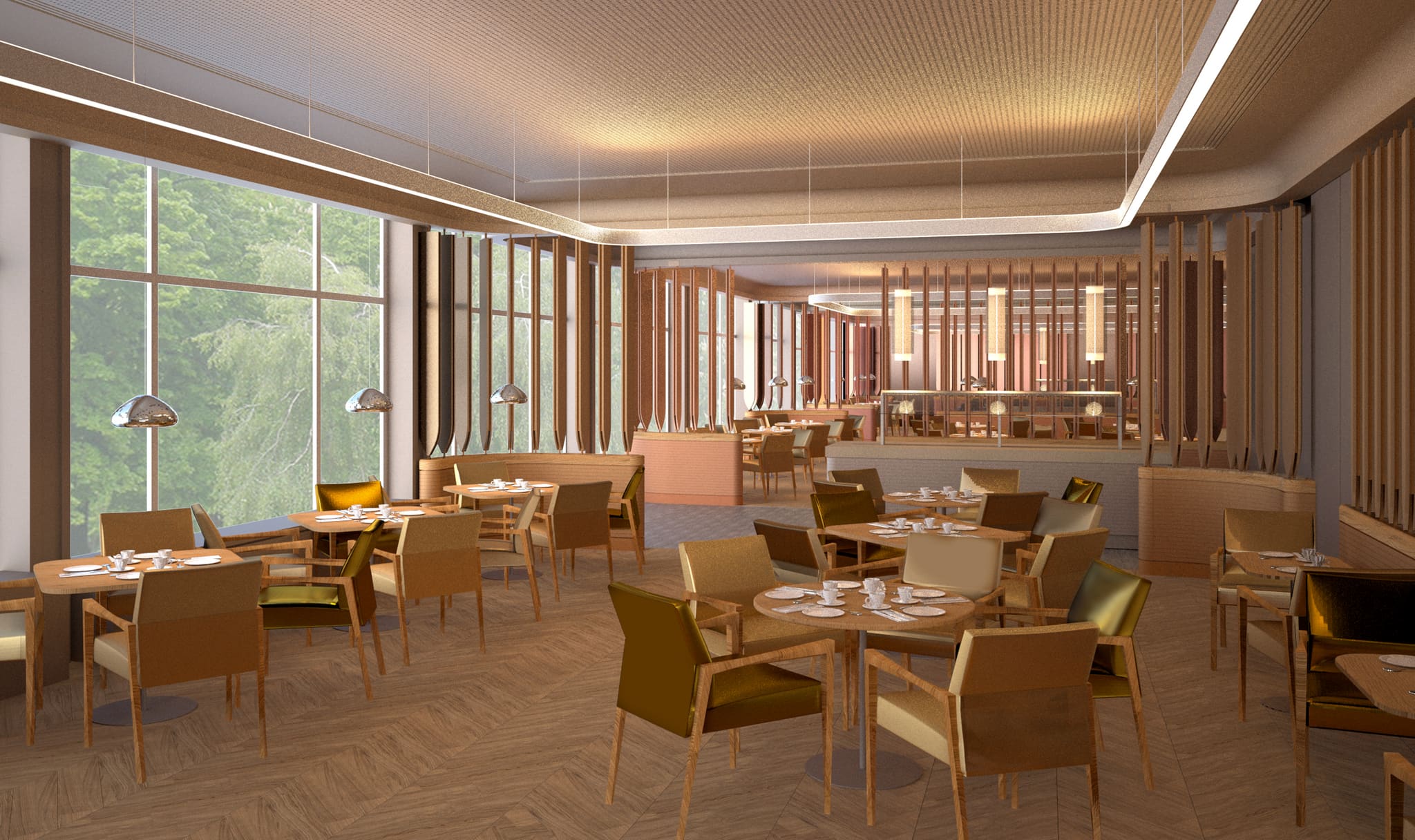
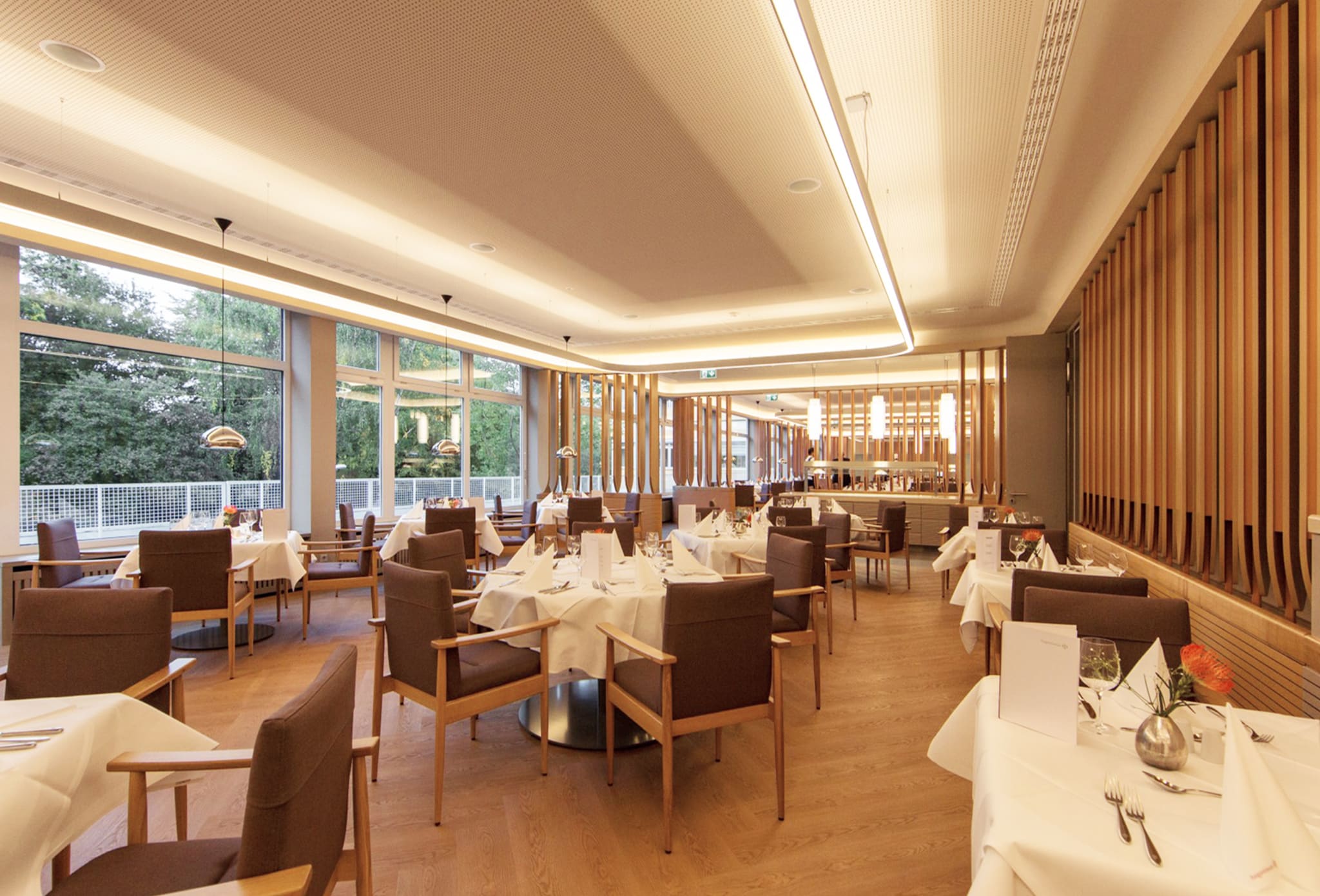
Visualisation and built project, using the example of Augustinum Kassel
You describe your work as “the craft of design”. What do you mean by that?
Mathis: “That term stands for how we approach our work – and how we understand architecture. On the one hand, of course, we're designers, almost artists. We develop architectural visions and designs. At the same time, our task is to execute it all to perfection as a craft and to look after major projects that carry great responsibility.”
Sebastian: “Our approach works like this: Mathis draws Scheme A, I draw B and our colleague C. And then we look at it all, discuss – and refine the design that brings the best of them all together, over and over again. Until everything is perfect. In English this approach is called ‘honing’.”
Mathis: “Design is like a composition. Look at how a Dutch painter arranges three pieces of fruit. Down to the last detail, the proportions and the light are tuned to one another. That is exactly our aim with a space.”
During your time in London you worked a great deal on international projects. Does that still stand you in good stead now?
Sebastian: “Absolutely! We see ourselves as translators between worlds. The British and German ways of approaching building projects sometimes differ very greatly from one another. The legal requirements are, of course, different too. The fact that we know and can handle both is a great plus. Our foreign clients – whether investors wanting to optimise their existing portfolio here or preparing to enter the market – get the perfect turnkey result and have nothing to do with all the bureaucracy here.”
Speaking of international: your staff come from Finland, Greece and Spain, among other places. In what way does a diverse team make a difference?
Mathis: “Everyone brings different impulses to the table, and we're firmly convinced that the results are far better than if everyone had the same background.”
Sebastian: “Our team is quite simply the best you could wish for! Everyone is involved with so much passion – it's incredibly wonderful to see! And we, the bosses, support them wherever we can. Everyone can work from home however they like. When a member of staff who was still on a fixed-term contract at the time became pregnant, we gave her a permanent position to make it clear to her: we want you!”
Mathis: “Yes, it really matters to us that we do everything for our team, because they do the same for us in return. We're simply a fantastic team! Every year, by the way, we hold a golf tournament for friends, family and, of course, clients. Perhaps that sums up the OOW philosophy rather well too: we don't just build great buildings, we bring people together.”
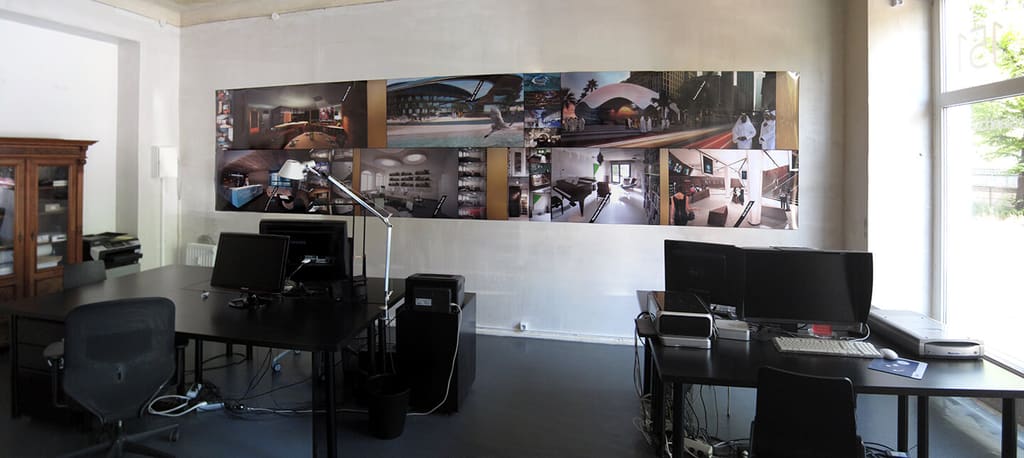
“We've got an absolutely brilliant team.”
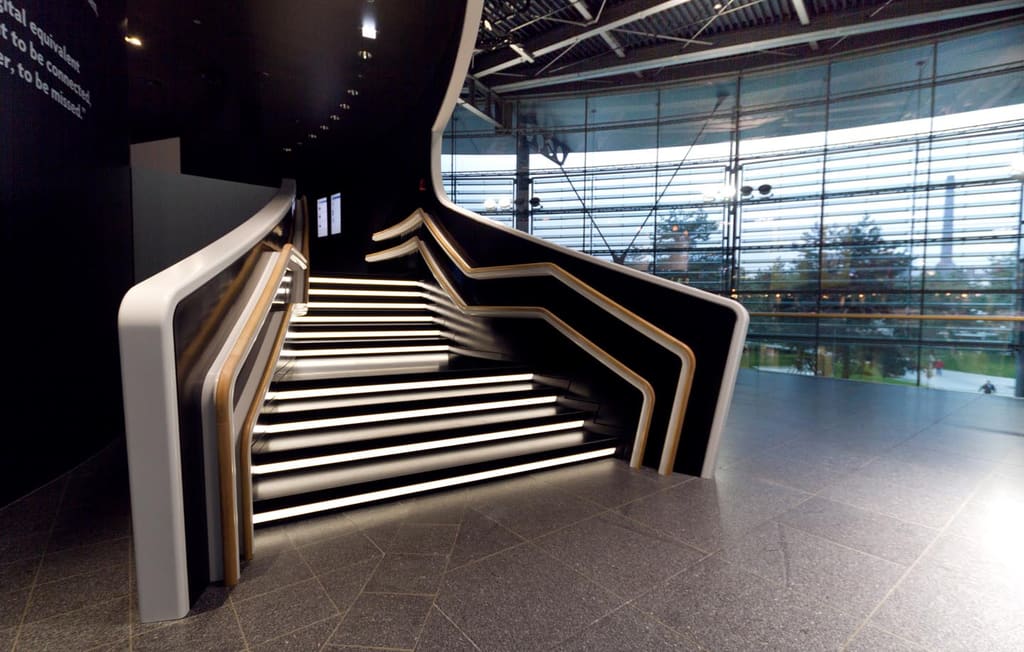
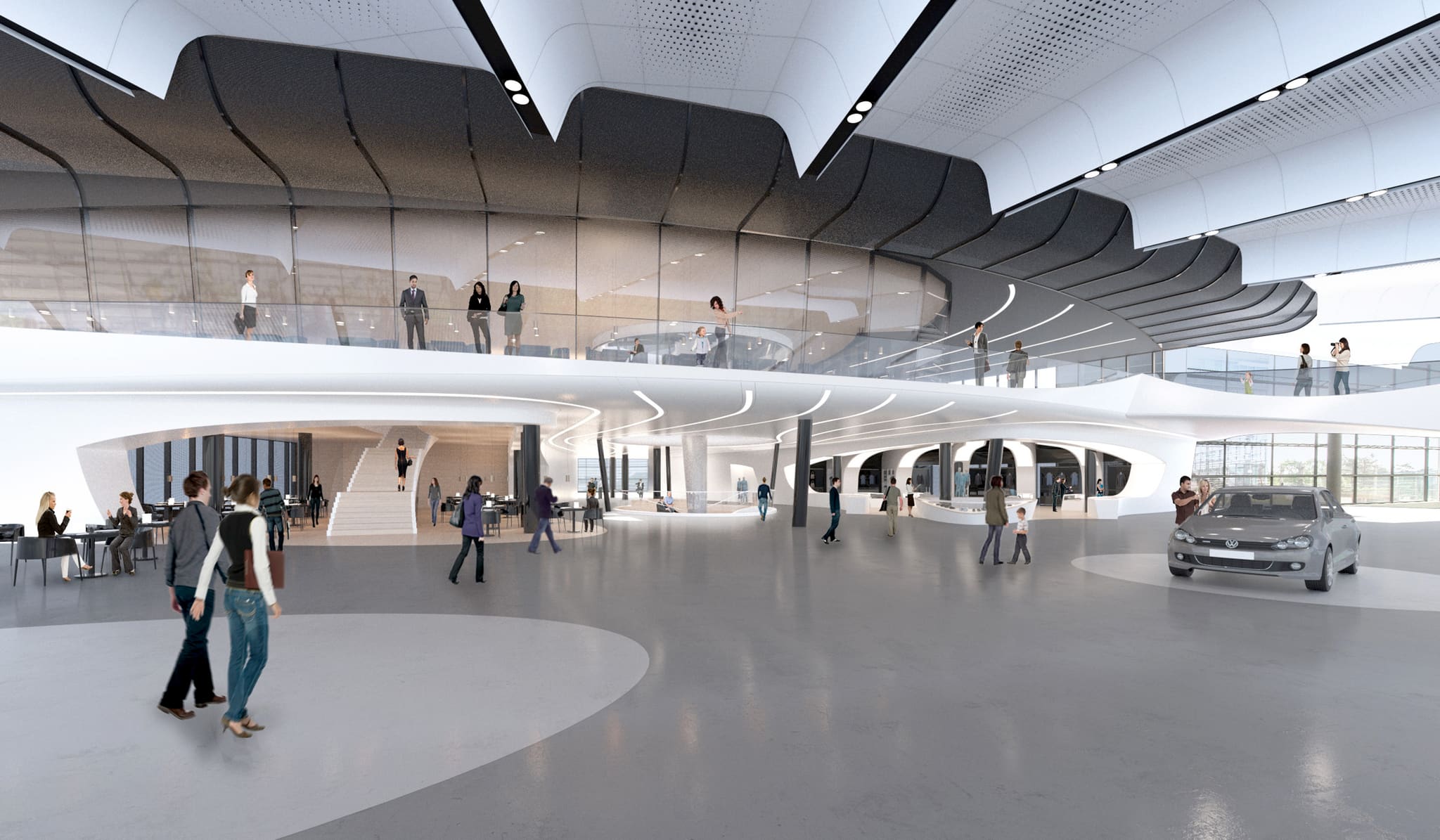
The Social Sphere at the Autostadt in Wolfsburg: a double-curved staircase with illuminated treads.
One last question: why did you actually become architects?
Mathis: “Like every sensible boy from southern Germany, I drew cars as a child. (laughs) I could get an E-Class onto paper down to the smallest detail, for instance. But at some point that got too boring for me and I started drawing houses. And since maths and art were my favourite subjects at school, it was settled the moment I finished my A-levels: I'm going to study architecture!”
Sebastian: “From Year 9 onwards, I always did holiday jobs in an architectural practice during the long summer holidays. Really daft – everyone else goes off on holiday and I'm building models. (laughs) But I enjoyed it so enormously that I didn't want to go back to school at all. Once I got to go with the architect to a horse clinic in Baden-Baden that he had just remodelled. When we visited the room where the horses wake up after their operations, I was completely blown away. It was such a genuinely lovely, cosy room, with padded walls so the horses wouldn't hurt themselves. I thought: how cool, all the things architecture can do! After that I didn't doubt for a single moment whether this profession might be something for me!”
Frequently asked questions
OOW founders Sebastian Blancke and Mathis Malchow in interview
Which services does OOW cover?
How would you describe your architectural signature?
Who has OOW built for?
HELLOOW!
+49 (0)30 7675 811 - 00