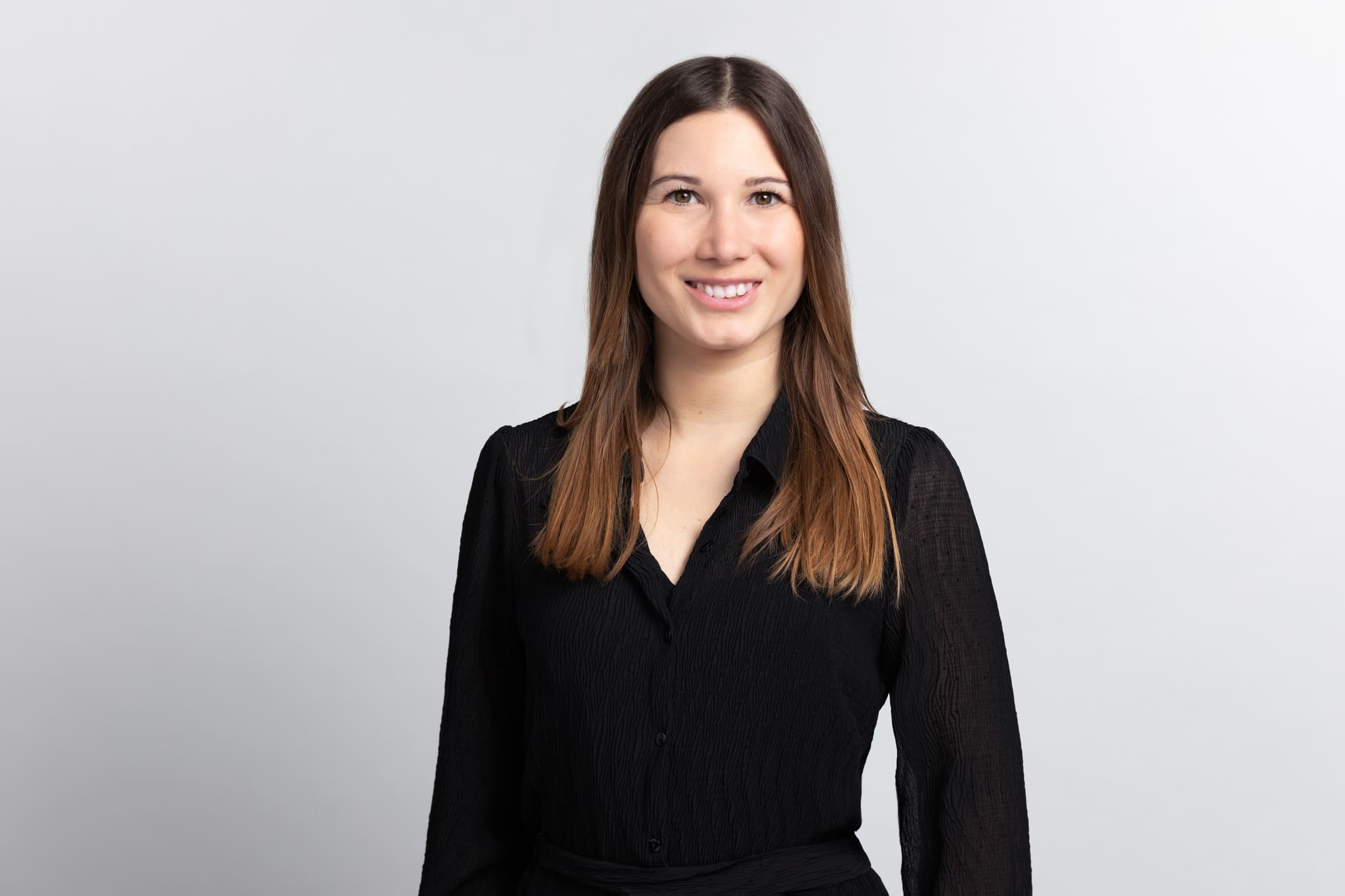
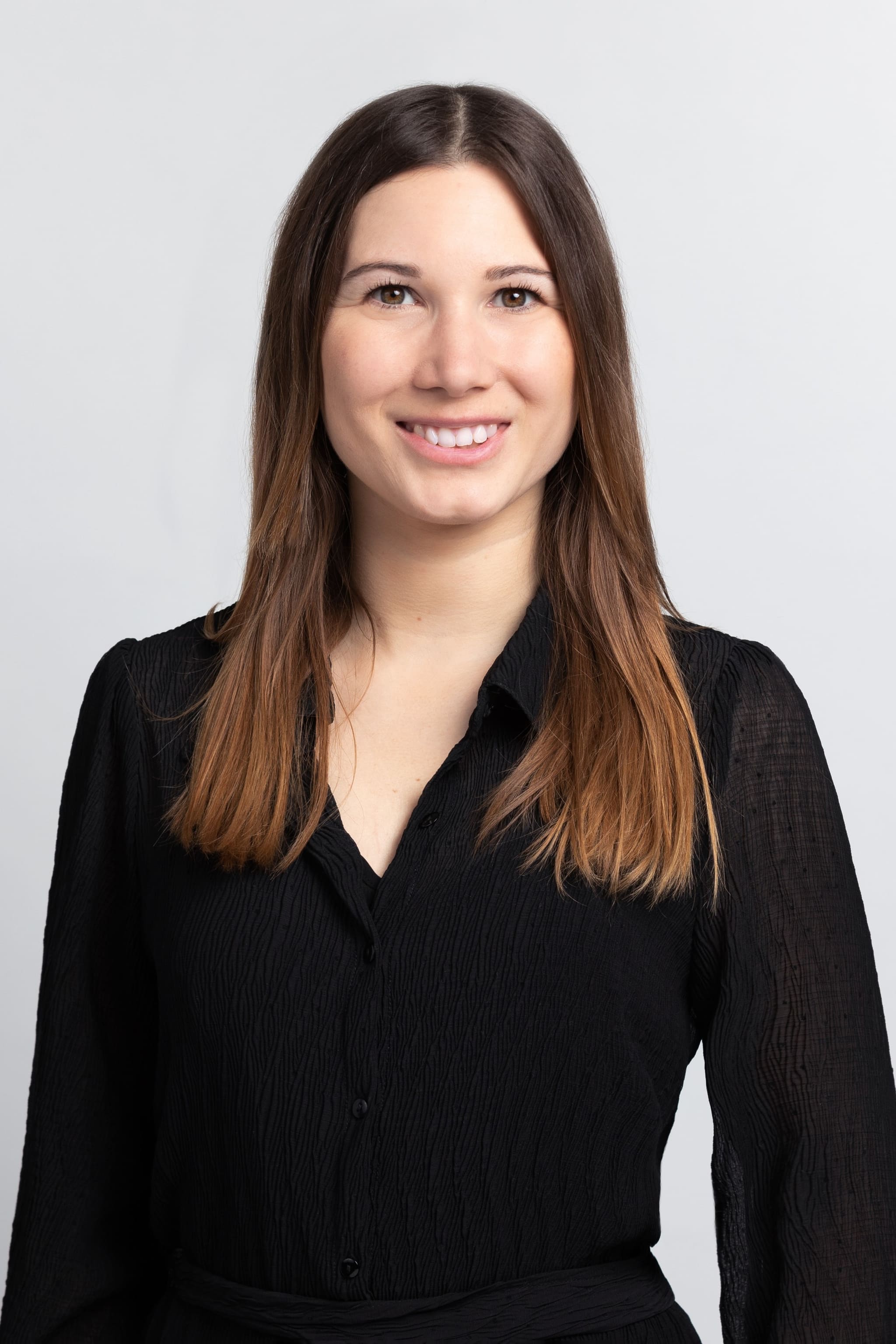
ALINA SCHIERSTEDT
“An existing building is not an obstacle – it is the first design partner”
From Westphalia for Berlin: Alina Schierstedt has been with OOW since 2023 and works with the office on Torstrasse from Lippstadt. In this interview she talks about why she became an architect, how distance sharpens collaboration, and what old structures know about good building.
Was architecture a decision, or did it just happen?
Both. At school I could never choose between art and maths, and at some point someone told me there was a profession for exactly that. The first building that stayed with me was not a famous one but an old barn near us in Geseke, where you could see the structure from the inside. That a house shows how it stands fascinated me more than any facade. Nobody tried to talk me out of it, but a few people warned me it was a long road.
Bachelor in Aachen, Master in Cologne, registered first in North Rhine-Westphalia and then in Berlin: how did you end up at OOW?
By detours, as usual. After my Master in Cologne I actually wanted to stay in the Rhineland; then came the chamber registration and with it the question of where I really wanted to work. Berlin had long been a thought, not a plan. What convinced me about OOW was that design and execution sit in the same office and that projects run all over Germany – so I did not have to live in Berlin to work on Berlin projects. I started in April 2023.
There are a good 400 kilometres between Lippstadt and Torstrasse. What does your work with the office look like today – and what actually works better at a distance?
My day starts with the model, not the inbox. We work in a shared 3D model, and in the morning I can see exactly what happened in Berlin the day before. Coordination is short and scheduled, because nobody just drops by a desk – that forces clear questions and clear answers. What works better at a distance: staying focused on one detail without the office humming around you. What is missing is the glance over the shoulder; for that I am in Berlin regularly.
What do you do when a design simply refuses to work?
I draw it in section. A lot can be glossed over in plan, but not in section – there you see immediately whether the heights, the light and the structure fit together. If that does not help, I put the drawing away and build a working model out of cardboard. Usually the problem is in a spot nobody has looked at on screen.
Your Master thesis was called “New Life on Historic Ground” and dealt with the quarter south of Cologne Cathedral. What was the actual problem you had to solve?
The quarter lies between the cathedral, the museum and the station and is crossed by tens of thousands of people every day, but hardly anyone stays. The task was not to add something new but to order the existing layers – Roman foundations, post-war buildings, traffic areas – so that a place emerges where people want to linger. To this day I would defend the decision not to overwrite the existing fabric but to set it free. What I would do differently are the ground-floor zones: too much gastronomy, too little everyday life.
Your specialisation was called “Strategies of Design and Construction”, alongside building history and historic structures. Which old building technique would you like to use again?
The vault. A jack-arch vault or a thin brick shell carries an astonishing amount with astonishingly little material, and it can still be repaired after a hundred years because every brick is individually accessible. The effort is worth it because today we need constructions that last and can be taken apart again – and that is exactly what the old techniques do better than much of what we call modern.
Quick round: plan or section? Concrete or timber? Sketch or model? Aachen or Cologne?
Section. Timber – on a good concrete plinth. Model. Cologne, but the canteen in Aachen.
Complete the sentence: “By my tenth year at OOW I would like to …”
… have taken an existing building from the first survey through to handover – and then gone back once more to see how it is being used.
Frequently asked questions
Where did Alina Schierstedt study?
How does Alina Schierstedt work with the Berlin office?
What did her Master thesis deal with?
Our team
HELLOOW!
+49 (0)30 7675 811 - 00